The Future of Autonomous Cars: A Revolution on Our Roads?
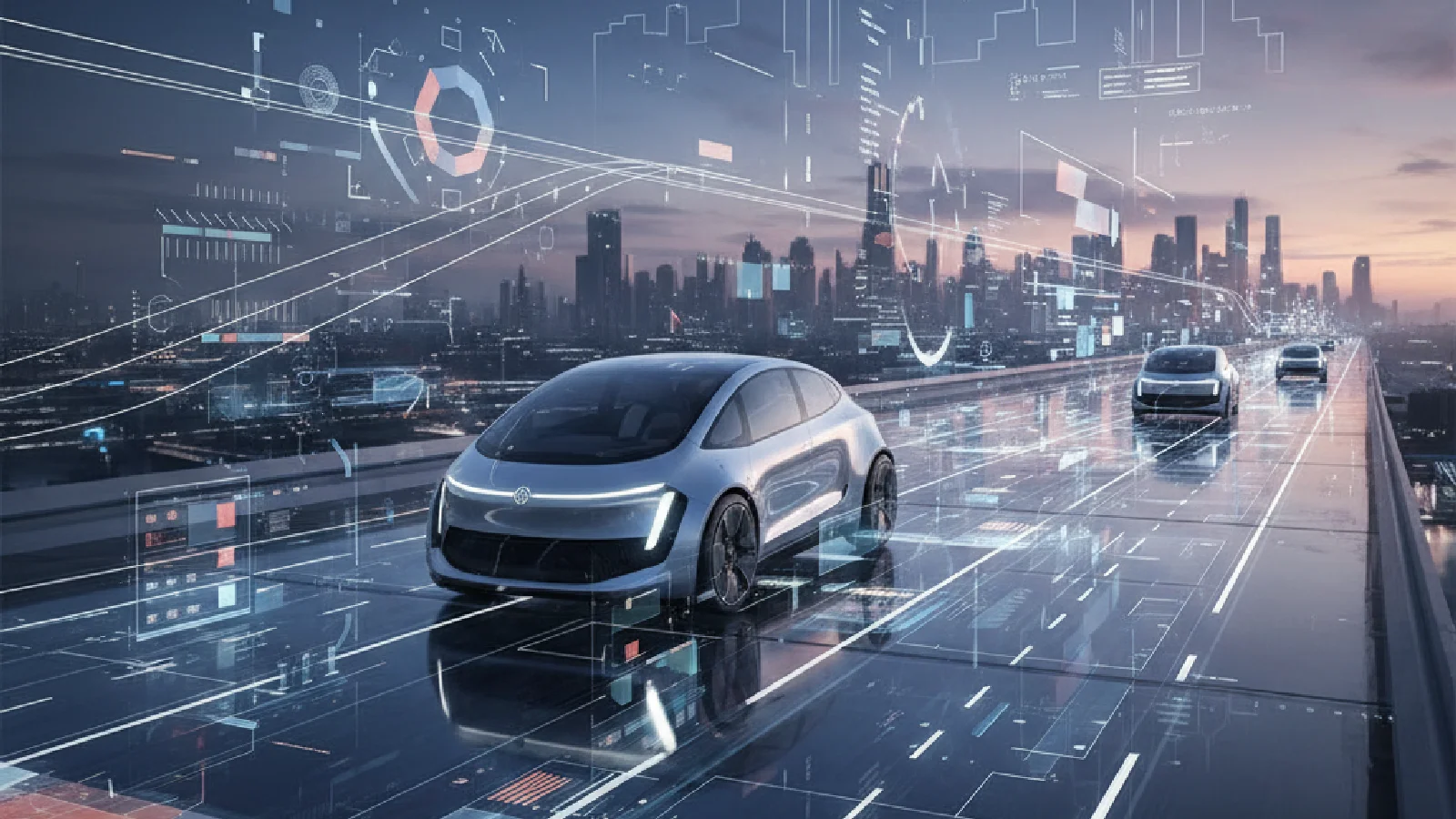
The advent of autonomous vehicles is no longer a futuristic utopia, but a rapidly unfolding reality. Artificial intelligence and sophisticated sensors are redefining our relationship with driving, promising a radical transformation of our urban infrastructures and daily lives. Experts agree that this decade will be one of acceleration, with major economic, ethical, and technological stakes.
The global autonomous car market is booming. According to a Grand View Research study, it is expected to reach $173.15 billion by 2030, with a compound annual growth rate (CAGR) of 25.5% from 2023 to 2030, highlighting the scale of this ongoing revolution. This growth is driven by innovations in lidar sensors, high-resolution cameras, and onboard processing systems, making autonomous driving increasingly reliable.
This dossier explores the various facets of this cutting-edge technology, from current progress to future challenges, including societal implications. We will analyze the levels of autonomy, key players, and the potential impact on urban and rural mobility.
Levels of Autonomy: Understanding the Progression
The Society of Automotive Engineers (SAE International) has established a six-level classification to define vehicle autonomy, ranging from 0 (no automation) to 5 (full autonomy). This framework allows for a better understanding of the complexity and progression of embedded technology.
From Level 0 to Level 2: Advanced Driving Assistance
Levels 0 to 2 represent the era of advanced driver-assistance systems (ADAS) already found in many current vehicles. These systems include adaptive cruise control, lane-keeping assist, and automatic emergency braking. They assist the driver without taking full control of the vehicle.
- Level 0: The driver performs all driving tasks.
- Level 1: Driving assistance (e.g., cruise control).
- Level 2: Partial automation (e.g., lane-keeping assist combined with cruise control). The driver must remain attentive and ready to take control at any time. According to Bpifrance, the first step towards autonomous cars is embodied in these aids.
Levels 3 and 4: Conditional and High Autonomy
Levels 3 and 4 mark a crucial turning point, where the vehicle can handle increasingly complex driving situations without human intervention. At Level 3, the car can drive autonomously under specific conditions but requires the driver to take over if necessary. Level 4 allows the vehicle to operate independently in geographically defined areas or under specific environmental conditions, without requiring driver takeover.
- Level 3: Conditional autonomy. The system manages driving under certain conditions, with the driver as a "fallback user."
- Level 4: High autonomy. The vehicle can drive itself without human intervention within a defined operational design domain (ODD).

Key Technologies and Innovations
The rise of autonomous cars relies on a set of mature and emerging technologies, working in synergy to enable the vehicle to perceive its environment, understand it, and make real-time decisions. This technological synergy is the key to success for manufacturers and developers.
Sensors: The Eyes and Ears of the Vehicle
Sensors are the foundation of an autonomous car's environmental perception. They include:
- Radars: Measure the distance and speed of objects, effective in bad weather.
- Lidars: Create a 3D map of the environment with remarkable precision, detecting obstacles and distances.
- Cameras: Recognize lane markings, traffic signs, and pedestrians, thanks to deep learning algorithms.
- Ultrasonics: Ideal for short-range detection, especially for parking.
"The multimodal combination of sensors is essential to ensure system redundancy and robustness, allowing the vehicle to navigate safely even in unforeseen scenarios." - Jean-Luc Beylat, President of Nokia Bell Labs France
Artificial Intelligence and Data Processing
Artificial intelligence (AI) is the brain of autonomous vehicles. It analyzes the massive data collected by sensors to:
- Object detection and classification: Identify vehicles, pedestrians, cyclists, etc.
- Behavioral prediction: Anticipate the movements of other road users.
- Trajectory planning: Choose the optimal route and the safest maneuver.
Advances in neural networks and machine learning enable constant improvement in perception and decision-making capabilities. To understand how AI shapes other fields, our readers can consult our article on the AI development revolution in coding, which explores similar concepts of predictive modeling and algorithmic optimization.
Challenges and Obstacles to Mass Adoption
Despite rapid progress, the widespread deployment of autonomous cars still faces major obstacles. These challenges are as much technical as they are regulatory and societal, requiring a multidisciplinary approach.
Technological Obstacles and Reliability
The reliability of systems in all circumstances remains a crucial issue. Extreme weather conditions (snow, heavy rain, fog) can impair sensor performance. Moreover, unforeseen and rare scenarios (the "edge cases") are difficult to simulate and anticipate. Cybersecurity is also a major concern, as connected vehicles could be potential targets for cyberattacks.
- Managing difficult weather conditions.
- Handling complex "edge cases."
- Protection against cyberattacks and hacking.
Regulatory Framework and Social Acceptance
Establishing a harmonized international regulatory framework is essential. The question of liability in case of an accident is complex and requires legal clarification. Simultaneously, public acceptance is a determining factor. Concerns about safety, job losses in the transport sector, and the ethics of AI decisions must be addressed transparently.
- Harmonization of international regulations.
- Clarification of legal liability.
- Public awareness and education on assisted road safety.

Societal and Economic Impact
The emergence of autonomous vehicles promises to profoundly transform our societies, with significant repercussions on the economy, employment, and urban planning. Robot-taxis and shared mobility services will reshape the user experience and logistics.
Accident Reduction and Traffic Improvement
One of the main advantages of autonomous cars is their potential to drastically reduce the number of road accidents, the vast majority of which are due to human error. Studies estimate that they could reduce accidents by 90% in the long term. Furthermore, optimizing traffic flow through smoother and interconnected driving could reduce road congestion and travel time.
| Potential Benefits | Estimated Quantified Impact |
|---|---|
| Accident Reduction | Up to 90% (via elimination of human error) |
| Traffic Optimization | 20-30% reduction in congestion |
| Fuel Savings | 10-15% (via optimized driving) |
New Business Models and Markets
The development of autonomous driving opens the way for new business models and services. Robot-taxis (on-demand autonomous vehicles) are already being tested in several cities (e.g., Waymo in Phoenix). According to Le Monde, the enthusiasm for these robot-taxis is global, with projections for large-scale deployment by 2030. These services promise more accessible and less expensive mobility for users, while transforming the transport landscape. The logistics sector will also be profoundly reinvented by autonomous trucks, which could operate 24/7, increasing operational efficiency and reducing labor costs. A 15% growth in logistics efficiency is anticipated thanks to these innovations.
Ethics and Machine Decision-Making
The integration of autonomous cars into our daily lives raises complex ethical questions, particularly concerning decision-making in critical situations. These dilemmas highlight the need for in-depth reflection on the values and principles we wish to see integrated into driving algorithms.
The Ethical Dilemmas of AI
In the event of an unavoidable accident, how should an autonomous vehicle make decisions? Should it minimize the number of victims, protect its occupants, or prioritize the most vulnerable users (pedestrians, cyclists)? These automotive versions of the "trolley problem" highlight the difficulty of programming moral choices into a machine. It is essential to define clear and transparent ethical frameworks to guide the developers of these decision-making systems.
- Prioritization of lives in case of an accident.
- Transparency of decision algorithms.
- Definition of moral principles for AI.
The Need for Societal Reflection
These ethical questions cannot be resolved by engineers alone. They require a broad societal discussion, involving philosophers, lawyers, policymakers, and the general public. The goal is to ensure that the development of smart cars aligns with our fundamental values and contributes to collective well-being. Public trust in these technologies will largely depend on the ability to address these ethical concerns satisfactorily.
Energy transition also plays a key role in the future of autonomous mobility. Many experts highlight the growing link between autonomous cars and the electrification of transport. To learn more about this synergy, we explore in another article how electric vehicles are becoming the technology of choice for autonomous cars. This article provides essential data on sustainable development and carbon emission reduction.
Conclusion
The future of autonomous cars is undoubtedly promising, but fraught with complex challenges. From technological advancements to ethical and regulatory issues, every aspect must be approached with rigor and foresight. The mass adoption of these vehicles will depend on our collective ability to ensure their safety, reliability, and societal acceptability.
Upcoming years will undoubtedly see an acceleration of experiments, limited deployments of robot-taxis, and a progressive integration of automation into our personal vehicles. Collaboration between industry, governments, and civil society will be essential to shape a future where mobility is smarter, safer, and more efficient. Discover our other articles on technology to delve deeper into these fascinating topics.