IBM and Arm: The Alliance Redefining Data Centers

When two technology giants join forces, an entire ecosystem transforms. The alliance between IBM and Arm marks a decisive turning point for enterprise data centers, promising unprecedented agility in workload management. This strategic collaboration addresses a growing demand: enabling businesses to deploy their applications across different architectures without technical friction.
A Technological Convergence for the Enterprise
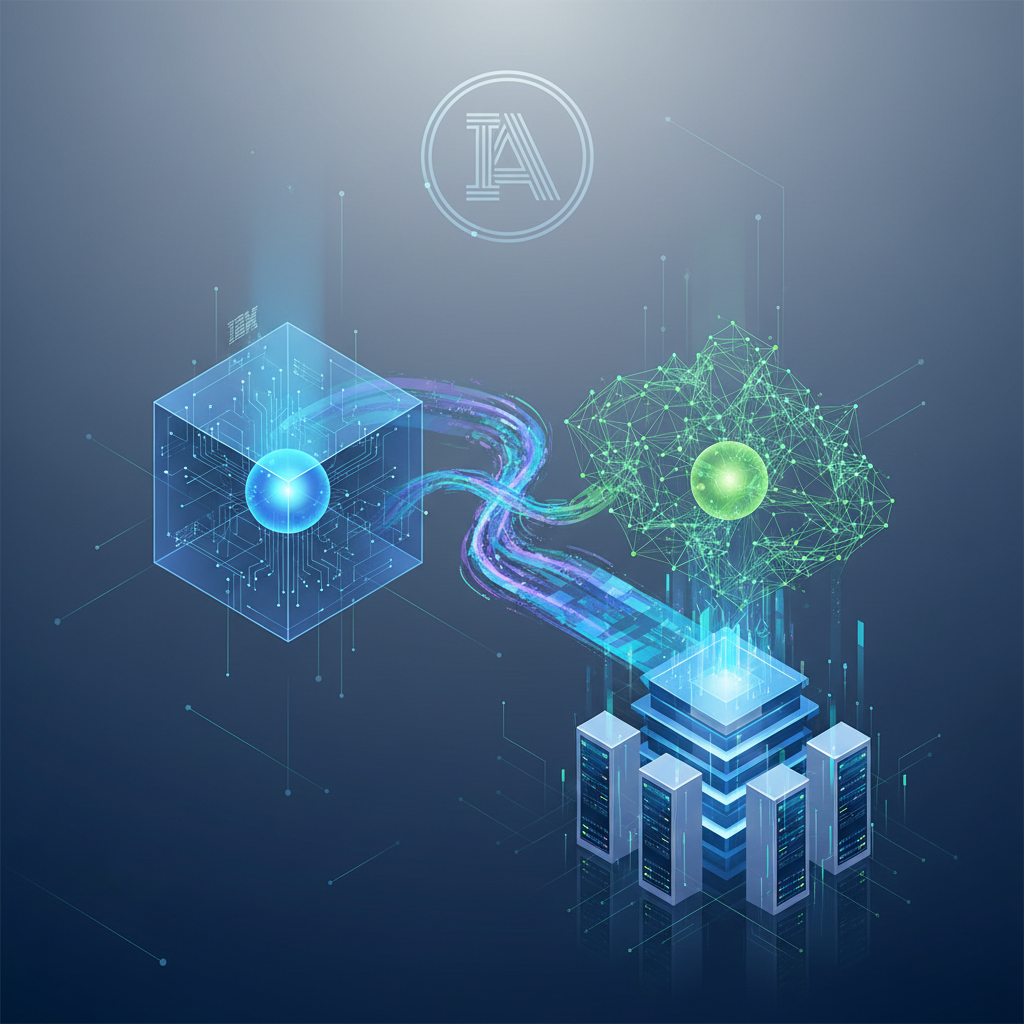
The rapprochement between IBM and Arm is no accident. On one side, IBM brings its historical expertise in critical enterprise infrastructures and its hybrid cloud solutions. On the other, Arm offers an energy-efficient processor architecture, already ubiquitous in mobile devices and now rapidly expanding into servers.
This synergy addresses a major challenge: how to migrate or run workloads between different platforms without completely rewriting applications? Compatibility between the IBM ecosystem and Arm processors paves the way for increased portability, reducing dependence on a single architecture.
The objective is clear: to offer IT departments technological freedom of choice while maintaining operational consistency. This approach contrasts with traditional proprietary models that locked companies into closed ecosystems.
Operational Flexibility and Cost Optimization
The first concrete benefit of this alliance concerns operational flexibility. Companies can now consider distributing their workloads based on performance, cost, and energy consumption criteria.
Servers based on Arm architecture stand out for their remarkable energy efficiency. Combined with IBM management solutions, they help optimize data center operating costs, a crucial issue as energy bills increasingly weigh on IT budgets.
Concretely, an application can be developed once and then deployed interchangeably on traditional x86 servers, IBM mainframes, or Arm infrastructures. This multi-architecture approach meets the needs of organizations looking to gradually modernize their IT infrastructure without drastic upheaval.
"The ability to move workloads between different architectures becomes a major competitive advantage for companies seeking to optimize their infrastructure."

Application Portability as a Strategic Advantage
Application portability is at the heart of this collaboration. IBM has invested heavily in development and deployment tools compatible with the Arm architecture, facilitating the transition for developers accustomed to other environments.
Containers and orchestrators like Kubernetes play a central role in this strategy. They abstract the hardware layer, making applications agnostic to the underlying architecture. IBM Cloud and Red Hat OpenShift, now optimized for Arm, offer this unified orchestration capability.
For businesses, this translates into several tangible benefits:
- Reduced migration time between development, test, and production environments
- Performance optimization by choosing the most suitable architecture for each type of workload
- Enhanced business continuity through the ability to quickly switch between different infrastructures
This multi-architecture approach offers significant advantages over traditional models, as summarized below:
| Characteristic | Traditional Architectures | IBM-Arm Alliance (Multi-architecture) |
|---|---|---|
| Architectural Dependence | Strong (often x86 or mainframe) | Reduced (multi-architecture) |
| Application Portability | Limited, requires rewriting | Increased, agnostic |
| Operating Costs | Potentially high (consumption, licenses) | Optimized (Arm efficiency) |
| Flexibility | Less agile, complex migration | High, adaptable deployment |
This approach is particularly relevant in the current context where companies are adopting hybrid cloud strategies, combining on-premise infrastructures, public cloud, and edge computing.
Impact on the Software Ecosystem and Open Standards
Beyond hardware aspects, this alliance stimulates the adoption of open standards in the industry. IBM actively pushes enterprise software vendors to adapt their solutions to the Arm architecture, thereby expanding the available ecosystem.
Databases, middleware, and management tools that form the backbone of enterprise applications are gradually being ported to Arm. This technological democratization benefits the entire market, not just IBM customers.
This initiative recalls other recent technological transformations, such as the evolution of user interfaces. Like passkeys revolutionizing authentication on Windows 11, this architectural convergence simplifies the user experience while strengthening technical capabilities.
Developers also benefit from unified toolchains, reducing the complexity of managing multi-architecture environments. This productivity gain directly impacts the time-to-market for new features.
Challenges and Technical Considerations
Despite its undeniable advantages, this transition raises several technical challenges. Not all enterprise software is yet natively available on Arm architecture. Legacy applications, developed decades ago, sometimes require recompilation or containerization efforts.
The question of performance also remains central. While Arm architecture excels in energy efficiency, certain intensive workloads (scientific computing, complex simulations) can still benefit from the advanced optimization of x86 architectures or specialized IBM processors.
IT teams must also develop new skills. Managing a heterogeneous environment requires increased mastery of orchestration, monitoring, and automated deployment tools. Training and support become key success factors.
Connectivity between different infrastructure components also plays a crucial role. Just as Thunderbolt 5 transforms mobile professional setups, data center interconnection protocols must evolve to support this architectural diversity without creating bottlenecks.
Prospects for Tomorrow's Data Centers
The IBM-Arm alliance outlines the contours of next-generation data centers. These infrastructures will be characterized by their ability to combine different architectures transparently, depending on the specific needs of each application.
Artificial intelligence and machine learning will particularly benefit from this flexibility. Model training phases, which are power-intensive, can be executed on optimized architectures, while inference in production will prioritize the energy efficiency of Arm processors.
This evolution is part of a broader trend of computing decentralization. Companies are now deploying their applications from the centralized cloud to the network edge (edge computing), where Arm architecture naturally prevails due to its low power consumption.
The coming years will likely see the emergence of new economic models for data centers, where billing will become more refined based on the architecture used. This granularity will allow companies to precisely optimize their costs according to their real needs.
This approach recalls transformations observed in other technological sectors. Just as Vision Pro seeks to redefine AR uses in the enterprise, this collaboration aims to broaden the scope of possibilities in IT infrastructure.