Backlinks: Google Discover's Impact on Link Profiles
Google Discover has transformed how content is discovered and consumed on the web. This feature, which suggests personalized articles without prior queries, is now disrupting backlink building strategies and forcing SEO professionals to rethink their traditional approaches.
Discover's algorithm now prioritizes different signals than classic search. Engagement time, content freshness, and editorial authority are gaining new importance. This evolution has direct repercussions on the value and type of inbound links sites must acquire to maximize their visibility.
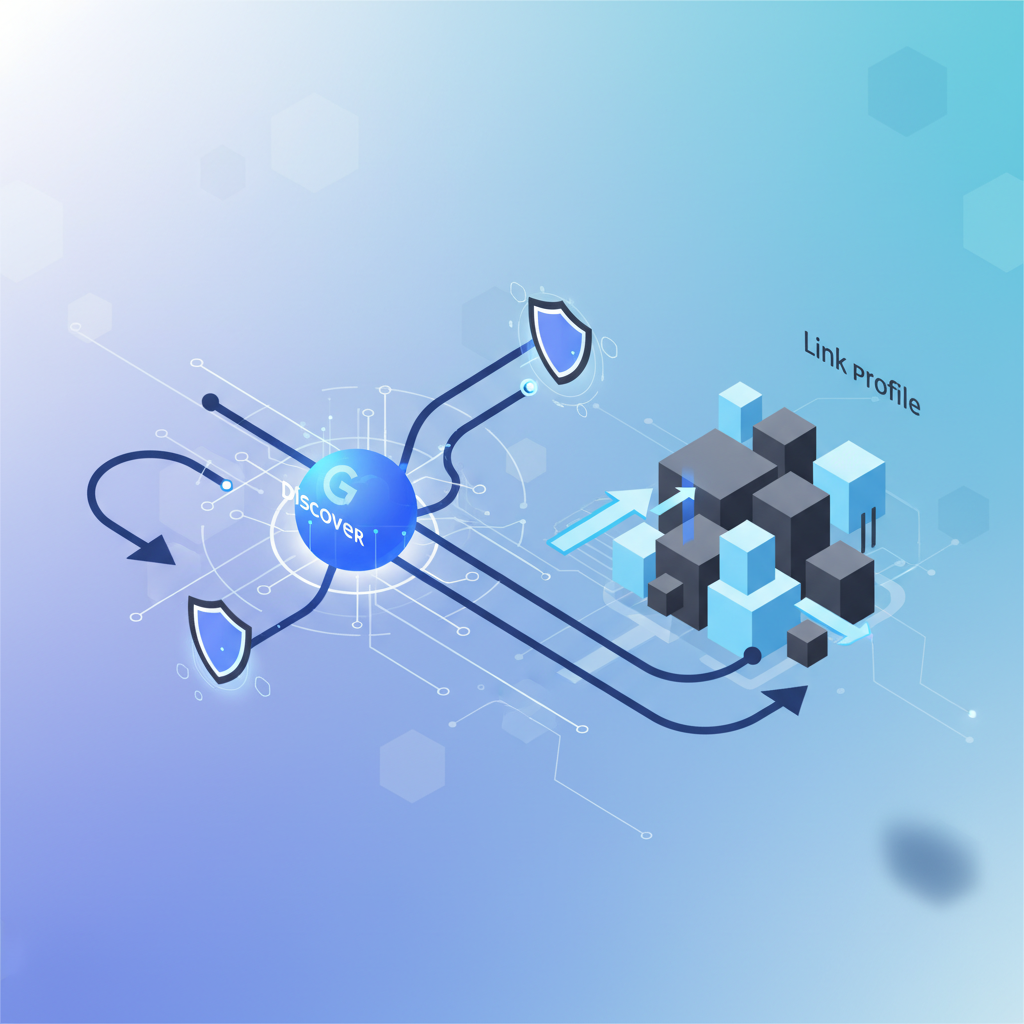
The New Hierarchy of Link Signals
Google Discover has introduced a different interpretation of backlink quality. Unlike traditional search where link age and volume play a major role, Discover values more dynamic and contextual link profiles.
Temporal signals are becoming crucial: a recent link from an active news site now carries more weight than an old link from a rarely updated site. This evolution favors link strategies focused on editorial freshness rather than the accumulation of static links.
The algorithm also places more importance on deep contextual links, those that are naturally embedded in long, engaging content. Isolated links in directories or footers lose effectiveness for Discover SEO, even if they retain some value for classic search.
Engagement Indicators as Multipliers
Content engagement now amplifies the value of the backlinks it receives. An article with a high click-through rate and significant reading time in Discover sees its inbound links gain authority exponentially.
This mechanism creates a leverage effect: content that performs well in Discover naturally attracts more links, which in turn strengthens its positioning. Sites must therefore optimize simultaneously for engagement and link acquisition, two pillars previously treated separately.
Backlink Sources Valued by Discover
Not all link sources are equal in the Discover ecosystem. News sites, online magazines, and editorial platforms generating regular traffic see their links valued more highly than traditional static sources.
Links from frequently updated content that itself appears in Discover benefit from amplified authority transfer. This logic pushes off-page strategies towards partnerships with active media rather than purchasing links on dormant sites with high domain authority.
Social networks and content platforms also play an indirect but significant role. Although links from these platforms are generally nofollow, they generate engagement signals that Discover considers when evaluating content relevance and, by extension, the quality of its link profile.
Geolocation of Link Sources
Since Google Discover is highly personalized by geographic area, the geographic origin of backlinks takes on a new strategic dimension. Links from sites located in the same regions as your target audience reinforce the perceived relevance of your content.
This evolution requires a more segmented approach to link building, with differentiated campaigns according to markets. Uniform global strategies lose effectiveness compared to localized and contextualized approaches.
Partial Obsolescence of Traditional Metrics
Classic indicators like Domain Authority or Trust Flow remain relevant but are no longer sufficient to assess a backlink's impact in a Discover context. New dimensions must be integrated into the analysis.
The source site's publication frequency, its appearance rate in Discover, and the average engagement duration on its content become essential evaluation criteria. These metrics are not always accessible via traditional SEO tools, which complicates link profile auditing.
The authority of a backlink is now measured as much by the editorial vitality of its source as by its age or PageRank.
Natural link patterns are also evolving. Discover favors organic link profiles with diverse sources, varied anchor texts, and gradual growth rather than sudden spikes. Aggressive link building techniques become counterproductive, even penalizing.
The Limited Lifespan of Backlinks
A new phenomenon is emerging: the accelerated temporal depreciation of backlinks. In the Discover universe, a link loses value more quickly if the source content is not regularly updated or if the site stops publishing actively.
This dynamic requires continuous monitoring of the link profile and a permanent renewal strategy. Link building campaigns can no longer be one-off but must be part of a continuous flow to maintain a high-performing link profile.
Acquisition Strategies Adapted to the Discover Paradigm
Given these developments, backlink building tactics must be rethought. The priority shifts from quantity and raw authority to contextual quality and temporal relevance.
Content marketing gains increased importance. Producing content likely to appear in Discover and naturally attract links becomes the cornerstone of modern off-page strategies. Investment should focus on engaging formats: in-depth analyses, exclusive data, impactful visuals.
Editorial partnerships with active media in Discover offer a superior return on investment compared to traditional placements. These collaborations allow for contextual links in content with high engagement potential, thus maximizing their algorithmic impact.
The Importance of Link Earning over Link Building
The shift from link building to link earning is accelerating with Discover. Rather than actively soliciting links, the strategy involves creating content so relevant and engaging that it naturally attracts mentions and citations.
This approach requires close collaboration between SEO, content, and public relations teams. Content must be designed from the outset with maximum linkability potential: exclusive data, innovative formats, original angles on current topics.
Reconciling Discover Strategy and Traditional SEO
The coexistence of Google Discover and classic search requires dual optimization of the link profile. The two channels do not value exactly the same signals, creating a strategic challenge for SEO teams.
The optimal approach is to build a solid foundation of authoritative links for traditional search, while layering dynamic and contextual links for Discover. This hybrid strategy maintains performance on both fronts without sacrificing one for the other.
Managing toxic backlinks also becomes more nuanced. Some links penalizing classic search may have a neutral impact on Discover, and vice versa. The audit must therefore integrate this dual reading to avoid counterproductive disavowals.
Integration with Other Acquisition Channels
Backlink strategies can no longer be isolated from other marketing levers. Multi-touch attribution reveals how inbound links interact with other touchpoints in complex user journeys.
This holistic view allows for optimizing budget allocation between traditional link building, digital public relations, and amplification on social platforms. Synergies between these channels produce results superior to the sum of their individual effects.
Performance Measurement and Adapted KPIs
Success indicators for a backlink strategy must evolve to reflect Discover's impact. Beyond link volume and authority, new KPIs are emerging.
- Discover traffic generated per page: Evaluates the effectiveness of the link profile based on presence in Discover feeds.
- Conversion rate of Discover visitors: Measures the effectiveness of users coming from Discover.
- Average engagement time of Discover visitors: Analyzes the quality of user interaction discovering content via Discover.
The Discover traffic generated per page becomes a key metric for evaluating the effectiveness of the link profile. Pages benefiting from quality contextual backlinks generally show increased presence in Discover feeds, reflecting algorithmic recognition of their relevance.
The conversion rate and engagement of visitors from Discover allow for refining the analysis. These users, arriving without prior search intent, exhibit specific behaviors that must be measured and optimized differently from visitors from organic search.
Analysis Tools and Methodologies
Traditional SEO tools must be supplemented by solutions capable of tracking Discover performance. Google Search Console now provides separate data for Discover, allowing correlation of link profile evolution with performance on this channel.
Longitudinal analysis becomes essential. Observing how the acquisition of new backlinks impacts Discover metrics over several weeks helps identify the most effective link sources and adjust the strategy accordingly.
Outlook and Continuous Adaptation
Google Discover's algorithm continues to evolve, with regular updates that refine the valuation of link signals. This relative instability requires a posture of permanent adaptation rather than a fixed strategy.
SEO professionals must develop specific monitoring for Discover developments, distinct from monitoring core updates for classic search. Patterns that work today may lose effectiveness tomorrow, requiring increased strategic agility.
The growing integration of artificial intelligence into content recommendation processes suggests that personalization will become even finer. Backlink strategies will need to anticipate this hyper-personalization by further diversifying link sources and contexts.
The convergence between user experience, engagement, and technical SEO is strengthening. Sites that excel simultaneously in these three dimensions see their link profiles naturally valued by Discover, creating a virtuous cycle of visibility and authority.
| Feature | Google Discover | Traditional SEO |
|---|---|---|
| Key Link Signals | Freshness, Contextual, Engagement | Age, Volume, Raw Authority |
| Weight of Authority | Dynamic, source site responsiveness | Static, source site DA/TF |
| Link Building vs Earning | Link Earning favored | Link Building more dominant |
| Geographic Targeting | Strong local relevance | Less emphasized |