Programmatic Advertising in 2026: Emerging Strategies and Tools

The purchase of advertising space in real-time has reached a decisive milestone. While Meta Ads and Google Ads remain essential, a new generation of platforms and strategies is reshaping the programmatic landscape. Between artificial intelligence, hybrid formats, and European solutions, advertisers now have a technological arsenal that radically transforms the reach, measurement, and personalization of campaigns.
The market is moving towards an omnicanal approach where linear programmed TV, digital audio, dynamic display, and interactive formats converge in unified ecosystems. This transformation relies on identity graphs, predictive algorithms, and advanced automation that allow for orchestrating every touchpoint with consistency.

Linear Programmatic: When TV Joins Real-Time Buying
Linear television, long perceived as a static medium, is opening up to automated booking of premium inventories. Advertisers can now reserve slots during live events — sports championships, popular shows — by leveraging high-quality audience data integrated into DSPs (Demand-Side Platforms).
This dynamic is based on artificial intelligence algorithms capable of optimizing ad placement based on context, time, and viewer profiles. According to le Journal du Net, generative AI and agentic AI facilitate access to these spaces by reducing purchasing friction: "advertising on television is as simple as buying ads on social networks."
TV programmatic platforms thus unify the buying experience, connect first-party data to broadcast inventories, and offer multi-channel attribution that measures the real impact of each broadcast.
Programmatic Audio: Contextual Targeting and AI-Powered Curation
The audio sector is undergoing a major transformation driven by AI-assisted curation and contextual targeting. Contextual targeting now represents a significant portion of the dimensions exploited by advertisers to match brand environments and audience segments.
Platforms like Triton Digital integrate identity-based attribution solutions, allowing for tracking results across multiple devices and optimizing campaigns in real-time. Cross-device measurement thus becomes a key lever for understanding the complete user journey, from podcast to music streaming.
Programmatic audio also benefits from the rise of OTT (Over-The-Top) streaming, which offers granular listening data and unprecedented personalization possibilities. Advertisers use these signals to adapt their messages to consumption moments — commute, workout, lunch break — and maximize engagement.
Dynamic Display: Towards Modular and Automated Ecosystems
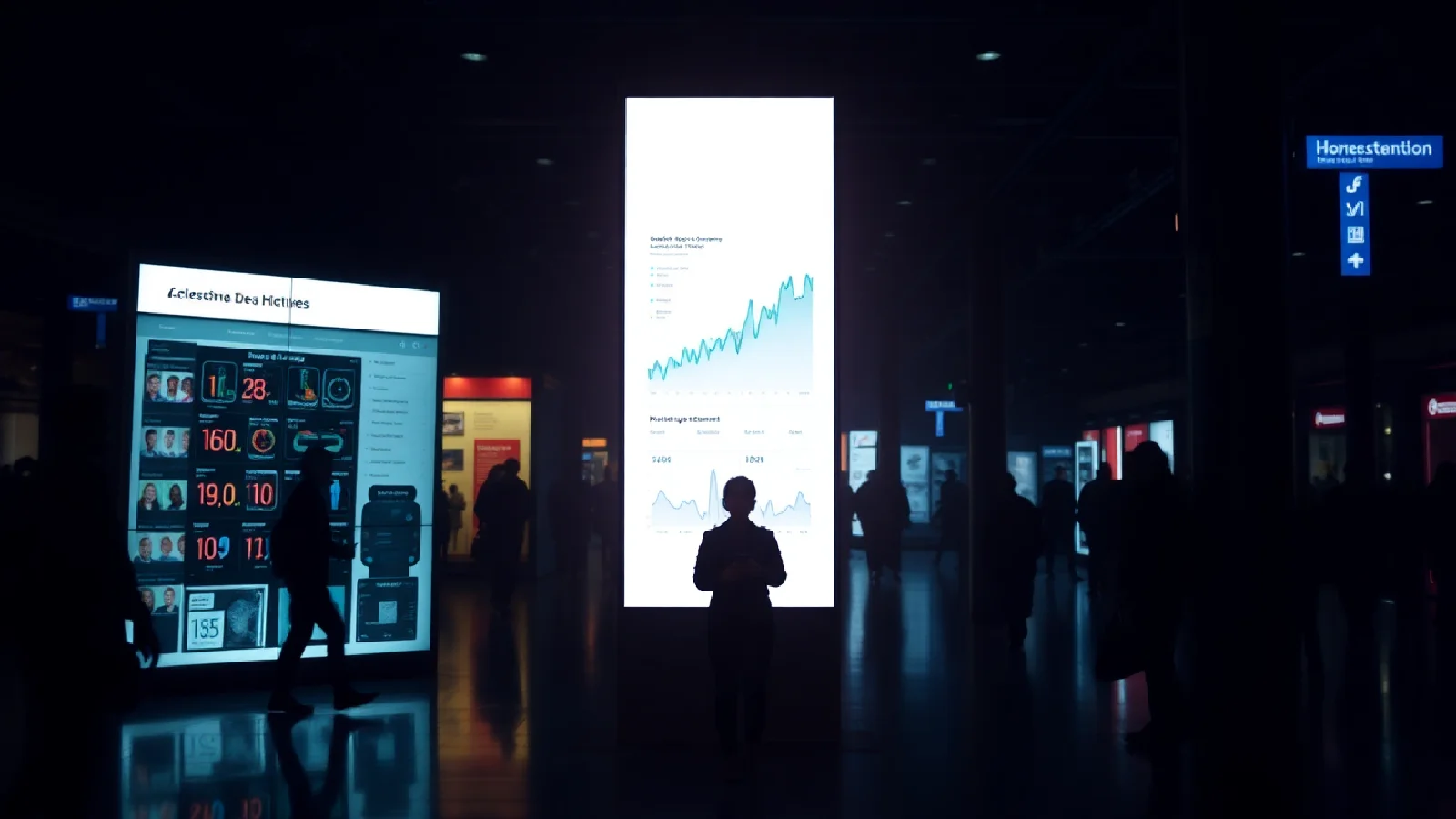
Dynamic display (Digital Out-Of-Home, DOOH) is evolving towards modular API architectures that connect CMS, data warehouses, and programmatic platforms. These ecosystems enable predictive personalization and complete automation of the creative lifecycle.
According to Navori, 2026 trends favor the integration of third-party data, real-time dashboards, and advanced interactivity. Advertisers can now broadcast content adapted to the weather, time of day, or pedestrian traffic flows, while measuring impact via sensors and geolocation tools.
"AI-powered content automation accelerates the production of messages tailored to each segment, transforming dynamic display into a real-time activation channel."
This approach paves the way for a DOOH-programmatic convergence where physical screens become inventories purchasable via RTB (Real-Time Bidding) auctions, similar to classic display formats.

AI-Powered Creative Generation: Accelerating Production and Personalization
AI-assisted creative generation tools are revolutionizing advertising production. Rather than manually creating dozens of variants, advertisers rely on algorithms capable of automatically generating texts, visuals, and videos adapted to each audience segment.
This automation is not limited to production: it also includes continuous A/B testing, dynamic message optimization, and adaptation to each platform's proprietary formats. AI systems analyze performance in real-time and adjust creatives to maximize conversion rates.
Agentic artificial intelligence, which acts autonomously on defined objectives, promises to go further by orchestrating the entire creative chain: brief, production, distribution, analysis, and iteration. This approach frees marketing teams from repetitive tasks and allows them to focus on strategy and innovation.
Emerging Platforms: The Rise of European and SME-Oriented Solutions
Facing American giants, new European platforms and lightweight solutions are democratizing access to programmatic. Adloop, Equativ Easy, or the simplified offers from Trade Desk target SMEs and local advertisers by offering intuitive interfaces, reduced entry costs, and multi-channel attribution reports.
These solutions focus on transparency, privacy compliance (GDPR), and the integration of clean rooms for exchanging secure identifiers between advertisers and publishers. As Big Media highlights, European adtech stands out for its privacy-friendly approach and its ability to adapt to regulatory constraints.
SMEs thus benefit from direct access to real-time bidding, premium inventories, and advanced measurement tools, previously reserved for large brands. This democratization fosters increased competition and diversification of players in the programmatic market.
Omnichannel Convergence: Identity Graphs and First-Party Signals
The key to a successful programmatic strategy lies in omnichannel convergence. Rather than managing isolated campaigns by channel (display, video, audio, TV), advertisers orchestrate unified journeys supported by identity graphs.
These graphs aggregate first-party signals (CRM, browsing data, purchase history) and allow for recognizing a user across all their devices and touchpoints. Attribution then becomes multi-channel and multi-touch, measuring the real contribution of each interaction to the conversion path. To delve deeper into this approach, consult our article on multi-touch models and the role of OOH.
Contextual targeting, respectful of privacy, complements this approach by relying on consumed content rather than third-party cookies. This combination — first-party identity and context — offers a sustainable alternative to traditional tracking methods.
Measurement and Attribution: Moving Beyond the Single Touchpoint
Single-touchpoint attribution models — last-click, first-touch — show their limitations in the face of complex and fragmented customer journeys. Advertisers are now adopting algorithmic attribution models that weight the contribution of each interaction based on its position in the conversion funnel.
These models rely on machine learning to identify the most effective channel combinations and dynamically allocate budgets. Multi-channel attribution reports integrate TV, audio, DOOH, display, and social, offering a 360° view of advertising effectiveness.
Identity-based measurement also allows for tracking post-exposure impact: in-store visits, phone calls, app downloads. This holistic approach redefines advertising ROI and guides investment decisions with precision. To go further on link profile optimization and impact measurement, discover our guide on the impact of Google Discover on backlinks.
Challenges and Best Practices: Transparency, Data Quality, and Privacy
Despite its promises, advanced programmatic raises issues of transparency, data quality, and privacy protection. Advertisers must ensure that their inventories are not exposed to ad fraud (bots, invisible impressions) and that the data used complies with current regulations (GDPR, ePrivacy).
Best practices include:
- Regular auditing of programmatic partners to verify inventory quality and impression traceability
- Utilizing clean rooms to securely share data without exposing individual identifiers
- Integrating third-party verification solutions (IAS, DoubleVerify) to measure viewability and detect fraud
Respect for privacy becomes a competitive advantage: brands that adopt transparent strategies build consumer trust and improve their long-term performance. If you wish to delve deeper into managing risks related to external data, consult our article on detecting and neutralizing toxic backlinks.
Outlook: Towards Predictive and Decentralized Programmatic Advertising
The future of programmatic is moving towards predictive automation where AI systems anticipate purchasing behaviors and trigger campaigns in real-time. Blockchain technologies and decentralized identities also promise to give users back control of their data, while offering advertisers enriched and consented first-party signals.
Immersive formats — augmented reality, in-game advertising, metaverses — are gradually integrating into programmatic platforms, opening up new territories for creative expression and engagement. The convergence between programmatic and media commerce (retail media networks) accelerates direct attribution between advertising exposure and transaction, transforming each campaign into a measurable growth lever.
In 2026, mastering programmatic advertising means orchestrating a technological symphony where every channel, every piece of data, and every creative plays a coordinated part. Advertisers who can leverage this complexity — while maintaining transparency and user respect — will establish themselves as leaders in the new era of digital advertising.