
Ethical AI Image Generation: Detecting and Preventing Bias

Artificial intelligence image generation models produce striking visuals in seconds. But what happens when these systems reproduce – or even amplify – gender, racial, or social class stereotypes present in their training data? Between hyperrealistic deepfakes and biased representations, the question of ethics in generative AI becomes crucial. Fortunately, a new generation of tools and methods now makes it possible to audit, correct, and secure this creative process.
Taxonomy of Biases: Understanding What Models Truly Generate
Researchers have developed a detailed taxonomy of biases observed in AI-generated images. According to a study published by Leipzig University and Hugging Face, these biases fall into several categories: gender, race, socioeconomic class, culture, and biological characteristics.
Concretely, a neutral prompt like “a doctor” predominantly generates white men in lab coats, while “a nurse” conversely produces women. Similarly, representations of “beauty” or “professionalism” tend to overrepresent certain ethnic groups and perpetuate Western aesthetic canons.
These statistical models learn from billions of online images. If the training data reflects societal prejudices, AI reproduces them on a large scale.
This awareness has led to the creation of interactive exploration tools to visualize the extent of the problem.
Visual Audit Tools: Making Biases Visible
No-code and open-source platforms now facilitate the identification of biases within generation pipelines. Google's What-If Tool offers a graphical interface where developers and researchers display gender, age, and race distributions produced by their models. By comparing these results to demographic references, they detect representation gaps.
Meanwhile, initiatives hosted on Hugging Face offer interactive “bias explorers.” These tools automatically generate image collections for specific groups – for example, “Black women in tech professions” or “elderly people in leadership positions” – and calculate the statistical discrepancies between what should be produced and what actually is.

These automated diagnostics allow AI teams to:
- Instantly visualize generated demographic distributions
- Compare synthetic face averages to real benchmarks
- Export audit reports to document improvements over time
The goal? To transform an invisible problem into concrete, actionable data.
Advanced Analysis Methods: Embeddings and Diffusion Networks
Beyond visual interfaces, analysis techniques based on embeddings – particularly via OpenAI's CLIP model – allow for the extraction of latent visual attributes. These numerical vectors reveal how the model associates certain concepts (profession, age, clothing style) with demographic characteristics.
Diffusion architectures, which underpin systems like Stable Diffusion or DALL-E, can also be probed to detect naming or cultural style biases. By analyzing variations introduced by prompt reformulation, researchers identify which words trigger stereotypes.
These analysis approaches are used to map undesirable correlations – for example, the systematic association between “leader” and “man in a suit” – and guide corrective interventions.
Correcting Deviations: Data Diversification and Equitable Fine-Tuning
Once biases are identified, how can they be corrected? Practitioners use several complementary strategies.
Data Set Diversification
The first line of defense is to enrich training datasets. This involves intentionally including underrepresented photos (racialized individuals, people with disabilities, diversity of ages and body types) as well as balanced textual descriptions. As the Center for Teaching Excellence at the University of Kansas points out, “model biases reflect the biases of the sources on which they are trained.”
Fine-Tuning with Equity Constraints
Targeted retraining (fine-tuning) allows for adjusting the parameters of a pre-existing model by penalizing undesirable correlations. Optimization algorithms incorporate equity constraints that promote diversity in the generated outputs. For example, a model can be trained to produce a balanced demographic distribution when a prompt remains neutral.
Prompt Engineering and Constraint Injection
Prompt reformulation is an accessible and quick method. By explicitly specifying the desired diversity – “a team of scientists from diverse ethnic backgrounds and genders” – users partially bypass the model's biases. Some companies even develop systems that automatically enrich prompts to ensure inclusivity.
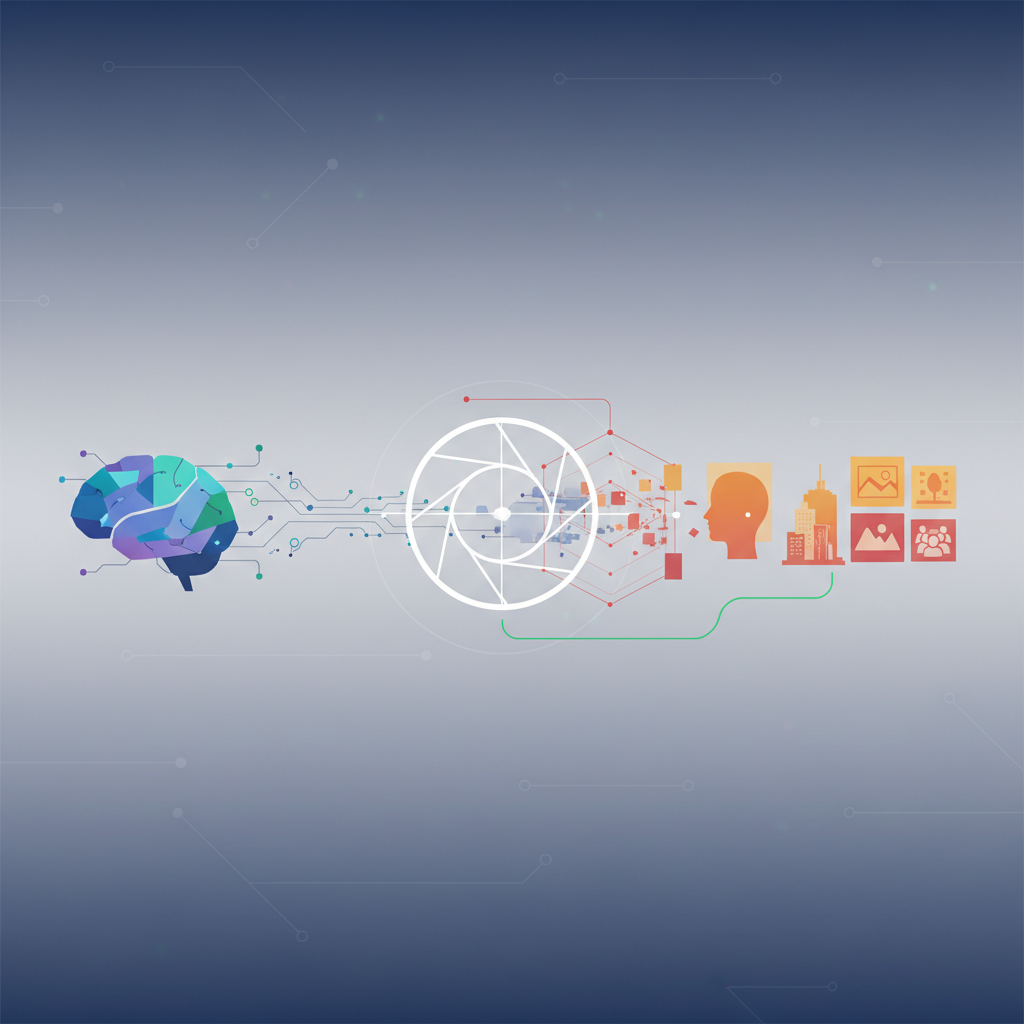
Post-Generation Filters
Finally, filters applied after generation allow for replacing or re-sampling images deemed biased. These automated systems analyze each output, detect blatant stereotypes, and propose more balanced alternatives.
Deepfakes and Provenance: Securing the Production Chain
Beyond representation biases, synthetic image generation raises issues of manipulation and misinformation. Deepfakes – hyperrealistic videos or photos where faces and voices are falsified – pose major risks to privacy, reputation, and public trust.
Automated Deepfake Detection
Classification models trained on datasets like FaceForensics++ or the DeepFake Detection Challenge identify synthetic content. Microsoft has deployed its Video Authenticator, which analyzes micro-inconsistencies in pixels and metadata to spot manipulations. Recent research shows that these detectors achieve high accuracy rates, even if the race between falsifiers and detectors remains ongoing.
Digital Marking and Watermarking
To trace the origin of an image, invisible watermarking systems embed digital signatures in pixels. These markers resist compression and retouching, allowing for verification of content authenticity. Some platforms are also exploring blockchain to archive generation history and guarantee provenance.
Provenance Frameworks and Traceability
Version tracking records document each step: initial prompt, model used, generation parameters, successive revisions. This traceability strengthens the accountability of creators and platforms, while facilitating external audits.
Bias analysis in AI shows that this systemic approach – combining statistical audit, model adjustment, prompt control, and security – constitutes the best defense against deviations.
Social and Economic Implications: Beyond Technology
Biases in AI image generation are not just a technical problem. They have real social and economic consequences. When widespread tools massively produce stereotypical visuals, these images flood the internet, shape collective perceptions, and reinforce exclusionary norms.
Underrepresented groups – women in tech, racialized individuals in leadership positions, elderly people, or people with disabilities – find themselves invisible or caricatured. This visual polarization influences hiring policies, marketing campaigns, and even the self-esteem of those concerned.
Economically, companies that neglect ethical auditing expose themselves to media scandals, boycotts, and regulatory fines. Conversely, those that invest in responsible AI pipelines gain credibility and build loyalty among audiences sensitive to inclusion.
| Bias Correction Strategy | Description | Impact |
|---|---|---|
| Dataset Diversification | Adding varied images and descriptions to balance training data. | Reduces underrepresentation and perpetuation of stereotypes. |
| Fine-tuning with Constraints | Retraining the model to penalize undesirable correlations and promote diversity. | Adjusts outputs for better demographic equity. |
| Targeted Prompt Engineering | Reformulating user queries to explicitly include desired diversity. | Bypasses inherent model biases and improves direct inclusivity. |
| Post-Generation Filters | Automatic analysis and replacement of generated images deemed stereotypical or biased. | Acts as a last line of defense to correct outputs. |
Towards Inclusive and Responsible AI Images
The path to truly ethical AI image generation involves a combination of audit technologies, corrective methods, and transparent governance. Interactive exploration tools make previously invisible biases visible. Fine-tuning and prompt engineering techniques offer concrete levers for action. Deepfake detection and digital marking systems secure the production chain.
But technology alone will not be enough. We also need regulatory frameworks, industry standards, and an organizational culture that places equity at the heart of AI development. Researchers, developers, policymakers, and users must collaborate to ensure that AI-generated images reflect the diversity of the real world – and not the prejudices of the past.
To delve deeper into these issues, it is useful to consult advancements in complementary architectures for AI, which also influence auditing and correction capabilities. Similarly, the dynamics of AI personalization illustrate how hyper-specialization can strengthen or mitigate biases depending on system design.
Generative AI has the potential to democratize visual creation. Provided that we take the necessary steps now to ensure it serves the general interest, and does not endlessly reproduce the blind spots of our societies.