Intel Gaudi vs Loihi 2: Complementary Architectures for AI

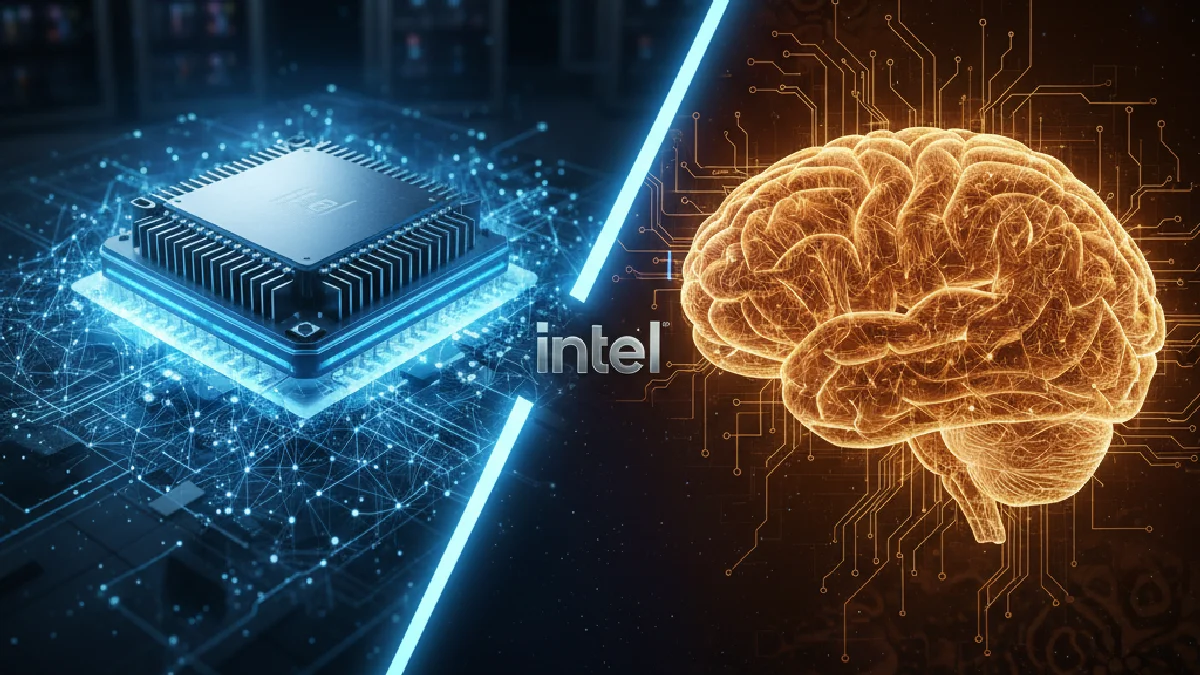
Two processors, two philosophies, one manufacturer. Intel is simultaneously deploying two families of AI chips that are diametrically opposed: Gaudi 3, a conventional datacenter accelerator designed to compete with Nvidia, and Loihi 2, an experimental neuromorphic chip inspired by the human brain. Far from being competitors, these architectures outline a complementary map of tomorrow's artificial intelligence.
Gaudi 3: Raw Power for Deep Learning
The Intel Gaudi family (Gaudi 2 and Gaudi 3) embodies the classic approach to AI acceleration. Engraved in 5nm, Gaudi 3 delivers up to 1.8 PFlops of FP8/BF16 computing power, with 128 GB of HBM2e memory and bandwidth exceeding 3 TB/s. These figures position it as a credible alternative to Nvidia GPUs for training and inference of large-scale large language models (LLMs) and generative AI.
The architecture is based on a von Neumann structure optimized for dense matrix multiplications, the core of current deep neural networks. Intel is also banking on open source to attract developers: an open software ecosystem that contrasts with Nvidia's more closed approach.
Preferred Use Cases
Gaudi 3 targets intensive cloud workloads:
- Training LLMs with billions of parameters
- Batch inference for high-traffic AI services
- Deep learning pipelines requiring throughput and predictable latency
The positioning is clear: to support hyperscalers and enterprises in their AI deployments at scale, where GPU infrastructure costs become prohibitive.
Loihi 2: The Neuromorphic Bet for Frugal AI
At the opposite end of the spectrum, Loihi 2 represents a radical departure. This second-generation research chip implements asynchronous spiking neural networks, with integrated on-chip learning. The architecture features 128 neuromorphic cores, capable of managing up to 2.3 billion synapses with time steps under 200 nanoseconds.
The claimed performance is spectacular in terms of energy efficiency: up to 100 times less power consumption and 50 times faster inference than conventional CPUs/GPUs for specific edge tasks. The Hala Point system, which integrates 1,152 Loihi 2 processors, forms the world's largest neuromorphic system with 1.15 billion neurons in a chassis the size of a microwave oven, consuming a maximum of 2,600 watts.
"This architecture rivals and exceeds the levels achieved by architectures built on GPUs and CPUs." — Intel Labs
Preferred Applications
Neuromorphic computing excels in scenarios very different from classic deep learning:
- Real-time audio/video event detection with ultra-low latency
- Adaptive robotics requiring continuous learning
- Combinatorial optimization problems
- Processing sparse and asynchronous data streams
Intel provides Lava, an open-source framework for developing neuro-inspired applications, facilitating the exploration of this approach by the research community. However, the system remains experimental and not commercially available, unlike Gaudi.
Architecture: Von Neumann vs. Event-Driven Computing
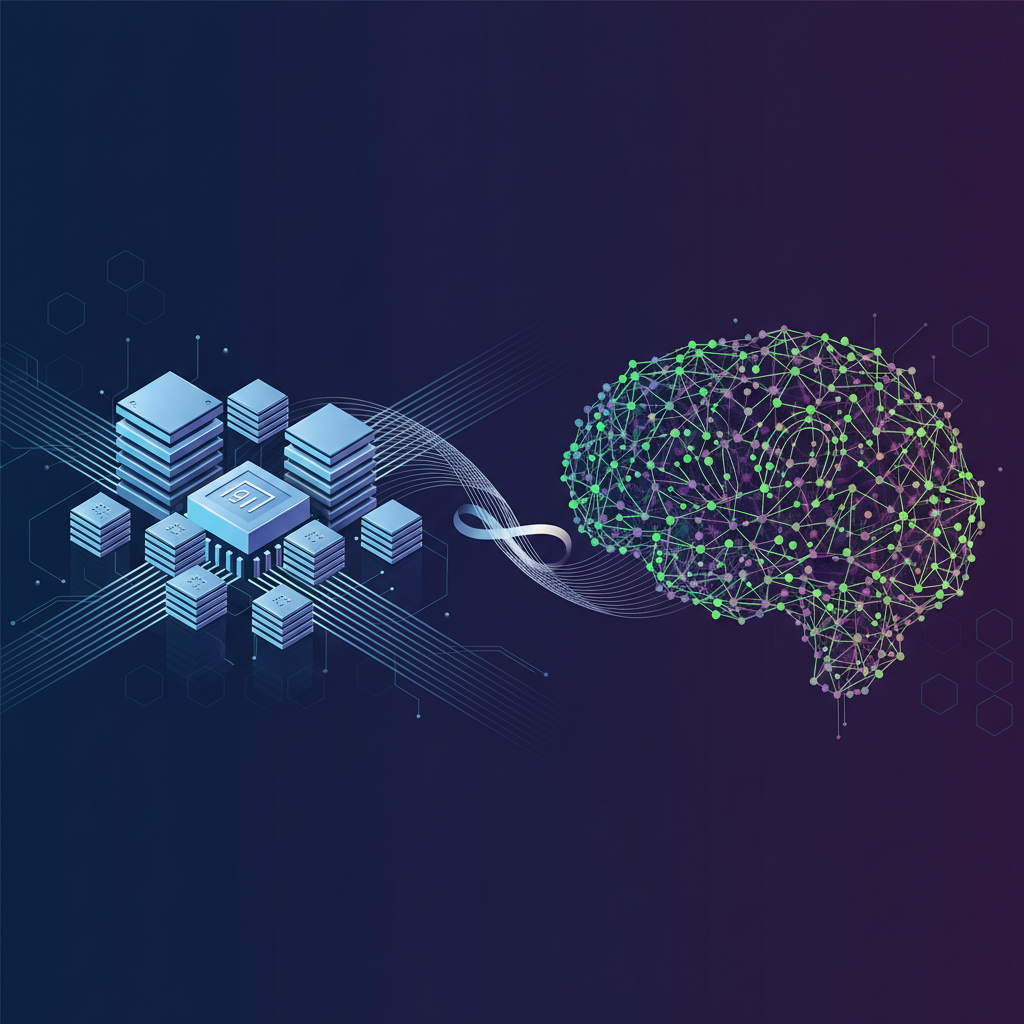
The architectural differences between these two chip families reveal two distinct computing paradigms.
Gaudi 3: Synchronous and Matrix-Based
Gaudi's architecture follows the classic model of synchronous, clock-driven computing. Data flows from memory to computing units according to a fetch-decode-execute cycle. Massive matrix operations — tensor multiplication, convolutions — are its preferred domain. This approach requires moving large volumes of data, hence the importance of high memory bandwidth.
Loihi 2: Asynchronous and Event-Driven
Loihi 2 reverses this logic. Computing is event-driven: only neurons receiving spikes are activated. This sparsity drastically reduces data movement and energy consumption. On-chip learning avoids memory round trips. The concept of "sparse computing" pursued by Loihi 2 is being studied by the U.S. Department of Defense as a future computing architecture.
This approach mimics the functioning of the biological brain, where information travels as brief electrical impulses and computation migrates to the data rather than the other way around.
Complementarity Rather Than Competition
The idea of a rivalry between Gaudi and Loihi is a misunderstanding. These architectures address fundamentally different needs within the AI ecosystem.
| Characteristic | Intel Gaudi 3 | Intel Loihi 2 |
|---|---|---|
| Primary Goal | Deep Learning Acceleration (training/inference) | Energy-efficient Neuromorphic Computing |
| Computing Model | Von Neumann, synchronous, matrix-based | Event-driven, asynchronous, spiking neural networks |
| Use Cases | LLMs, Generative AI, Cloud, High-traffic Services | Robotics, Smart Sensors, IoT, Edge AI |
| Commercial Availability | Yes | Experimental (research) |
Gaudi 3 serves current production AI: training foundation models, large-scale inference, batch pipelines requiring maximum throughput. Its role is a continuation of GPUs, with the ambition to offer a more open and economical alternative.
Loihi 2 explores the AI of tomorrow: autonomous agents at the edge, continuous learning without the cloud, real-time processing under extreme energy constraints. Its target applications — smart sensors, embedded robotics, cognitive IoT — often do not have cloud access or cannot afford its latency.
This complementarity reflects a coherent industrial strategy. Intel simultaneously invests in optimizing existing solutions (Gaudi) and exploring technological breakthroughs (Loihi), thus covering the full spectrum of current and future AI needs.
Energy Efficiency: The Challenge of the Decade
AI's energy consumption is becoming a critical issue. Current generative models require GPU farms with considerable electrical appetites. In this context, Loihi 2's neuromorphic approach could transform the economics of AI inference.
The promises of a 100x reduction in consumption for certain tasks certainly only concern specific use cases. But even more modest gains, applied at the scale of billions of daily AI assistant requests, would represent massive energy savings.
The evolution towards neuromorphic architectures could enable the deployment of artificial intelligence in environments where it is currently impractical: battery-powered connected objects, satellites, autonomous sensors in isolated areas. Event-driven computing consumes energy only when relevant information occurs, a radical contrast to the continuous operation of conventional architectures.
Challenges and Limitations of Each Approach
No architecture is without its compromises.
Gaudi 3 faces Nvidia's overwhelming dominance in the AI accelerator market. The CUDA software ecosystem remains the gold standard, with years of optimizations and a massive community. Intel must convince developers and businesses to migrate to its software stack, a considerable challenge despite the promise of a more open approach.
Loihi 2 encounters different obstacles. The immaturity of the neuromorphic ecosystem hinders adoption: few tools, lack of standards, a steep learning curve for developers accustomed to classic frameworks. Above all, the lack of commercial availability confines Loihi to the status of a laboratory curiosity, while businesses need deployable solutions now.
The intellectual challenge is not negligible: thinking in terms of spiking networks and temporal dynamics requires a mental paradigm shift compared to classic matrix-based deep learning. This cognitive transition inevitably slows down diffusion.
Perspectives: Towards a Hybridization of Paradigms?
The future could lie in intelligent orchestration of these architectures. Complex AI systems could combine cloud training on Gaudi and edge inference on Loihi, leveraging the strengths of each approach.
Some researchers are exploring neuromorphic LLMs capable of drastically reducing the energy footprint of linguistic inference. If this work succeeds, conversational models could run locally on neuromorphic chips at a few watts, rather than requiring server farms.
Intel does not have a monopoly on this dual approach. Work on neuromorphic architectures is progressing in many laboratories worldwide, while competition on conventional accelerators is intensifying with AMD, Nvidia, and custom chips from cloud giants (Google TPU, AWS Trainium, etc.).
The question may not be which architecture will "win," but rather how the industry will orchestrate this diversity to build an AI infrastructure that is both powerful, efficient, and sustainable. The needs for AI personalization and AI integrations in business will continue to shape this technological evolution.