Horizon Worlds VR vs Mobile: Meta's Major Strategic Shift
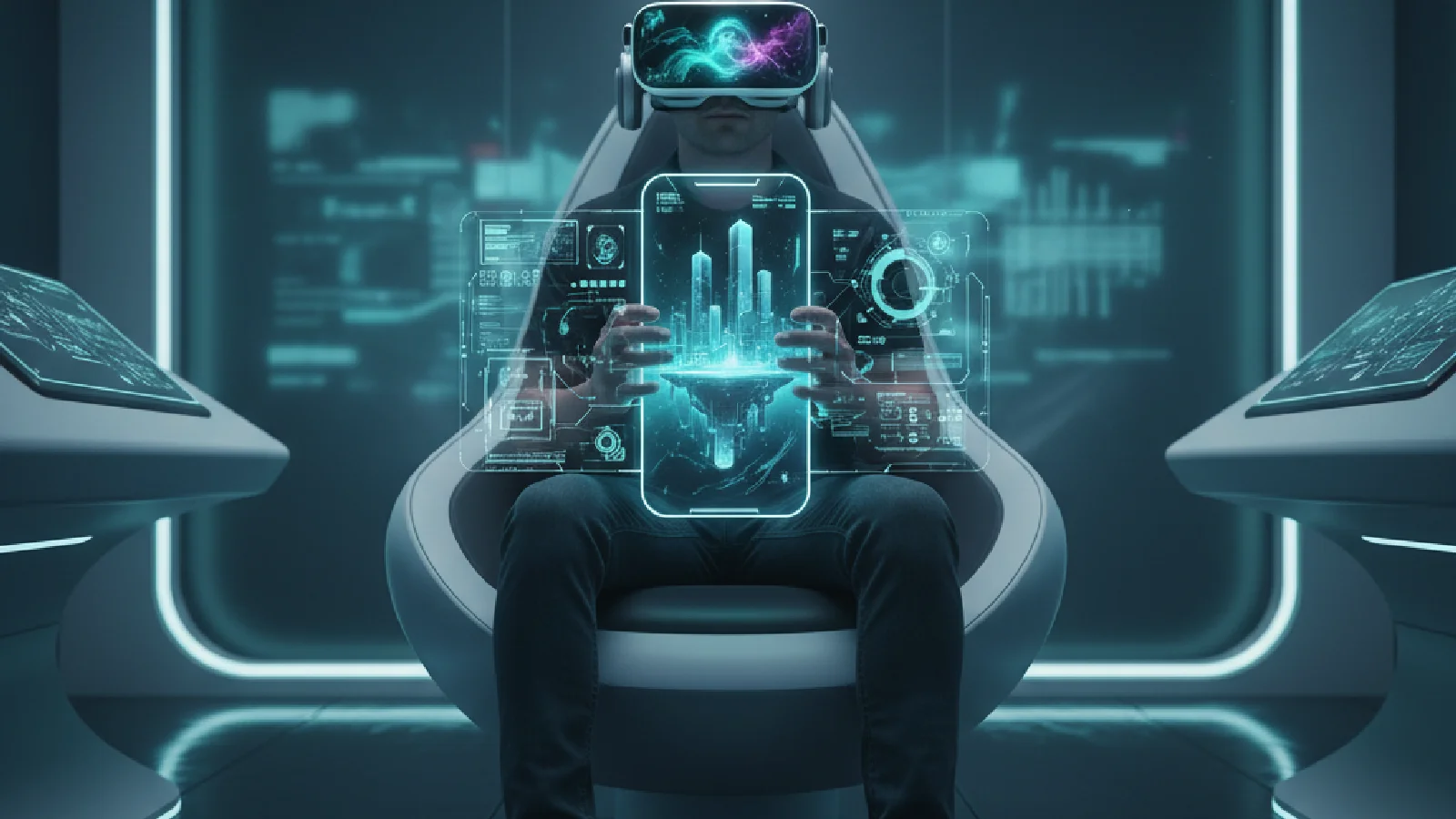
The metaverse as Mark Zuckerberg envisioned it is taking an unexpected turn. Horizon Worlds, the social virtual reality platform that was supposed to embody the future of the internet, is now splitting into two ecosystems with radically different destinies. On one side, VR is relegated to the status of a host platform for third-party content. On the other, mobile is elevated to an absolute priority, with massive resources and an aggressive roadmap. This strategic bifurcation, announced in early 2026, marks an admission: virtual reality adoption has not met expectations.
The signs were already visible. Restructurings within Reality Labs, Meta's VR/AR division, led to workforce reductions. Investments in the development of new VR worlds ceased. Meanwhile, the mobile version of Horizon Worlds is experiencing strong growth in activity on iOS and Android, confirming public appetite for accessible experiences without expensive hardware.

VR in Maintenance Mode: An Assumed Retreat Strategy
Meta has officially repositioned its VR platform as a support for third-party content rather than a ground for internal innovation. According to Samantha Ryan's official announcement, VP Content for Reality Labs, the company will no longer develop new proprietary games or worlds for Horizon Worlds in VR. Existing worlds remain accessible, but no major investment is planned to enrich the immersive experience.
The Meta Horizon Store becomes the focal point of this new approach: an open ecosystem where third-party developers can distribute their creations, while Meta focuses on infrastructure and content discovery. Monetization and distribution tools are strengthened to encourage independent studios to take over.
This transformation is accompanied by team reductions. Layoffs in Reality Labs affect approximately 10% of the workforce, an adjustment described as "necessary to ensure long-term viability" by management. The goal: to concentrate resources where user traction is measurable.
“VR and Worlds have fundamentally different needs, tools, and trajectories for success. By separating them, we can provide more targeted support to each community for the long term.” — Samantha Ryan, VP Content, Reality Labs
Mobile First: The New Heart of the Horizon Empire
While VR keeps a low profile, mobile is exploding. The iOS/Android version of Horizon Worlds, powered by the new Horizon Engine, becomes the spearhead of Meta's strategy in 2026. Downloads are growing rapidly, user engagement is strengthening, and the platform is attracting a broader demographic than VR.
The advantages are clear: no hardware barrier, instant access, a potential audience of billions of users. Meta is banking on scalability and monetization to transform Horizon Worlds into an economically viable social platform. Creator tools for developers are being modernized, feedback systems improved, and promotional campaigns concentrated on this channel.
The mobile roadmap includes:
- Extended social features: integrated messaging, live events, creator collaborations
- A robust monetization ecosystem: in-app ads, virtual purchases, commissions on premium content
- Strategic partnerships: integration with Instagram, Facebook, and WhatsApp to maximize distribution
The gamble is clear: build a massive user base on mobile before potentially converting them to VR when the technology is more mature and accessible.

VR Developers: Between Disillusionment and Adaptation
For creators who have invested time and resources in VR world creation, this strategic pivot feels like a disappointment. Many built their businesses around the promise of an immersive metaverse, funded by Meta's support programs. Today, they must either pivot to mobile or accept a stagnant VR audience.
Some studios have already announced their transition. Porting tools between VR and mobile are offered by Meta, but conversion is not always straightforward: game mechanics, user interface, and economic models differ radically between the two platforms.
The Meta community forum has seen an influx of messages from developers expressing frustration and uncertainty. Meta responds with support programs, technical webinars, and transition assistance funds, but the sense of rupture is palpable.
However, some see this as an opportunity. The mobile market offers an infinitely larger audience, shorter development cycles, and potentially higher revenues. Agile studios, capable of adapting quickly, could benefit from this strategic shift.
Reality Labs: Profitability Finally in Sight?
The abysmal losses of Reality Labs have long worried investors and analysts. Since 2021, the division has accumulated deficits, with billions swallowed up in R&D, marketing, and creator subsidies. Pressure is mounting to turn this investment into tangible revenue.
The pivot to mobile addresses this financial urgency. Mobile economic models – advertising, in-app purchases, subscriptions – are proven and profitable. Conversely, VR remains an expensive niche, with low margins and slow adoption.
Meta hopes that this rationalization will allow Reality Labs to reduce its losses by 2027 and achieve financial balance in the medium term. Maintaining minimal VR support avoids a complete abandonment that would harm the company's image, while freeing up resources for more promising projects.
Ray-Ban Meta smart glasses, for example, are experiencing notable success with several million units sold. These consumer devices represent a credible alternative to heavy VR, and Meta is now dedicating increasing attention to them.
Meta's Strategy for Reality Labs: VR vs Mobile
| Key Aspect | VR (Horizon Worlds) | Mobile (Horizon Worlds) |
|---|---|---|
| Objective | Host platform for third-party content, minimal support | Spearhead of strategy, targets growth and monetization |
| Investment | Team reduction (-10%), end of proprietary VR development | Massive resources, aggressive roadmap |
| Monetization | Via the Meta Horizon Store for third parties | In-app advertising, virtual purchases, subscriptions, partnerships |
The Future of the Metaverse: A Revised Vision
This repositioning raises a fundamental question: was the metaverse as popularized in 2021 a premature vision? Users seem to prefer accessible, lightweight experiences integrated into their daily tools rather than immersive universes requiring dedicated equipment and learning.
Meta is not giving up on VR, but is adjusting the timeline and priorities. The mobile strategy aims to build a massive community that, in a few years, could naturally migrate to immersive experiences when the technology is more mature, more affordable, and more ergonomic.
Other industry players, such as Apple with Vision Pro or ByteDance with Pico, are closely observing this transformation. The virtual reality market is still under construction, and the lessons learned by Meta will influence the entire industry.
What are the Consequences for the VR Ecosystem?
Beyond Meta, this decision impacts the entire VR ecosystem. Independent developers, content studios, and peripheral manufacturers must reconsider their strategies. If the market leader reduces its commitment to social VR, what place remains for smaller players?
Some competing platforms, such as VRChat or Rec Room, could benefit from this weakening by attracting users and creators disappointed by Meta's shift. These communities, more organic and less dependent on massive investments, could embody a credible alternative.
At the same time, the pure VR gaming industry – with titles like Half-Life: Alyx or Beat Saber – continues to grow modestly but steadily. The market is fragmenting between social experiences (struggling) and immersive entertainment (slowly progressing).
The question of interoperability between platforms also becomes crucial. If Horizon Worlds in VR becomes a simple hub for third-party content, openness to other ecosystems could accelerate. Meta has already announced partnerships with third-party game engines and open standards to facilitate this transition.
To learn more about the ongoing transformations in the world of AI and emerging technologies, consult our analysis on automation and AI in electronic waste sorting, another sector where artificial intelligence is redefining economic models. Similarly, audio-visual multimodality illustrates how interfaces are evolving towards greater accessibility, a relevant parallel with Meta's VR-mobile transition.
Towards Sustainable Coexistence or Gradual Extinction?
The ideal scenario for Meta would be a harmonious coexistence between VR and mobile, with each platform serving complementary uses. Mobile for discovery, light socialization, and quick interactions. VR for deep immersive experiences, special events, and ambitious creations.
But there is a risk that this strategic separation will eventually lead to a gradual abandonment of social VR. If investments remain limited, if innovation stagnates, and if users do not return, Horizon Worlds in VR could become a relic, maintained by inertia rather than conviction.
The coming quarters will be decisive. Meta will have to demonstrate that its mobile version can generate significant engagement and revenue, while maintaining a VR community active enough to justify technical support. A delicate balance, in a sector where expectations have been excessively high and disappointments brutal.
What is certain is that the metaverse of 2026 bears little resemblance to Zuckerberg's initial vision. More pragmatic, more fragmented, but potentially more economically viable. Time will tell if this hybrid strategy was a clever compromise or an admission of failure.
FAQ (JSON format - translate question and answer fields only): [ { "answer": "Meta is repositioning its VR strategy to focus on hosting third-party content via the Meta Horizon Store rather than internal creation. Resources are being reallocated to mobile, where adoption and user engagement are significantly higher. Existing VR worlds remain accessible, but no new proprietary VR projects are planned.", "question": "Why is Meta abandoning the development of new VR worlds for Horizon Worlds?" }, { "answer": "No, despite contradictory initial announcements, Meta has confirmed that Horizon Worlds will remain accessible on Quest headsets. However, support will be minimal, with a clear focus on mobile development. VR is becoming a host platform rather than an innovation axis.", "question": "Will the VR version of Horizon Worlds disappear completely?" }, { "answer": "Mobile eliminates the barrier of expensive hardware (VR headsets costing hundreds of euros), offers instant access from a smartphone, reaches a potential audience of billions of users, and allows for proven economic models like advertising and in-app purchases. User engagement is also stronger there.", "question": "What advantages does the mobile version offer compared to VR?" }, { "answer": "Meta offers porting tools to convert VR experiences to mobile, technical support programs, and transition assistance funds. Studios must rethink their game mechanics, interfaces, and economic models to adapt to mobile specificities.", "question": "How can VR developers adapt to this change?" }, { "answer": "Not necessarily. Meta is adjusting its timeline and priorities by favoring immediate accessibility via mobile, while keeping a foot in VR to capitalize on its future evolution. The immersive metaverse remains a long-term goal, but with more realistic expectations regarding the pace of adoption and the required technological maturity.", "question": "Does this strategy mean the end of the immersive metaverse?" } ]