DAC: How Innovation Drastically Reduces CO2 Prices
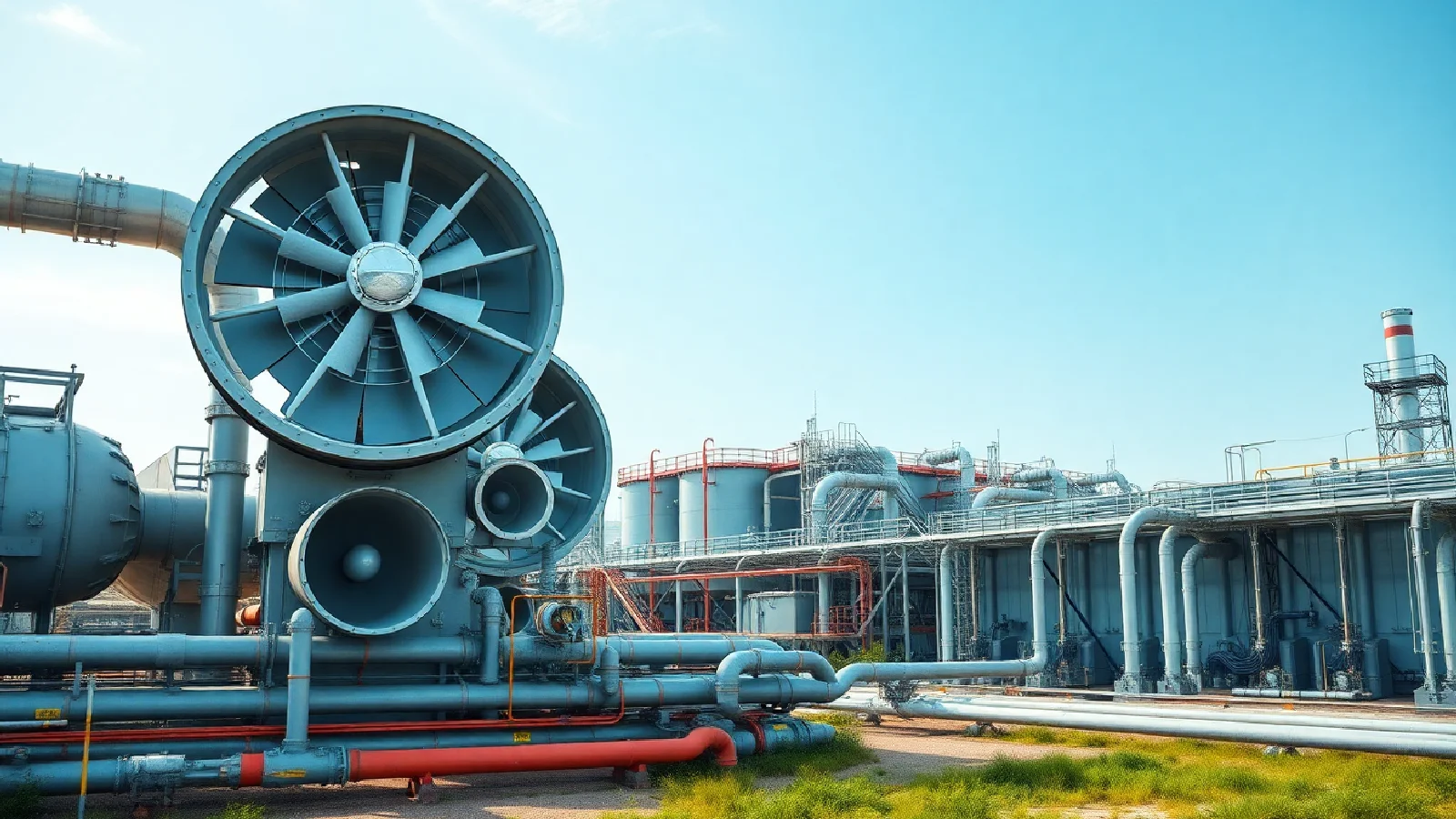
Promises of carbon neutrality face a stark reality: reducing emissions alone will not suffice. To meet the commitments of the Paris Agreement and limit global warming, it will also be necessary to remove CO₂ already present in the atmosphere. This is where Direct Air Capture (DAC) comes in, a technology that extracts carbon dioxide directly from ambient air. Long considered too expensive, it is now undergoing a radical transformation thanks to technological innovation and economies of scale.

Materials Chemistry at the Heart of the Revolution
Energy efficiency is the determining factor in the operational cost of DAC facilities. Traditional solid sorbent systems required high temperatures to release captured CO₂, leading to significant energy consumption. New generations of materials are changing the game.
Emerging technologies now rely on liquid solvents capable of regenerating at temperatures around 100 °C, compared to several hundred degrees previously. This optimization drastically reduces energy requirements, which represent the majority of operating costs. According to Climeworks, a pioneer in the sector, the use of low-temperature heat transforms the economic equation for facilities.
Electrochemical approaches represent an even more promising breakthrough. Companies like Sustaera claim efficiencies exceeding 90%, whereas traditional thermal technologies peak around 40%. This difference in efficiency directly translates to a three-to-five-fold reduction in capture costs, with estimates potentially below $100/tCO₂ under optimal conditions, as reported by gasworld and Idtechex.
| DAC Technology | Regeneration Temperature | Typical Efficiency | Estimated Cost (Optimal) |
|---|---|---|---|
| Solid Sorbents (traditional) | Several hundred °C | ~40 % | High |
| Liquid Solvents (new generation) | ~100 °C | Not Specified | Reduced |
| Electrochemical Approaches | Not Specified | >90 % | < $100/tCO₂ |
Process Engineering: Optimizing Existing Systems
Innovation is not limited to materials. Engineers are redefining the very architecture of facilities by utilizing proven industrial equipment. The use of standard cooling towers, for example, significantly accelerates deployment while reducing initial capital expenditures.
Facility modularity is another major optimization lever. Unlike traditional energy infrastructures that require massive economies of scale, modular DAC systems allow for:
- Rapid deployment across multiple geographic sites
- Pooling of supply chains between facilities
- Progressive dilution of fixed research and development costs
- Fine adaptation to available local energy sources
This architectural flexibility also facilitates integration with intermittent renewable energies. Facilities can adjust their operation in real-time according to the availability of low-cost solar or wind energy, transforming a potential handicap into a competitive advantage.

Economies of Scale: From Theory to Practice
The learning effect observed in other technological sectors is beginning to materialize for DAC. Each doubling of installed capacity is accompanied by a measurable cost reduction, following a learning curve comparable to that of solar photovoltaics fifteen years ago.
"Traditional thermal technologies reach their maximum efficiency around 40%. We have recently crossed the 90% efficiency threshold, using much less capital than conventional thermal approaches." — Cory Sanderson, CTO of Sustaera
The standardization of capture modules represents a considerable optimization lever. Instead of designing each installation as a unique project, developers are now creating standardized units that can be replicated and iteratively improved. This approach allows for sharing innovations between sites and accelerating overall technological maturation.
Current cost trajectories offer encouraging prospects. According to analysis by the International Energy Agency, projections indicate a cost of $300/tCO₂ by mid-century for mature technologies. In the most ambitious scenarios, supported by rapid scaling and continuous optimization, some experts even envision reaching $100/tCO₂ in the long term.
The Regulatory and Financial Ecosystem as an Accelerator
Technological innovation alone is not enough. The regulatory framework and financial support mechanisms play a decisive role in the economic equation of DAC. Carbon tax credits, particularly in the United States with the 45Q program, transform the economic viability of projects by guaranteeing predictable revenues for operators.
Carbon pricing mechanisms create a market for CO₂ removal credits. Companies seeking to neutralize their residual emissions constitute a growing demand, willing to pay for permanent capture solutions. This voluntary market, already valued at several billion dollars, directly finances the deployment of facilities and their continuous improvement.
Direct integration of low-cost renewable energy also transforms operational costs. In certain regions benefiting from exceptional sunshine or geothermal resources, the marginal cost of energy becomes negligible, allowing capture costs below $200/tCO₂ to be achieved today for some pilot projects.
This convergence between technological advancements and institutional support creates a virtuous cycle: guaranteed outlets encourage R&D investments, which in turn lower costs and expand the potential market. To discover how other energy technologies are transforming the climate landscape, read our article on green hydrogen and innovative materials.
Persistent Challenges to Overcome
Despite undeniable progress, obstacles remain. The issue of scaling up remains central. Moving from a few thousand tons of CO₂ captured annually to hundreds of millions requires not only massive investments but also securing robust supply chains and training skilled labor.
The availability of low-carbon energy is another major challenge. If all DAC facilities were to operate with electricity from gas or coal-fired power plants, the net carbon footprint would be disastrous. The supply of renewable energies or industrial waste heat therefore becomes an absolute prerequisite.
Permanent storage of captured CO₂ also requires dedicated infrastructure. Transport to geological sequestration sites and the guarantee of no leakage over millennia add costs and regulatory complexities. The vertical integration of the entire value chain — from capture to storage — represents a considerable logistical and financial challenge.
Towards Real Economic Competitiveness?
The question is no longer whether DAC will become competitive, but when and at what scale. Current trajectories suggest that certain application niches — heavy industries in need of carbon credits, sites benefiting from abundant renewable energy — will achieve economic viability in the coming years.
The emblematic goal of $100/tCO₂, often presented as the threshold for universal competitiveness, remains subject to debate. As an in-depth analysis by Mission Zero explains, this figure, while symbolic, does not reflect the diversity of operational contexts or the variability of costs depending on regions and available energy sources.
DAC's competitiveness must also be evaluated against alternatives. Compared to other CO₂ removal options — reforestation, bioenergy with capture, ocean fertilization — DAC offers the advantage of permanence and verifiability. CO₂ captured and geologically stored will not return to the atmosphere, unlike natural solutions vulnerable to fires or land-use changes.
In the broader context of the energy transition, DAC is part of other disruptive innovations. Modular nuclear reactors for data centers or advancements in technological recycling illustrate this dynamic of complementary innovations that, together, are reshaping the global energy landscape. Furthermore, direct air capture, e-methanol, and CO₂ electrolysis technologies won the "Best CO2 Utilization 2026" award, highlighting their innovation potential as mentioned by chemeurope.
Outlook: Continuous Innovation as a Driver
The future of DAC relies on continuous innovation on several simultaneous fronts. New-generation materials, optimized electrochemical processes, intelligent integration with energy networks, and industrial standardization are all levers for improvement.
Current pilot projects provide valuable data that feeds the next generation of technologies. This rapid learning loop, characteristic of fast-growing technological sectors, suggests that costs will continue to decline in the coming years.
Direct air capture will undoubtedly not be the miracle solution on its own. But combined with massive decarbonization of the economy, it represents an indispensable tool for achieving global climate goals. Current technological advancements are progressively transforming this promise into tangible economic reality.
FAQ (JSON format - translate question and answer fields only):