Floating vs. Fixed Offshore Wind: What's the Energy Future?
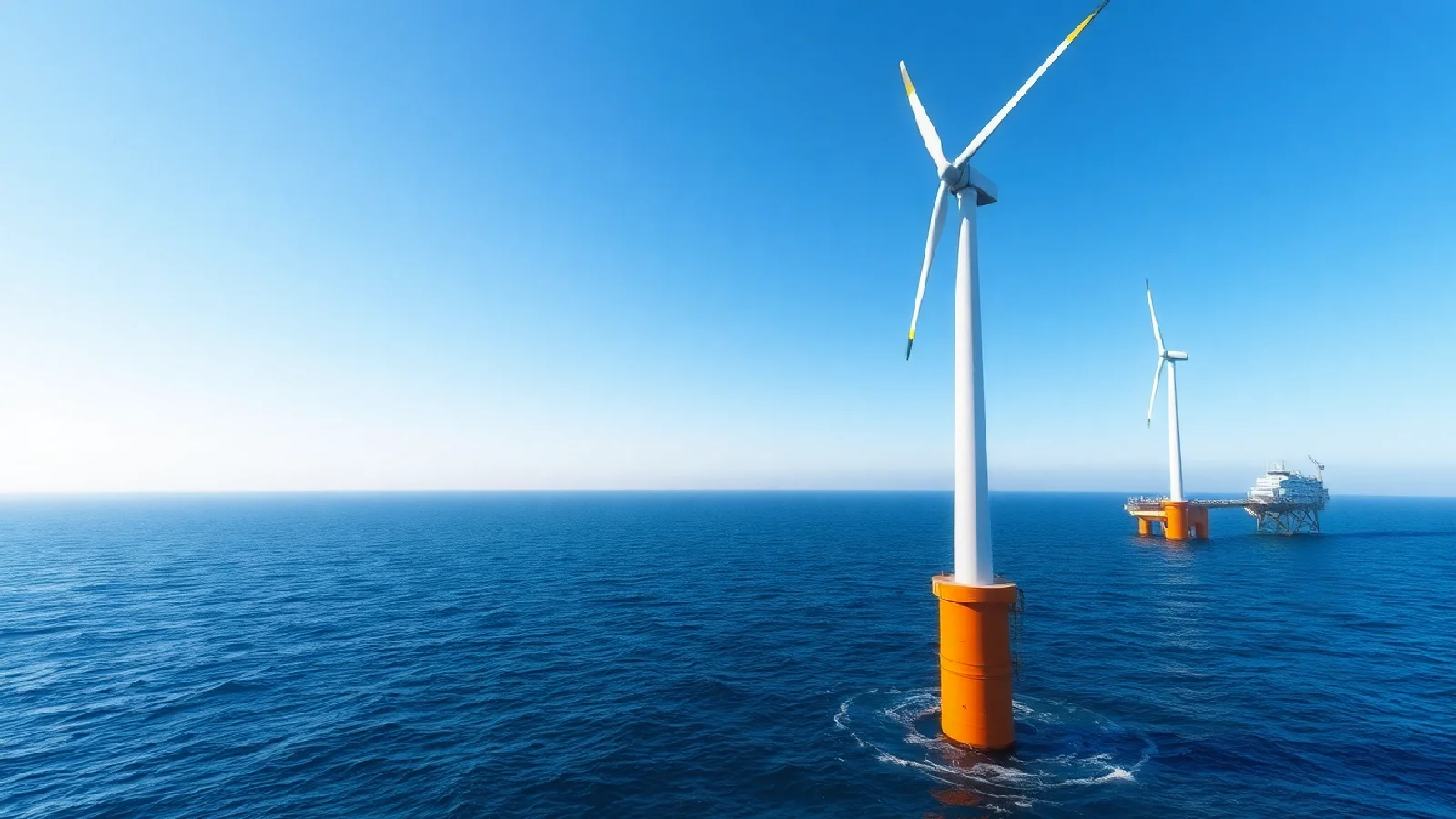
Offshore wind energy currently represents one of the pillars of the global energy transition. Faced with climate challenges and the need to diversify renewable energy sources, two technologies are vying for the future of the seas: fixed offshore wind and floating offshore wind.
While the former has already proven its commercial viability, the latter opens up unprecedented opportunities to exploit previously inaccessible marine areas. This technological revolution raises crucial questions: what are the fundamental differences between these approaches? How do they compare in terms of costs and performance? What will be the impact of each technology on the energy future?
Fixed Foundations: Technological Maturity for Efficiency
Fixed offshore wind currently dominates the global market with proven technology and controlled costs. This approach relies on foundations solidly anchored to the seabed, primarily in the form of monopiles or jacket structures.
Fixed installations offer significant advantages. Their investment cost remains 30 to 50% lower than floating solutions, with an LCOE (Levelized Cost of Energy) reaching approximately €0.05/kWh in pioneering countries like Denmark or the Netherlands. This competitiveness is due to the relative simplicity of installation and maintenance operations.
However, this technology faces a major constraint: depth limitation. Fixed foundations can only be economically installed in waters less than 40 to 50 meters deep, thus restricting their deployment to shallow coastal areas.
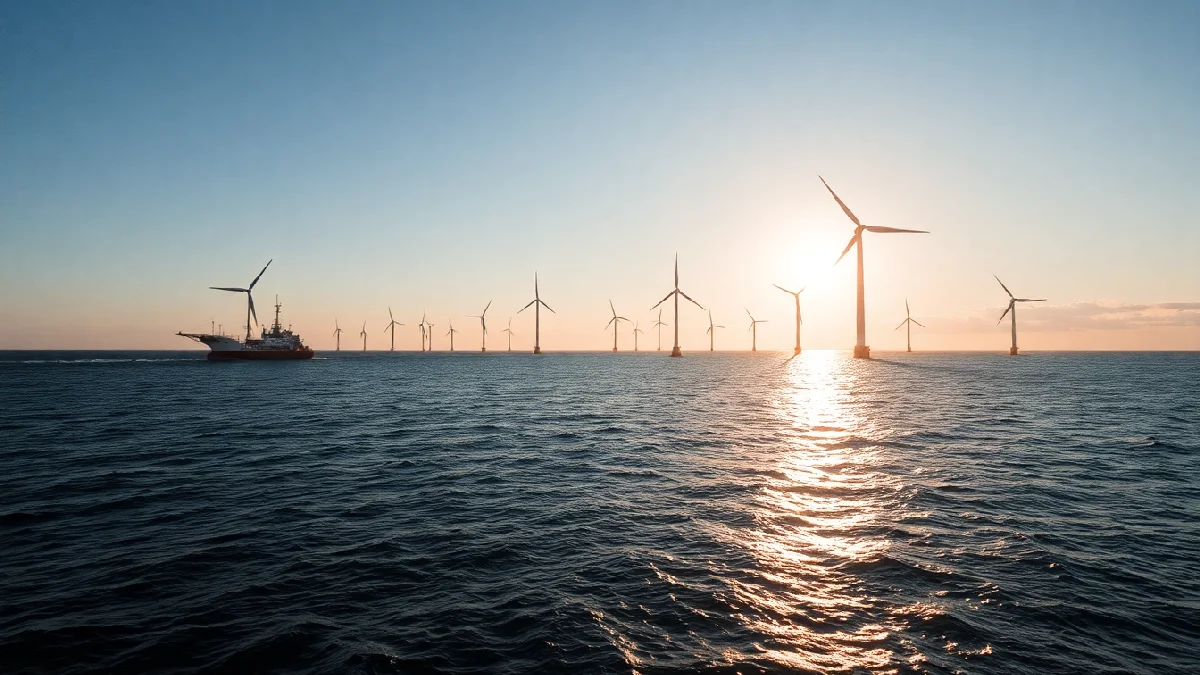
The energy performance of fixed farms already reaches remarkable levels. In the North Sea, some installations show capacity factors above 50%, demonstrating the efficiency of this technology in optimal marine conditions.
Floating Wind: Innovation for New Horizons
Floating offshore wind revolutionizes the approach to marine energy exploitation by eliminating depth constraints. Thanks to floating platforms maintained by sophisticated anchoring systems, this technology opens access to millions of square kilometers of deep waters.
The energy potential of floating wind is considerable. European studies estimate that the exploitable deep-water area could support several hundred additional gigawatts, or even more than a terawatt by 2050. This geographical expansion allows access to stronger and more consistent winds, typical of the open sea.
The advantages of floating wind are not limited to energy potential:
- Enhanced social acceptance: minimum distance of 5 to 10 km from the coast
- Reduced visual impact: minimized visibility from the coast
- Installation flexibility: construction in port then towing to site
However, economic challenges remain significant. The CAPEX (initial investment cost) of floating wind exceeds that of fixed by 30 to 50%, mainly due to the complexity of floating foundations and long-distance cabling.
Comparative Cost Analysis: An Evolving Economic Equation
The economic comparison between the two technologies reveals contrasting dynamics. Fixed offshore wind currently benefits from an undeniable competitive advantage, with production costs among the lowest in the energy sector.
"The costs of fixed offshore wind have fallen by nearly 70% in a decade, establishing this technology as one of the most competitive energy sources in the world."
Floating offshore wind, although currently more expensive, is experiencing a rapid downward trend in prices. Experts predict a cost convergence by the early 2030s, thanks to economies of scale and continuous technological improvements.
OPEX (operating costs) also differ significantly. Fixed wind benefits from simplified maintenance due to coastal proximity, while floating wind requires complex logistical operations in the open sea, impacting operating costs.
| Characteristic | Fixed Offshore Wind | Floating Offshore Wind |
|---|---|---|
| Depth Limitation | Less than 40-50m | None |
| Investment Cost | Lower (30-50%) | Higher (30-50%) |
| Technological Maturity | Proven, mature | Rapidly developing |
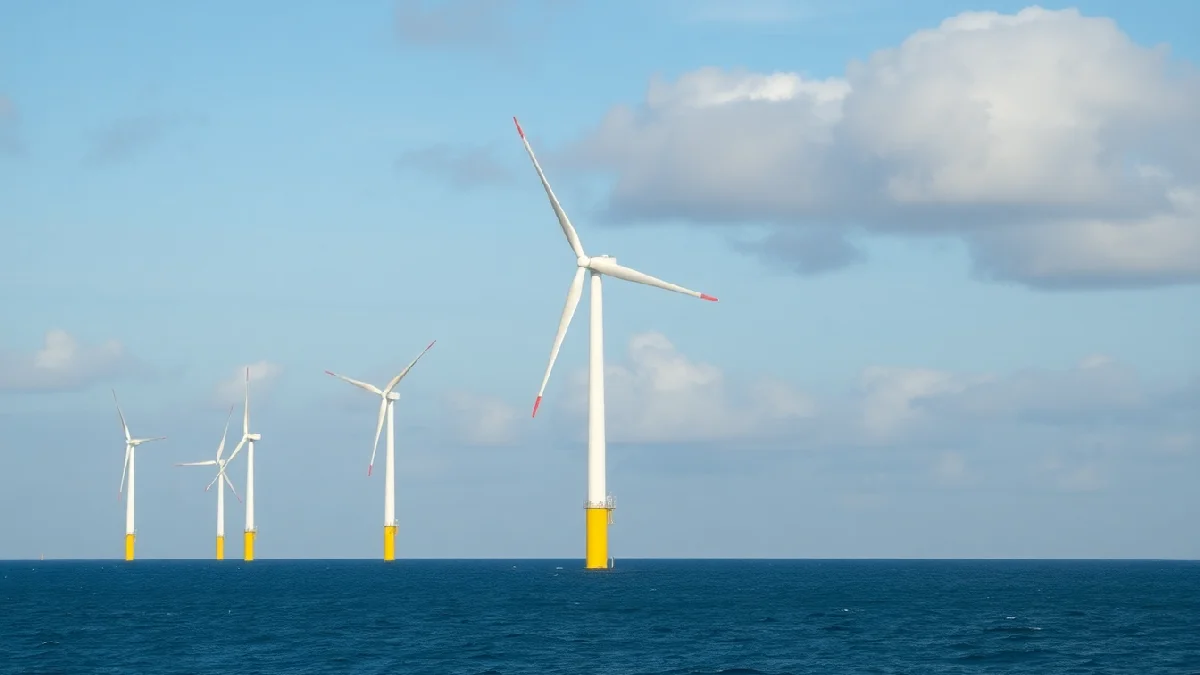
This cost evolution is accompanied by promising technological innovations. New anchoring systems and optimized platforms are gradually reducing the economic gap between the two approaches.
Environmental Impact: Distinct Ecological Footprints
Environmental analysis reveals contrasting impact profiles between the two technologies. Fixed wind generates significant disturbances during installation, particularly through monopile piling, which produces significant underwater noise pollution.
Floating wind presents a different environmental profile. Its installation minimizes seabed work, reducing the impact on benthic ecosystems. The distance from the coast also limits interactions with traditional coastal activities such as artisanal fishing.
However, floating anchor lines can affect pelagic fauna, creating new ecological challenges specific to deep waters. Impact studies must now integrate these novel considerations to optimize coexistence with marine ecosystems.
Social acceptability is a major advantage of floating wind. Its distance from the coast significantly reduces local opposition, facilitating project development and accelerating authorization procedures.
Development Prospects: Complementary Strategies for the Future
Development prospects outline a future where the two technologies coexist, specializing in their areas of excellence. Renewable marine energies, as reported in the 2025 observatory of marine energies report, represent a key sector for the ecological transition, with considerable industrial and employment stakes.
Fixed wind will continue to dominate shallow coastal areas where its technological maturity and competitive costs make it the preferred solution. Ongoing projects in the North Sea, particularly the 150 gigawatts announced by Germany, Denmark, the Netherlands, and Belgium by 2050, confirm this trend.
Floating wind is positioned as the technology of the future for exploiting the vast potential of deep waters. France aims for 50 GW of offshore wind by 2050, a significant portion of which will be floating technology, particularly in the Mediterranean where the seabed quickly becomes deep.
This strategic complementarity is part of a broader logic of territorial optimization. Just as solar yield maximization solutions diversify the photovoltaic approach, offshore wind technologies each exploit their specific advantages.
Continuous innovation in storage systems and grid integration strengthens the viability of both approaches. Developments in lithium battery assembly contribute to optimizing the integration of these intermittent energy sources.
Conclusion
The future of offshore wind energy is not about an opposition between fixed and floating technologies, but rather their strategic complementarity. Fixed wind, with its technological maturity and competitive costs, will continue to structure the development of shallow coastal areas. At the same time, floating wind opens up unprecedented opportunities to exploit the considerable potential of deep waters.
This technological synergy is part of a broader dynamic of energy diversification, where each solution finds its optimal place according to geographical, economic, and environmental constraints. The major challenge now lies in accelerating industrial deployment and building the skills of national sectors to seize the opportunities of this marine energy revolution.
The coming years will be decisive in realizing this potential and making offshore wind a pillar of European energy sovereignty.
FAQ (JSON format - translate question and answer fields only):