Offshore Wind: Is France Catching Up with the Leaders?
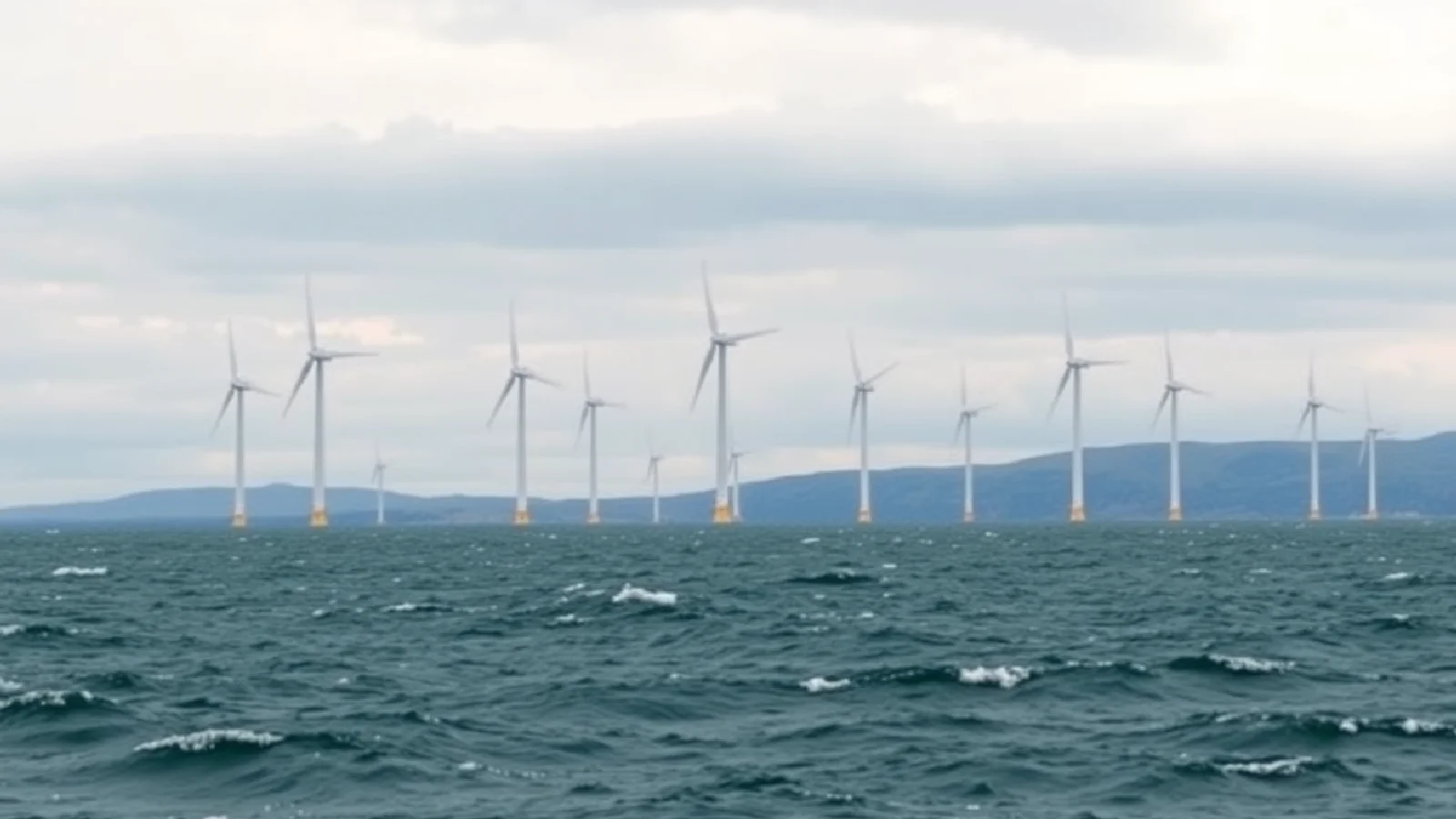
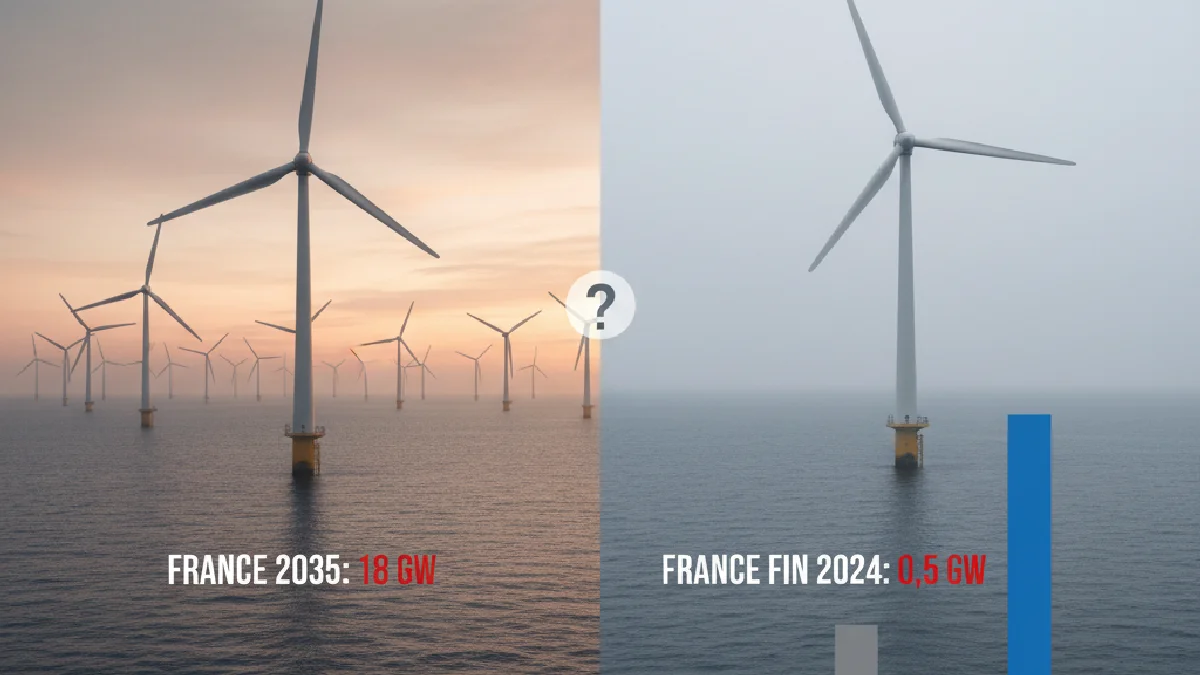
France has colossal ambitions for offshore wind: 18 GW by 2035 and 45 GW by 2050. However, with barely 0.5 GW installed by the end of 2024, France is significantly behind its European neighbors. The United Kingdom leads with over 10 GW already in service, while Germany exceeds 2 GW, and both Denmark and the Netherlands each have approximately 1 GW. This situation raises the question: can France's strategy close this technological and industrial gap?
France's Lag Behind European Leaders
The observation is clear: France lags behind its neighbors in the deployment of offshore wind energy. According to the Institute for Energy Economics and Financial Analysis (IEEFA), the main obstacles have been lengthy administrative procedures, legal challenges, and opposition from local stakeholders.
The United Kingdom is a pioneer, with a stable regulatory framework since 2015 and regular calls for tenders. The country has successfully created a mature supply chain that attracts international investors. Germany, for its part, has benefited from streamlined authorization procedures and robust public funding to achieve its goals.
"Unlike other European countries, France chose early on to protect households through tariff shields, largely financed by the proceeds from remuneration supplements that renewable energy sources paid back to the state."
Identified French Obstacles
Regulatory difficulties are the main impediment to French development. Authorization procedures span several years, punctuated by frequent legal challenges. Added to this are financing challenges, despite the existence of a green tax credit until 2025, and persistent local opposition that complicates the social acceptability of projects.
This situation contrasts with the pragmatic approach of neighboring countries, which established stable frameworks and targeted financial incentives as early as the 2010s.
| Country | Offshore Wind Capacity (end 2024) | Regulatory Framework / Funding |
|---|---|---|
| United Kingdom | > 10 GW | Stable since 2015, regular tenders |
| Germany | > 2 GW | Streamlined procedures, robust public funding |
| Denmark | ~ 1 GW | Stable frameworks, targeted incentives |
| Netherlands | ~ 1 GW | Stable frameworks, targeted incentives |
| France | 0.5 GW | Lengthy procedures, appeals, local opposition |
France's Accelerated Catch-Up Strategy
To address this delay, France has embarked on an ambitious catch-up strategy since 2022. In October 2024, the government published a map of priority development zones for 2035 and 2050, thereby simplifying maritime spatial planning.
Recent legislative reforms aim to streamline processes: the variable-characteristic permit (ESSSOC law) offers more flexibility to developers, while the pooling of public debates (APER law) accelerates citizen consultations.
Quantified Objectives and Timeline
The multi-year energy program (PPE) sets precise milestones:- 1 GW of new capacity commissioned in 2024
- 18 GW by 2035
- 45 GW by 2050
These objectives are accompanied by the launch of calls for tenders AO9 and AO10, representing an additional 12.5 GW currently being allocated. KPMG highlights that France is pursuing its ambition to become a European leader by making offshore wind a key lever for its energy independence.
Innovation as a Competitive Differentiator
France is banking on technological innovation to compensate for its time lag. The development of floating wind is its main differentiating asset, allowing it to exploit deeper and less contentious marine areas than bottom-fixed wind.
Gigantic Turbines and Pilot Projects
New-generation French turbines now exceed 20 MW of unitary power, compared to an average of 15 MW for European competitors. Four floating pilot farms are under development, including the Dunkirk project, which aims for a cost below €50/MWh.
This technological orientation is based on the expertise of France Energies Marines, a research institute that employs 90 staff and has an annual budget of €10.6 million for four dedicated R&D programs.
Offshore wind could prove complementary to other renewable technologies, as explained in our analysis on floating vs. fixed offshore wind, which details the advantages of each technological approach.
Industrial Issues and Competitiveness
Large-scale deployment raises crucial questions about the structuring of the French value chain. While the sector attracts investors, uncertainties remain regarding the future of national factories and competitiveness in the face of rising raw material costs.
National Industrial Ecosystem
The France 2030 plan and the European Net Zero Industry Act support the creation of a national industrial ecosystem. The objective: to reduce dependence on foreign equipment manufacturers and create added value within French territory.
The modernization of port infrastructure represents a major challenge. French ports must adapt to the increasing dimensions of wind components and develop their logistical capacities to remain competitive.
This energy transition is part of a broader approach to diversifying the electricity mix, similar to the solar solutions described in our guide on how to maximize solar yield.
Environmental Integration and Acceptability
Environmental integration is a major issue for the social acceptability of offshore wind projects. France is developing reinforced environmental monitoring protocols, drawing inspiration from European best practices.
Coexistence with Marine Ecosystems
Environmental impact studies now include the analysis of interactions between wind farms and marine biodiversity. The DRACCAR wire program, led by France Energies Marines, specifically studies these interactions at the Fécamp site.
This preventive approach aims to anticipate conflicts of use with fishing, maritime transport, and the protection of marine species, three essential sectors of the French coastal economy.
Prospects and Challenges Ahead
To achieve its ambitions, France must double its current pace of investment in offshore wind energy. According to the KPMG report, despite government commitments and progress in allocating new projects, industrial sustainability and the modernization of port infrastructure remain major challenges.
The success of this strategy will depend on France's ability to:- Maintain a sustained pace of new project allocation
- Develop a competitive industrial sector at the European level
- Ensure social acceptability through enhanced consultation
- Innovate in floating technologies to conquer new markets
French offshore wind is at a decisive turning point. After years of delay, the recent acceleration and the bet on technological innovation could allow France to catch up with its European neighbors, or even surpass them in certain segments like floating wind. This transition is part of a broader logic of energy autonomy, which individuals can also adopt by installing DIY solar panels.
Conclusion
France's offshore wind strategy revolves around accelerated catch-up and a technological bet on innovation. With 0.5 GW installed compared to 10 GW in the United Kingdom, France's delay remains considerable, but the stated ambitions – 18 GW by 2035 – demonstrate strong political will.
France's approach is distinguished by three axes: recent regulatory simplification, the development of floating wind, and the creation of a national industrial ecosystem. These orientations could transform a temporal handicap into a competitive advantage, particularly in emerging deep-water wind markets.
The success of this strategy will nevertheless depend on France's ability to maintain the pace of project allocation, develop a competitive industrial sector, and ensure social acceptability. In a context of accelerated energy transition, French offshore wind could become a pillar of European energy sovereignty, provided its ambitions are quickly realized on the ground.
FAQ (JSON format - translate question and answer fields only):