Green Hydrogen: Chinese vs. Western Electrolyzers
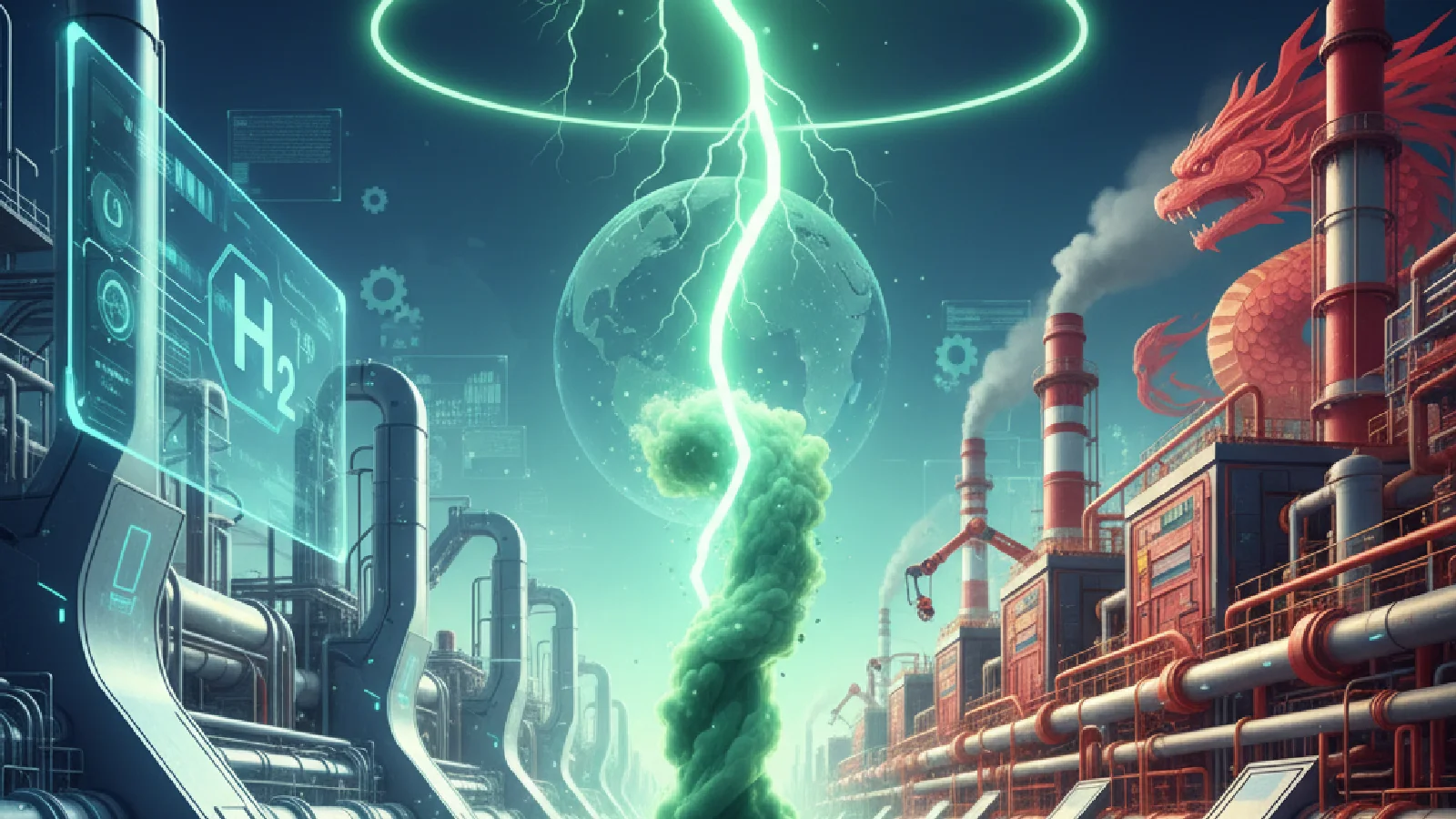
The race for green hydrogen is redrawing global geopolitical maps. At the heart of this energy revolution, electrolyzers – machines that break down water into hydrogen and oxygen using electricity – are crystallizing a fierce battle between industrial powers. On one side, China is focusing on mass production of affordable alkaline electrolyzers. On the other, the West favors more sophisticated but costly PEM (Proton Exchange Membrane) technologies.
This technological and industrial confrontation will determine who controls tomorrow's strategic supply chains. While China installed 80% of new green hydrogen capacity in 2023, European and American manufacturers are trying to preserve their technological advantage against the Chinese offensive.
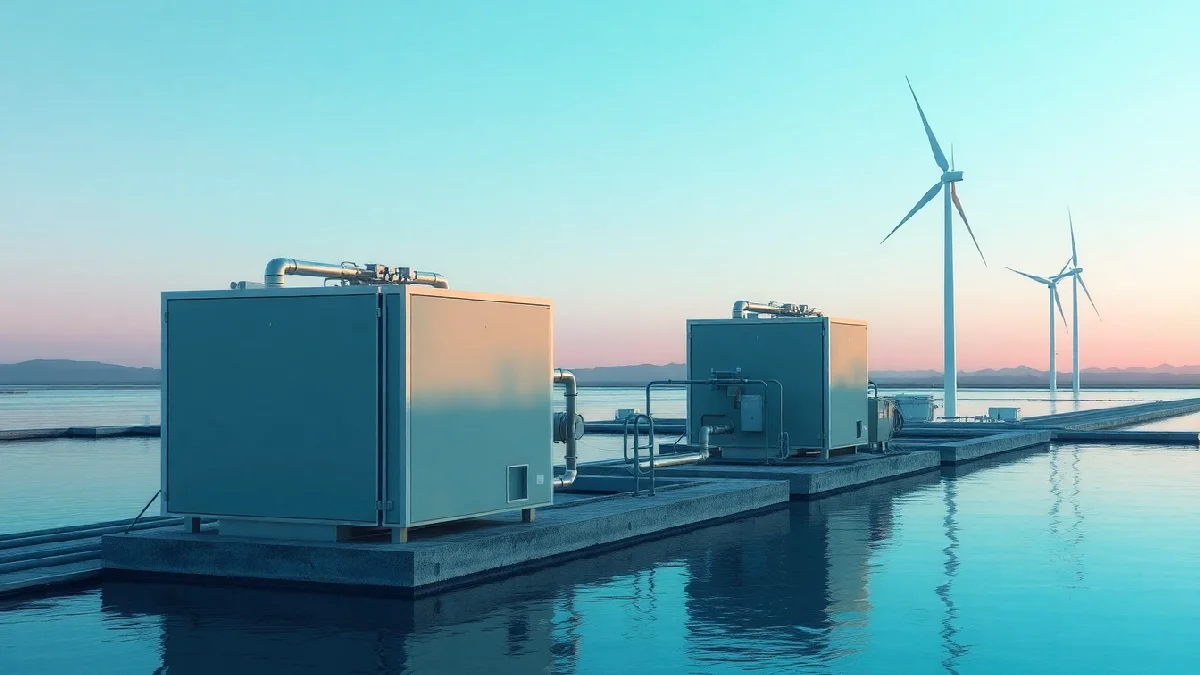
Chinese Dominance by Volume
China's strategy relies on a massive industrial approach favoring alkaline electrolyzers. These devices, less sophisticated than their Western counterparts, have the decisive advantage of being 30 to 40% cheaper to produce. This cost difference is explained by several structural factors.
The Middle Kingdom now controls 60% of the world's industrial capacity for electrolyzers. This dominant position allows it to benefit from significant economies of scale, drastically reducing unit costs. Standardized production and integrated supply chains amplify this competitive advantage.
"China holds 34% of the world's electrolyzer production capacity in 2023, with exponential growth projected until 2030."
Massive public investments support this rise to power. Beijing has mobilized 40% of global investments planned for green hydrogen until 2030, creating a vertically integrated industrial ecosystem. This approach allows Chinese manufacturers to offer complete solutions, from electrolyzer production to system installation.
However, energy efficiency remains the Achilles' heel of Chinese alkaline electrolyzers. With an efficiency of 50 to 55%, they significantly lag behind Western technologies. This limitation directly impacts long-term operational costs.
Western Technological Excellence
Facing the Chinese offensive, Western manufacturers are betting on PEM (Proton Exchange Membrane) technology. These electrolyzers show superior performance with an energy efficiency of 65 to 70%, 15 points higher than their alkaline competitors.
Europe concentrates most of this technological expertise. Companies like Siemens Energy, Air Liquide, and ITM Power are developing high-performance solutions for demanding industrial applications. Their PEM electrolyzers offer several decisive advantages:
- Operational flexibility: rapid response to renewable energy fluctuations
- High current density: reduced footprint for the same capacity
- Hydrogen purity: superior quality suitable for critical industrial uses
This excellence comes at a high price. Western PEM electrolyzers cost up to three times more than their Chinese equivalents. The necessary critical materials – particularly membranes and platinum-based catalysts – account for a significant portion of this cost difference.
The United States and Japan complete this Western technological landscape. American companies like Plug Power focus on system integration, while the Japanese excel in high-tech components. This geographical specialization creates a complementary but fragmented innovation ecosystem.
Obstacles to the Adoption of Chinese Solutions
Despite their price competitiveness, Chinese electrolyzers face several adoption barriers in Western markets. The first concerns performance, perceived as inferior by European and American industrialists.
Dependence on imports of critical components weakens the Chinese proposition. PEM membranes, essential for high-end electrolyzers, are still predominantly produced in the West. This situation creates a paradox: to access premium markets, Chinese manufacturers depend on their Western competitors.
#### Comparison of Electrolyzer Technologies
| Characteristic | Alkaline Electrolyzers (China) | PEM Electrolyzers (West) |
|---|---|---|
| Production Cost | 30-40% cheaper | Up to 3x more expensive |
| Energy Efficiency | 50-55% | 65-70% |
| Critical Materials | Less | Membranes, Platinum |
| Operational Flexibility | Low | High |
| Hydrogen Purity | Standard | Superior |
Geopolitical considerations are increasingly important. The European Union and the United States are developing strategies to protect strategic value chains, including hydrogen. These industrial policies aim to limit dependence on Chinese technologies in critical sectors.
Trade barriers are multiplying. Customs duties, strengthened technical standards, local content requirements: Western governments are using all available levers to protect their nascent industrial champions.
The issue of intellectual property also complicates matters. Western companies fear the forced transfer of technologies to their Chinese partners, limiting industrial cooperation.
Challenges for Western Players
Western manufacturers also face their share of difficulties. Their main obstacle lies in the prohibitive investment costs required to achieve a competitive industrial scale. Building an electrolyzer gigafactory requires hundreds of millions of euros in investment.
Limited industrial capacity hinders scaling up. Unlike China, which can rapidly mobilize massive production capacities, Europe and the United States struggle to industrialize their innovations. Projects often remain at the pilot or small-series stage.
The supply of critical materials is a major bottleneck. Platinum, a key element in PEM catalysts, experiences regular supply tensions. Its geographical concentration in South Africa and Russia exposes Western manufacturers to geopolitical risks.
Financing represents a constant challenge. Unlike Chinese companies benefiting from abundant public capital, Western players largely depend on public subsidies and private capital. This structural difference slows down large-scale deployment.
The fragmentation of the Western market hinders the emergence of continental champions. Each country develops its own hydrogen strategy, creating a complex regulatory patchwork. This dispersion contrasts with the centralized Chinese approach.
Market Outlook
2025 marks a turning point in this technological battle. The global electrolyzer market size could exceed 500 GW by 2030, opening immense commercial opportunities.
Strategic alliances are multiplying on both sides. Europe is strengthening its industrial cooperation through projects like IPCEI Hy2Infra, endowed with 6.9 billion euros. This collaborative approach aims to pool investments and accelerate innovation.
China is not standing still. It is investing heavily in R&D to improve the performance of its alkaline electrolyzers. The goal: to close the technological gap while preserving the cost advantage. Initial results show notable improvements in energy efficiency.
The emergence of hybrid technologies could reshuffle the cards. Some manufacturers are exploring solutions combining the advantages of both approaches: controlled cost of alkaline and performance of PEM. This technological convergence could level the playing field.
Emerging markets are becoming new battlegrounds. India, Brazil, and South Africa are developing their own hydrogen strategies. These countries will arbitrate between cost (China) and performance (West) according to their national priorities.
Conclusion
The battle of electrolyzers perfectly illustrates the new balances of the global economy. On one side, China leverages its manufacturing prowess to conquer markets through pricing. On the other, the West relies on technological innovation to preserve its competitiveness.
This confrontation goes beyond mere commercial considerations. It determines who will control the key technologies of the energy transition. Green hydrogen represents a major strategic issue for energy independence and industrial decarbonization The Hydrogen Landscape in Fierce Competition.
The outcome of this battle remains uncertain. Chinese manufacturers could catch up technologically, while Westerners try to reduce their costs. The race for offshore wind and solar photovoltaics shows that positions can evolve rapidly in cleantech.
The global green hydrogen market will likely be large enough to accommodate multiple players. But the market shares acquired today will shape tomorrow's industrial power dynamics. In this technological race, every month counts.
FAQ (JSON format - translate question and answer fields only): [ { "answer": "Chinese electrolyzers favor alkaline technology, which is 30-40% cheaper but less efficient (50-55% yield). Western ones rely on PEM technology, which is more expensive but offers 65-70% energy efficiency.", "question": "What is the main difference between Chinese and Western electrolyzers?" }, { "answer": "China controls 60% of global capacity thanks to its mass production, massive public investments, and integrated supply chains. It installed 80% of new green hydrogen capacity in 2023.", "question": "Why does China dominate the electrolyzer market?" }, { "answer": "Barriers include perceived inferior performance, dependence on Western components (PEM membranes), geopolitical considerations, and increasing protectionist measures from Western governments.", "question": "What are the main obstacles for Chinese electrolyzers in the West?" }, { "answer": "Europe relies on PEM technological excellence, industrial alliances like IPCEI Hy2Infra (€6.9 billion), and measures to protect strategic value chains to preserve its competitive advantage.", "question": "How do Western manufacturers plan to compete?" }, { "answer": "The market could exceed 500 GW by 2030. The evolution will depend on China's ability to improve its performance and the West's ability to reduce costs, with emerging markets acting as new arbiters.", "question": "What is the future for the global electrolyzer market?" } ]