Greenhouse Agrivoltaics: Maximizing Yields and Energy
On small European agricultural plots, every square meter counts. Faced with land pressure and climate challenges, a solution is emerging: integrating photovoltaic panels directly into greenhouse structures to simultaneously produce vegetables and electricity. This approach, now legally regulated in France since 2023, transforms horticultural farms into energy powerhouses without sacrificing their primary purpose.
A Dual Harvest on the Same Surface
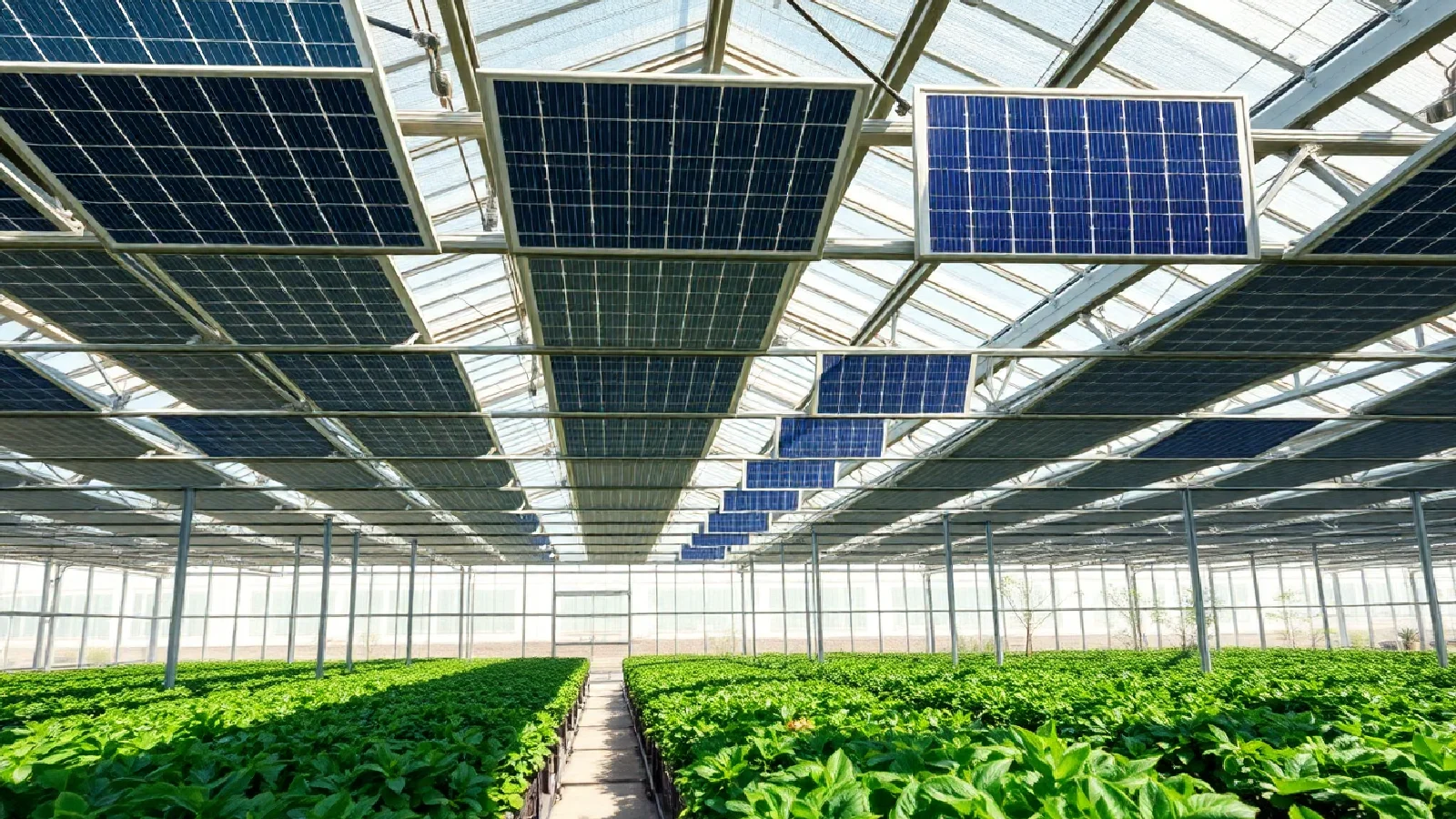
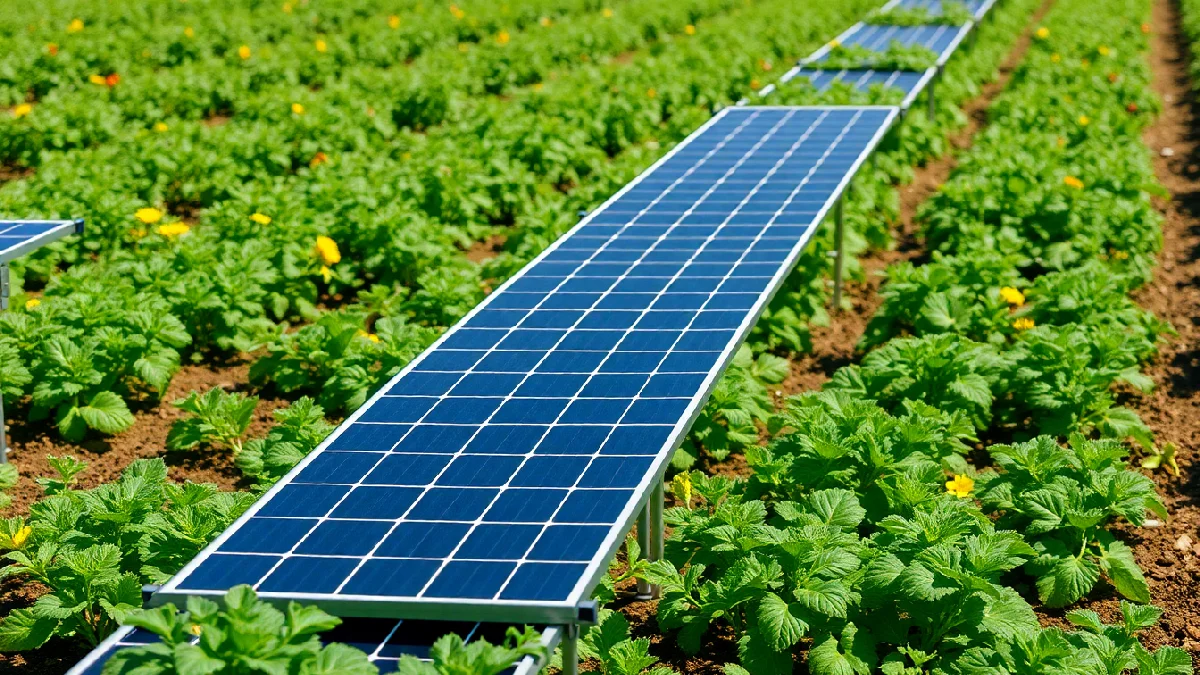
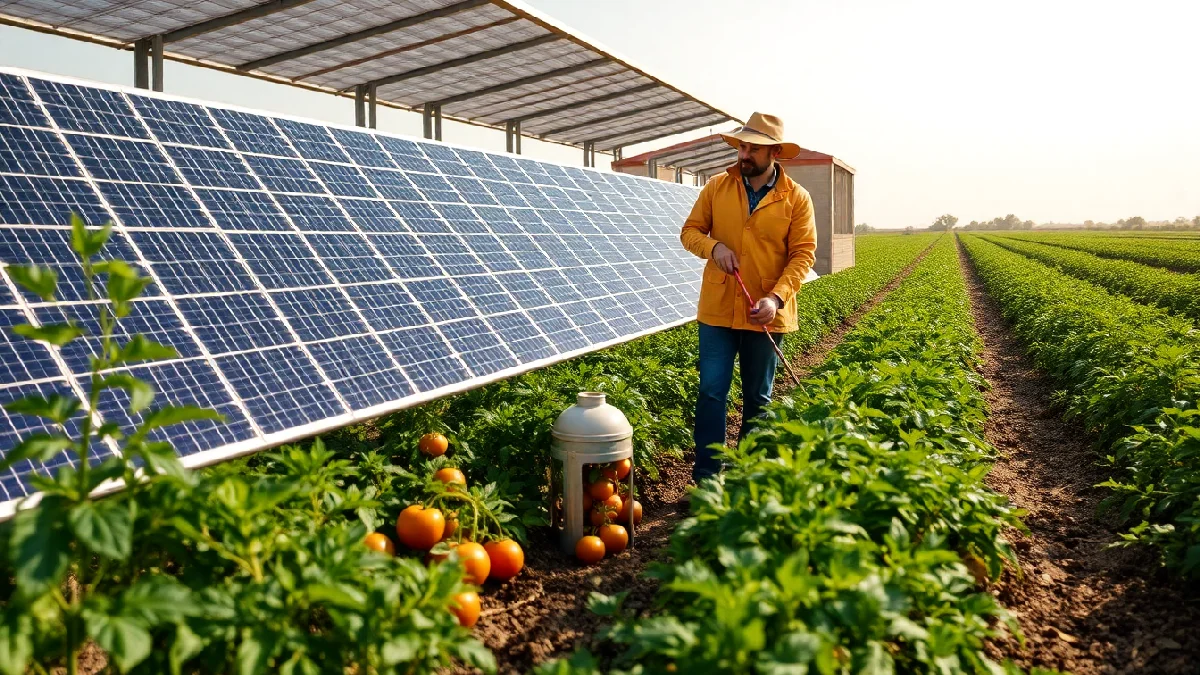
Greenhouse agrivoltaics are based on a simple but ingenious principle: installing photovoltaic modules on the roofs of market garden or horticultural greenhouses. Unlike ground-mounted solar farms that monopolize space, this technique superimposes uses without competing with food production.
The most common structures adopt single-slope or multi-span configurations, with photovoltaic coverage representing 40% to 60% of the total surface area. The inclination angle of the panels, generally adjustable between 15° and 30°, allows for balancing energy production and light input for crops. This architectural design ensures that plants receive enough light for photosynthesis while capturing excess solar energy.
According to feedback compiled by Énergie Partagée, the concept of agrivoltaics precisely defines “the coupling of a secondary photovoltaic production with a primary agricultural production with demonstrable synergy of operation.” This legal definition, established by the April 2024 decree, requires that agricultural activity remains a priority.
Protecting Crops While Producing Energy
Beyond simple electricity generation, photovoltaic greenhouses offer measurable agronomic advantages. The panels create physical protection against climatic hazards: hail, late frost, summer heatwaves. This barrier also reduces evapotranspiration, decreasing irrigation needs by up to 20% depending on the configuration.
Horticulturists observe a qualitative improvement in certain fruits and vegetables. Partial shading reduces thermal stress on sensitive plants such as lettuce, tomatoes, or strawberries. Solar tracker structures go further: by creating a mobile shade that follows the sun's path, they distribute light more uniformly throughout the day.
Tracker systems increase electricity production by 10% to 20% compared to static panels, while benefiting crops sensitive to direct sunlight.
However, this technology requires a higher initial investment and is more suitable for medium-sized farms looking to maximize their energy profitability.
| Feature | Static Panels | Tracker Systems |
|---|---|---|
| Electricity Production | Reference | +10% to +20% |
| Shading Regulation | Fixed | Mobile (follows the sun) |
| Initial Investment Cost | Lower | Higher |
| Favored Crops | Sensitive, but fixed shading | Sensitive, optimized and uniform shading |
The Legal Framework: Less Than 10% Loss Tolerated
The French law, via the 2024 decree, imposes a strict criterion: the agricultural production of an equipped plot cannot decrease by more than 10% compared to a comparable control plot. This requirement ensures that agrivoltaics do not divert land from its food-producing function.
Experiments conducted in Europe and Reunion Island show that with 50% photovoltaic coverage, agricultural yields remain within this legal tolerance. For market garden crops (lettuce, tomatoes, peppers), observed losses vary between 5% and 8%, compensated by better product quality and a reduction in weather-related losses.
The complete guide published by Mexens specifies that this approach “places farmers at the heart of high value-added projects, crucial for the national territory and France's energy independence.” The negotiating power of farmers is thus strengthened vis-à-vis photovoltaic developers.
Energy Production and Economic Model
The energy figures speak for themselves: a photovoltaic installation integrated into a greenhouse can generate 300 kWh per square meter of photovoltaic surface annually. On a medium-sized farm (1 to 2 hectares of equipped greenhouses), this represents significant production.
Additional income varies depending on the type of farm:
- Market garden crops: between €4,000 and €5,800 per equipped hectare
- Sheltered livestock farming: up to €5,200 per hectare with optimized self-consumption
Direct self-consumption is a major asset. Surplus electricity powers greenhouse heating in winter or air conditioning in summer, drastically reducing the energy bill. For organic farms or short supply chains, this autonomy strengthens the coherence of the overall economic model.
According to Solaire Conseil's detailed analysis, “only 1% of France's 27 million hectares of useful agricultural land will be affected by these solar projects.” This limited proportion eliminates the risk of massive artificialization while creating vital additional income for many farms. To explore other approaches, see our article on geothermal networks.
Concrete Cases: From Breton Horticulturist to Mediterranean Livestock Farmer
In Côtes-d'Armor, a tomato producer equipped 8,000 m² of greenhouses with 55% photovoltaic coverage. The result: a yield decrease of only 6%, largely offset by a 30% reduction in heating costs and an annual income of €18,000 from electricity resale.
In the Mediterranean region, sheep farmers have installed photovoltaic aviaries providing shade and shelter for animals. These structures, lighter than traditional greenhouses, combine milk production and electricity generation. Shading reduces thermal stress on animals during summer heatwaves, improving their well-being and productivity.
In Reunion Island, market gardeners grow lettuce and aromatic herbs under semi-transparent panels. Partial shading proves particularly suitable for the intense tropical climate, where excessive sunlight frequently burns crops. This configuration has allowed for increased regularity of harvests while producing locally valued electricity.
Climate Resilience and Soil Multifunctionality
Photovoltaic integration transforms greenhouses into climate resilience tools. Faced with extreme weather events (droughts, hailstorms, heatwaves), equipped structures offer direct physical protection. Weather sensors control the orientation of mobile panels to optimize shading or exposure as needed.
This soil multifunctionality addresses a major territorial challenge: how to produce more on limited areas without exhausting resources? By combining food and energy, greenhouse agrivoltaics maximize the value created by each hectare while preserving the agricultural vocation.
Farms adopting these systems also benefit from a modernized image, attractive to young farmers seeking viable economic models. In a context where the majority of farmers are approaching retirement without identified successors, this innovation can contribute to generational renewal.
Prospects and Technical Challenges
Despite its advantages, greenhouse agrivoltaics face several challenges. The initial investment cost remains high: between €150,000 and €250,000 per equipped hectare depending on the complexity of the structure. Public aid and participatory financing mechanisms are beginning to alleviate this barrier, but access to credit remains a hindrance for small farms.
Maintenance is another challenge. Panels must be cleaned regularly to maintain their efficiency, which adds to the workload. Electrical integration requires technical skills that not all farmers possess, making professional support essential.
From an agronomic perspective, some crops tolerate partial shading poorly. Cereals and oilseeds, for example, require maximum sunlight. Greenhouse agrivoltaics therefore remain primarily adapted to market garden crops, horticultural crops, and certain types of livestock farming.
Finally, the regulatory framework continues to evolve. Yield loss criteria, grid connection standards, and conditions for accessing preferential purchase tariffs are subject to regular adjustments. Farmers must stay informed to optimize their project. For an in-depth discussion on evolving regulations, read our article on COP30.
An Energy Transition Rooted in Territories
Greenhouse agrivoltaics illustrate how technical innovation can reconcile food production and energy transition. By multiplying the functions of the same space, this approach simultaneously addresses the challenges of food sovereignty, energy independence, and climate adaptation.
Farms that take the plunge become actors in local decarbonization. Their green electricity, self-consumed or reinjected into the grid, directly contributes to national renewable energy development goals. This distributed production strengthens the resilience of territories to energy crises.
For public decision-makers, supporting these projects involves administrative simplification, facilitated access to funding, and technical support for project leaders. Agricultural chambers and cooperatives play a key role in disseminating best practices and sharing feedback.
Greenhouse agrivoltaics will never replace large-scale conventional agriculture, but it offers a valuable complementary path. On small peri-urban areas, in regions with high land pressure, or on farms seeking to diversify their income, this technique provides concrete and proven solutions.
The coming years will determine whether this innovation will become widespread or remain a niche. The signals are encouraging: multiplication of pilot projects, stabilized legislative framework, increasingly efficient technologies. 21st-century agriculture may well combine market gardening tradition and energy modernity under the same roof of glass and silicon.