SMR: How to Break the Vicious Cycle of Mass Adoption
The Small Modular Reactor (SMR) industry currently finds itself in a paradoxical situation. How can investors and operators be convinced to adopt a technology that has not yet proven itself on a large scale, while knowing that this mass adoption is precisely what is needed to reduce costs and optimize the supply chain?
This chicken-and-egg dilemma represents one of the most critical challenges of the energy transition. As decarbonization targets tighten and the demand for dispatchable electricity explodes with the rise of artificial intelligence, SMRs appear as a promising but still fragile solution.

Standardization: The Keystone of Industrialization
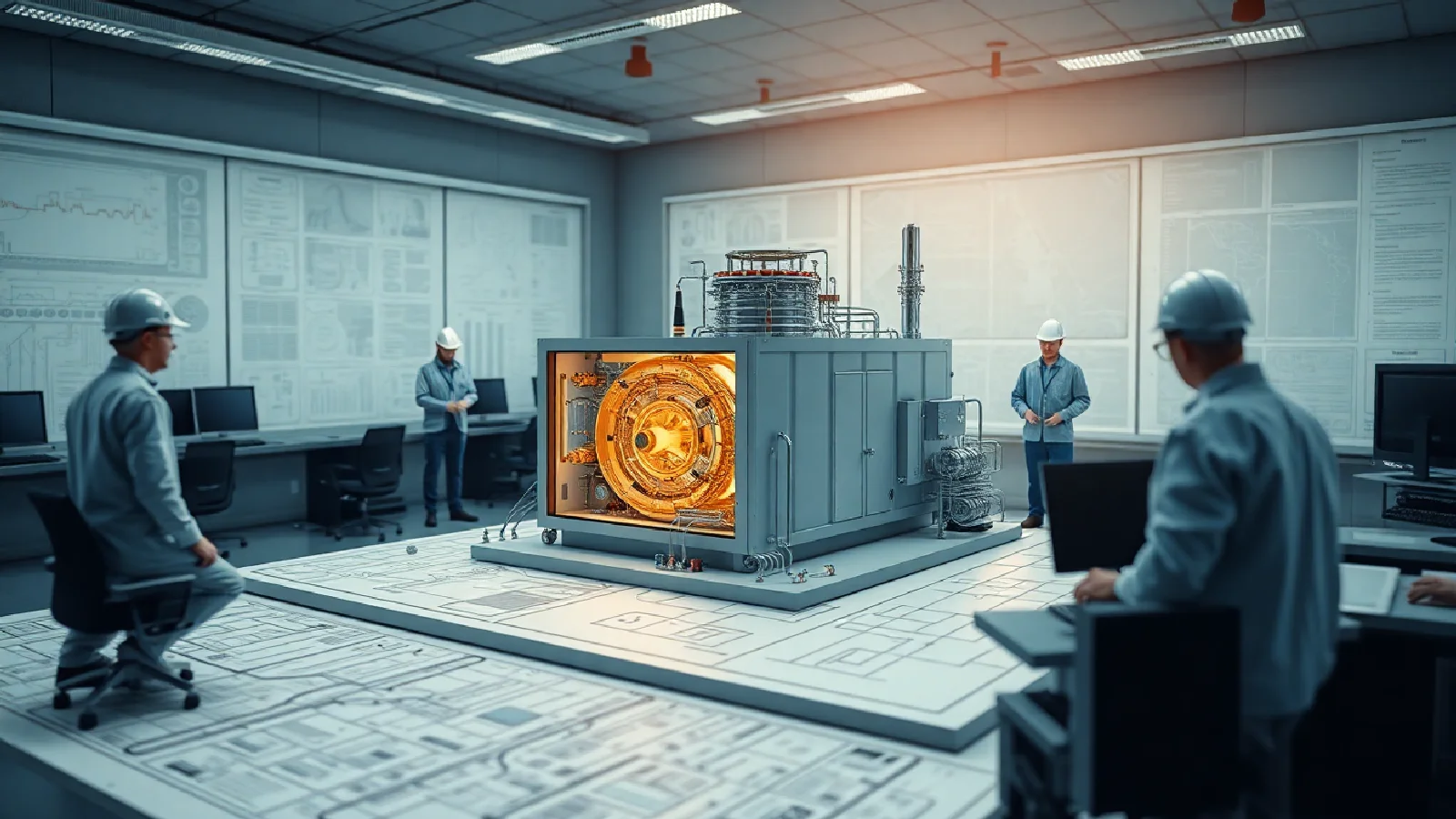
The modular design of SMRs represents their main competitive advantage over traditional reactors. Unlike conventional nuclear power plants, which are custom-built and require decades of development, SMRs rely on a logic of serial prefabrication.
This approach fundamentally transforms the economics of nuclear power. Standardized components can be manufactured in specialized factories, benefiting from economies of scale and enhanced quality control. The supply chain is simplified: fewer specialized suppliers, interchangeable parts, and an accelerated learning curve.
The French Nuward project, supported by France 2030, perfectly illustrates this strategy. With a unit power of 340 MW, this SMR aims for construction in four years compared to ten to fifteen years for the EPR.
"The current period is very important for hydrogen, but it is just as important for SMRs. Standardization of licenses and regulatory pre-approval can accelerate commissioning by five to seven years."
Creating Demand Before Supply: Market Catalysts
New Energy Needs
The explosion of data centers linked to AI is creating unprecedented demand for dispatchable electricity. These infrastructures require continuous and reliable power, which cannot be guaranteed by intermittent renewable energies alone. Microsoft, Google, and Amazon are already exploring partnerships with SMR developers to secure their energy supply.
Strategic Public Incentives
Governments have powerful levers to kickstart demand:
- Price guarantees: long-term purchase contracts to secure revenues
- Public funding: direct investments in initial deployments
- Accelerated regulatory frameworks: simplified authorization procedures
Global investment in energy has evolved considerably between 2019 and 2025, increasing from 1.8 to 3.3 trillion USD. This dynamic favorable to clean technologies creates a conducive environment for SMRs.
| Investment Category | 2019 | 2025 (estimate) |
|---|---|---|
| Total (all energy types) | 1.8 trillion USD | 3.3 trillion USD |
| Clean Energy | Significant growth | Growing share of total investment |
Artificial Intelligence for Optimization
AI is transforming SMR management on several levels. Predictive optimization makes it possible to anticipate maintenance needs, maximize energy efficiency, and minimize unscheduled shutdowns. This technology reduces operational costs by 15 to 20% according to initial estimates.
Fuel logistics also benefit from these advances. Predictive algorithms optimize refueling cycles, extend the lifespan of fuel elements, and streamline radioactive waste management.
Overcoming Social and Regulatory Resistance
Transparency and Local Engagement
Social acceptability remains a major challenge for SMRs. Developers are now adopting a proactive approach:
- Early information for local communities
- Technology demonstrations open to the public
- Partnerships with local universities and research centers
Passive Safety and Innovation
New generation SMRs integrate passive safety systems that automatically trigger in the event of an incident, without human intervention or external power supply. This feature reassures regulators and facilitates authorization procedures.
Deep geological disposal of waste, already operational in some Nordic countries, provides a concrete answer to environmental concerns.
Innovative Economic Models
Industrial Crowdfunding
New financing models are emerging to spread risks. Multi-stakeholder consortia bring together energy companies, industrial consumers, and investment funds. This approach pools development costs while securing outlets.
Lease vs. Ownership
Some developers offer "reactor-as-a-service" models, where the operator leases production capacity without owning the facility. This approach reduces initial investments and transfers technical risks to the manufacturer, as detailed in our article on the SMR guide.
Systemic Benefits of Adoption
Each successfully deployed SMR generates a ripple effect. Suppliers develop their expertise, production costs decrease, and regulatory confidence is established. Canada, a pioneer in SMRs with its Darlington project (300 MW, scheduled for commissioning in 2028), demonstrates this virtuous dynamic.
The industrial ecosystem is gradually structuring itself: specialized training centers, skill certification, standardization of procedures. This technical and human maturation constitutes a strategic asset for pioneering countries.
Towards a Virtuous Energy Cycle
The democratization of SMRs is no longer a hypothesis but a matter of planning. Traditional obstacles – high costs, construction delays, social acceptability – are finding concrete answers thanks to technological innovations and new economic models.
Binding decarbonization policies create an urgency favorable to dispatchable solutions. The rise of digital uses generates sustained demand for reliable electricity. The first commercial deployments, expected by 2028-2030, will definitively validate this trajectory.
The SMR industry is at an inflection point. The investments made today will determine tomorrow's leaders in this technological race where Europe, North America, and Asia are already vying for the top positions. For actors who can break the vicious cycle of adoption, SMRs represent a major industrial opportunity in the 21st-century energy transition, complementing innovations such as lithium-sulfur batteries.