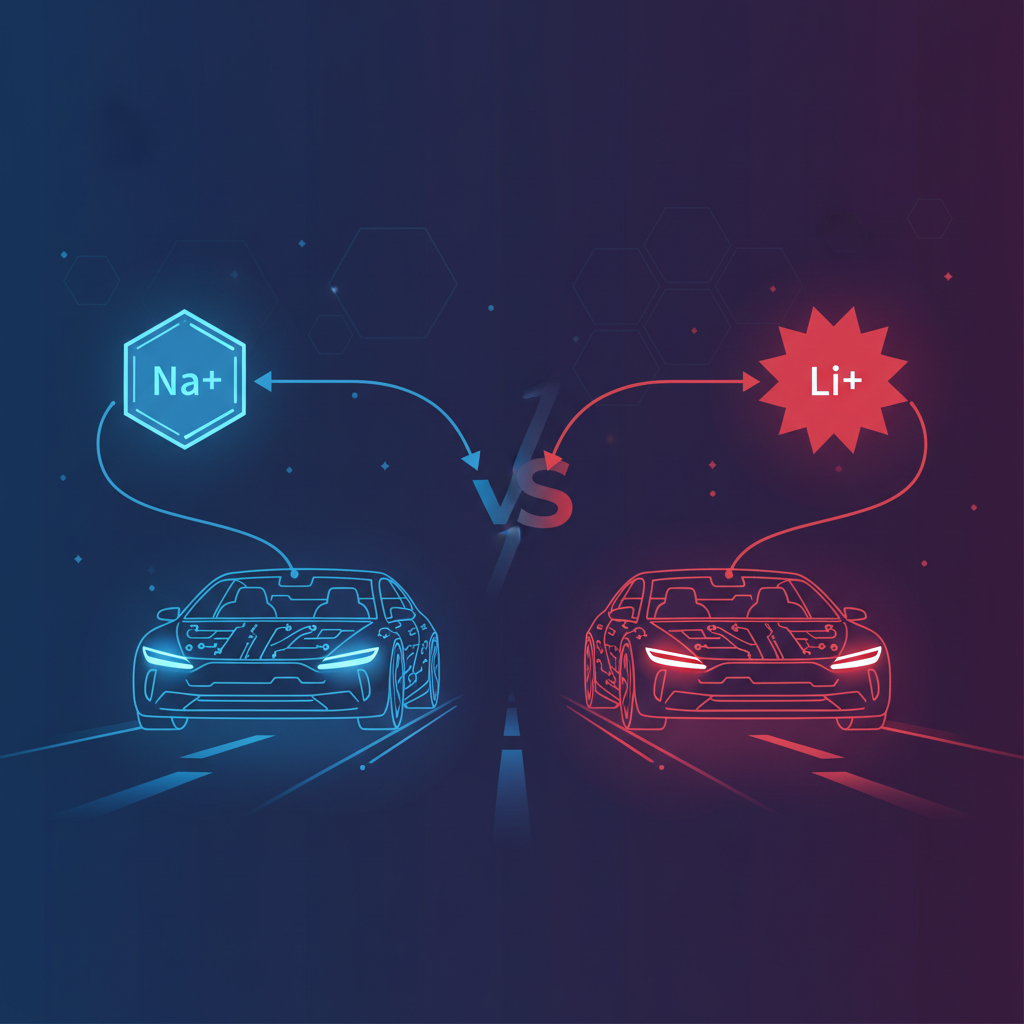
Sodium-ion vs. Lithium-ion Batteries: The Technological Duel for Electric Mobility
The electric vehicle market is undergoing a profound transformation. Faced with soaring lithium prices – which increased tenfold between July 2020 and October 2022 – and geopolitical tensions over critical metal supplies, an alternative technology is rapidly gaining ground: sodium-ion batteries. CATL, the Chinese battery manufacturing leader, has just reached a decisive milestone with its second generation of cells, promising production costs up to 30% lower than lithium-ion while maintaining remarkable performance.
This breakthrough could reshuffle the cards in a sector where China controls 79% of global lithium-ion battery production. But can sodium-ion technology truly compete with the lithium-ion standard that currently powers almost all premium electric vehicles?
Technical Performance: A Narrowing Gap
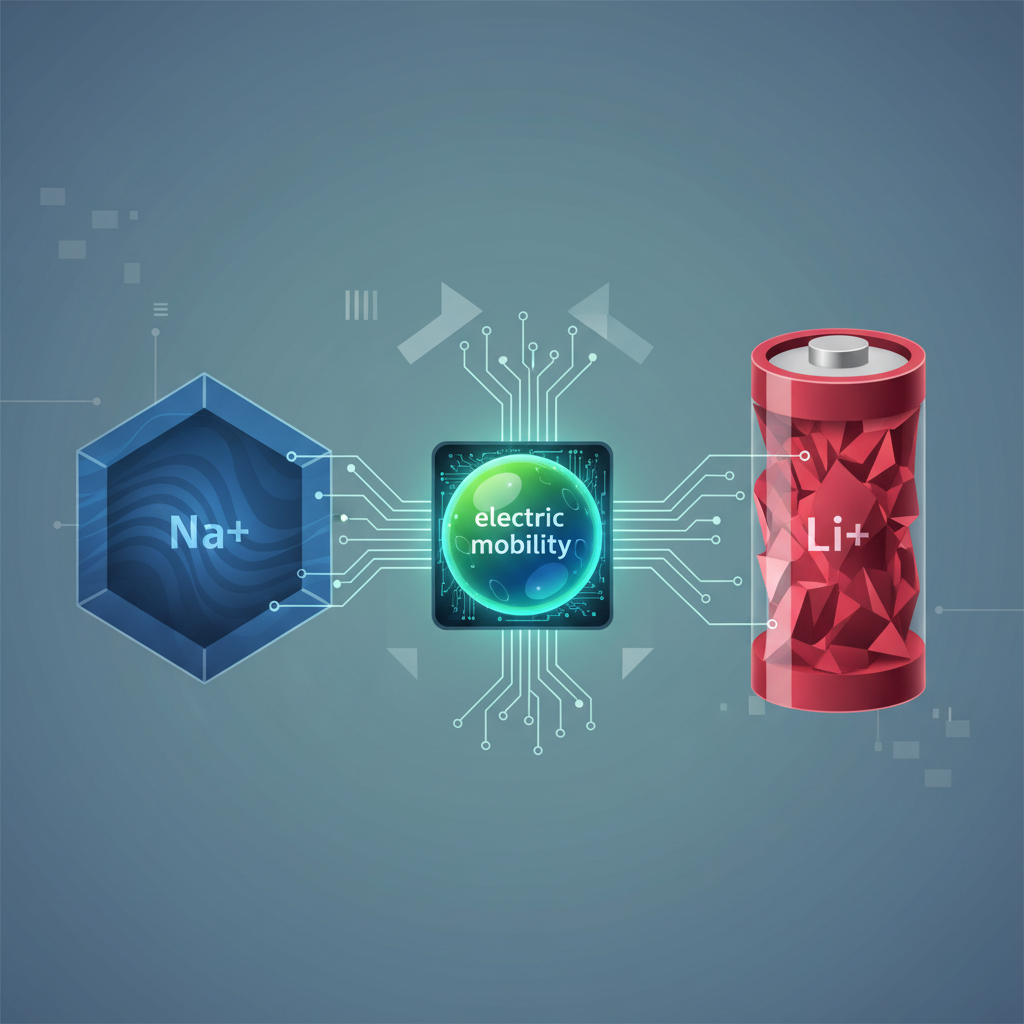
Sodium-ion batteries now achieve approximately 160 Wh/kg at the cell level, an energy density comparable to LFP (lithium iron phosphate) lithium-ion batteries. However, this performance remains lower than NMC and NCA lithium-ion batteries, which boast between 250 and 300 Wh/kg – a decisive advantage for high-end vehicles requiring long range.
According to data compiled by Bonnen Batteries, sodium-ion batteries nonetheless offer specific advantages:
- Extended lifespan: between 3,000 and 6,000 full cycles, roughly double that of traditional NMC cells (1,500 to 2,000 cycles)
- Fast charging: ability to reach 80% charge in approximately 15 minutes
- Resistance to extreme temperatures: optimal performance retention below 0 °C, a historical Achilles' heel of lithium-ion
The main compromise? A 50% higher weight for equivalent energy capacity, a significant handicap for applications requiring an optimal power-to-weight ratio.
"CATL's sodium-ion modules maintain their energy density while reducing cost to approximately 40 USD/kWh in mass production, compared to 120 to 150 USD/kWh for current lithium-ion packs."
Cost Structure: The Sodium Advantage
Economic competitiveness is the major asset of sodium-ion technology. Sodium, extracted from sea salt and abundantly present in the Earth's crust, is 500 times more available than lithium. This fundamental difference directly impacts prices: CATL's second-generation batteries aim for a cost of 40 USD per kWh, a 30% reduction compared to current lithium-ion batteries.
Beyond the active material, sodium-ion batteries eliminate several critical metals from their composition:
- No nickel
- No cobalt (70% of which comes from the Democratic Republic of Congo)
- No copper in certain configurations
- Graphite replaceable by more accessible alternatives
This independence from strategic supply chains represents a significant geopolitical and economic advantage for automakers, particularly given China's dominance in lithium refining (61% of global capacity).
Targeted Applications: Towards Market Segmentation
The automotive industry does not view sodium-ion batteries as a universal replacement for lithium-ion, but rather as a complementary solution for specific segments. In 2025, CATL launched its first production-ready 45 kWh module, intended to equip the GAC Aion starting in the second quarter of 2026.
Compact urban vehicles are the primary target: electric city cars, last-mile delivery vehicles, corporate fleets. These applications value the reduced cost, extended lifespan, and intrinsic safety of sodium-ion batteries more than maximum energy density.
Conversely, premium sedans and electric SUVs will continue to favor NMC/NCA lithium-ion to maximize range – a decisive purchasing criterion in the high-end segment. This differentiation reflects a broader trend: battery innovation no longer follows a single trajectory but diversifies according to use cases.
The Chinese market, which is expected to represent several GWh of sodium-ion capacity by 2030, could see 10 to 15% of EV sales shift to this alternative chemistry by the end of the decade. This dynamism is crucial for the European EV market 2026.
Safety and Environment: Intrinsic Advantages
Sodium-ion batteries exhibit a superior safety profile to lithium-ion. Unlike lithium-ion cells, they do not experience thermal runaway, an uncontrolled self-heating phenomenon that can lead to battery fires. This characteristic simplifies cooling systems and reduces thermal management requirements.
Environmentally, sodium extraction generates a significantly lower carbon footprint than lithium. The absence of cobalt also eliminates ethical issues related to mining conditions. However, sodium-ion battery recycling remains underdeveloped: the industrial sector still needs to be built, whereas lithium-ion benefits from established infrastructure.
This ecological dimension is part of a broader trend of energy diversification, similar to carbon capture technologies that also seek to reduce the overall environmental footprint.
Industrial Challenges: Still an Emerging Technology
Despite its promises, sodium-ion technology faces structural obstacles. The supply chain remains fragmented, lacking the vertical integration that lithium-ion benefits from after fifteen years of massive industrialization. Production equipment requires adaptations, even if compatibility with existing lithium-ion lines facilitates the transition.
Technological maturity also remains a limiting factor. While lithium-ion batteries have benefited from billions in R&D investments, sodium-ion is still in its early commercial iterations. Announced laboratory performance does not always translate into equivalent gains in real-world usage conditions.
Western automakers – Mercedes, Renault, Volvo – are closely observing these developments. Their strategy: develop partnerships without abandoning lithium-ion, while maintaining active technological watch on alternative chemistries such as sodium-ion or solid-state batteries.
2026-2030 Outlook: Coexistence Rather Than Substitution
The sodium-ion versus lithium-ion debate will not result in a unilateral victory. Market projections anticipate a lasting coexistence of the two technologies, each dominating distinct application segments. Lithium-ion will maintain its leadership in vehicles requiring high energy density and long range, while sodium-ion will gradually establish itself in urban segments and stationary applications.
CATL estimates that its second-generation sodium-ion batteries will achieve economic profitability as early as 2026, creating significant competitive pressure on lithium-ion prices. This dynamic could accelerate the democratization of affordable electric vehicles, a goal shared by many governments to achieve their climate objectives.
| Key Feature | Lithium-ion (Standard) | Sodium-ion (CATL 2nd Gen.) |
|---|---|---|
| Production Cost | 120-150 USD/kWh | ~40 USD/kWh |
| Raw Material | Lithium (rare) | Sodium (abundant) |
| Energy Density | 250-300 Wh/kg (NMC) | ~160 Wh/kg |
| Lifespan | 1,500-2,000 cycles | 3,000-6,000 cycles |
China will likely maintain its technological and industrial lead in the short term, but Europe and North America are intensifying their investments in sovereign production capacities. This industrial race is reminiscent of that observed in other major environmental issues, such as biodiversity protection, where the capacity for collective action determines the scale of results.
The ultimate challenge? Industrialize fast enough for these technological advancements to translate into accessible electric vehicles for the masses before 2030 – the deadline for many international climate commitments.