
Archaeology 2026: 5 Discoveries Revolutionizing History
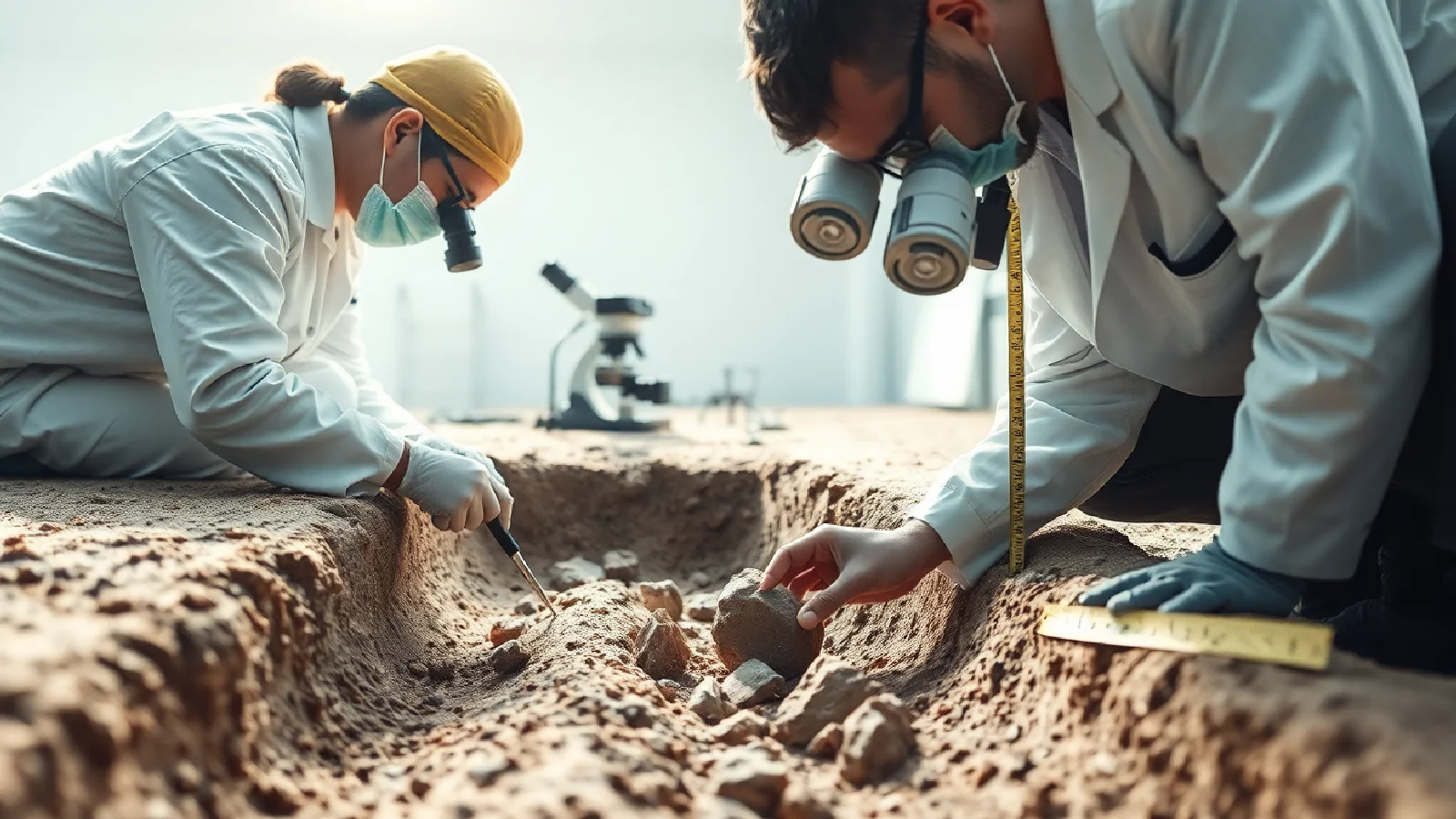
A 773,000-year-old fossil in Morocco, a 9,500-year-old cremation in Malawi, a Tang dynasty tomb in China... January 2026 will go down in history as an exceptional month for global archaeology. These revelations are radically transforming our perception of ancient civilizations and human evolution.
To grasp the significance of these finds, a systematic analysis method is essential: chronologically and geographically contextualizing each site, examining the investigation technologies used, and then interpreting the implications for our established historical models.

The Revolution in Funerary Practices: The Millennia-Old Cremation of Malawi
The discovery of an exceptional 9,500-year-old cremation in Malawi is overturning our understanding of prehistoric funerary rituals. This find, analyzed in a recent scientific publication, reveals that cremation practices were already sophisticated in sub-Saharan Africa long before the Neolithic period.
Context and Methodology
The remains were discovered in a stratified archaeological site, allowing for precise dating thanks to the surrounding geological layers. Archaeologists used:
- Stratigraphic analysis for contextual dating
- Mass spectrometry to identify combustion residues
- Electron microscopy to study calcined bone fragments
This discovery challenges the idea that cremation was a late phenomenon, demonstrating that African communities had already mastered these complex ritual techniques nearly 10,000 years ago.
| Discovery | Chronology | Impact on Knowledge | Key Methods |
|---|---|---|---|
| Malawi Cremation | 9,500 years | Sophisticated prehistoric funerary rituals | Stratigraphic analysis, Mass spectrometry |
| Casablanca Human Fossils | 773,000 years | Origins of Homo sapiens, early diversification | Contextual dating |
| Celtic War Horn | 3rd century | Advanced military strategies | X-ray fluorescence, 3D imaging |
| Tang Tomb (China) | 7th century | Globalized trade networks | Tomography, Material analysis |
| Ketef Hinnom Silver Scroll | 1st century BCE | Antiquity of biblical text | Non-destructive medical imaging |
Homo Sapiens Reimagined: The Revolutionary Fossils of Casablanca
The 773,000-year-old human fossils discovered in the Hominid Cave in Casablanca are forcing anthropologists to revise the narrative of our origins. These remains, studied by an international team involving the National Museum of Natural History, place a basal ancestor in the Homo sapiens lineage much earlier than previous estimates.
The Impact on the Human Family Tree
The discovered mandible exhibits unique morphological characteristics suggesting:
- Earlier diversification of the human lineage
- Complex migrations across North Africa
- Non-linear evolution of our ancestors
This find follows on from research conducted at the Casablanca sites since the early 20th century, but new analysis technologies now allow for revolutionary interpretations.

The Celtic Military Arsenal: The 3rd Century War Horn
In England, the discovery of a 3rd-century iron war horn is transforming our view of Celtic military strategies. Identified through advanced metallurgy and iconographic comparison, this instrument proves the existence of more sophisticated sonic warfare equipment than the simple wooden horns traditionally associated with this period, as reported by National Geographic in its review of recent discoveries.
Identification Technologies
The analysis of this artifact required several complementary approaches:
- X-ray fluorescence to determine metallic composition
- 3D imaging to reconstruct the original form
- Comparative analysis with contemporary iconography
This discovery broadens our understanding of Celtic military organization and suggests more developed technological exchanges than previously thought with Mediterranean civilizations.
"Each discovery of January 2026 reminds us that human history is infinitely richer and more complex than our current models suggest." - International Archaeological Research Team
Tang Trade Networks: Unsuspected Cosmopolitanism
The Tang Dynasty tomb unveiled in the heart of a 7th-century necropolis reveals an ultra-cosmopolitan trade network. Thanks to tomography and the analysis of exotic materials, archaeologists have identified the presence of silk, Syrian glass, and precious stones, completely revising the notion of Chinese cultural isolation in the early Middle Ages.
An Interconnected World
This female military burial testifies to trade exchanges of unsuspected scale:
- Trade routes extending from China to the Mediterranean
- Cultural exchanges between distant civilizations
- Social mobility of women in the Tang military elite
These discoveries are part of a modern archaeological approach that combines advanced technologies and traditional methods, transforming our understanding of ancient civilizations.
The Oldest Biblical Text: Revelations on a Silver Scroll
The Ketef Hinnom silver scroll, read non-destructively using medical imaging, reveals the oldest known biblical text. This technological feat confirms the existence of priestly blessings in the first century BCE, prompting specialists to re-evaluate the origins of the Jewish scriptural tradition, as highlighted in other articles on archaeological revelations.
Technological Innovation in the Service of History
This achievement perfectly illustrates the evolution of modern archaeology, which now relies on technologies from medicine. Non-destructive reading has allowed the artifact to be preserved while revealing its textual content, opening new perspectives for the study of ancient manuscripts.
These discoveries are part of a rigorous scientific approach that echoes research on recent advances in cognitive sciences and modern technological breakthroughs.
Towards an Archaeology of the Future
These five major discoveries of January 2026 illustrate the profound transformation of the archaeological discipline. The integration of cutting-edge technologies – 3D imaging, spectrometry, medical tomography – now allows us to explore the past with unparalleled precision.
This methodological revolution transforms our relationship with time and vanished civilizations. Each artifact becomes a window into forgotten worlds, revealing the unsuspected complexity of ancient societies and their remarkable capacity for innovation.
Archaeology in 2026 teaches us that human history is not a linear progression, but a complex fabric of exchanges, innovations, and adaptations that defies our traditional temporal and geographical categories.