Rheumatoid Arthritis: New Inflammatory Pathway Discovered

Medical research has just taken a significant step forward in understanding rheumatoid arthritis. This chronic autoimmune disease, which affects several million people worldwide according to Epidemiology and pathophysiology of rheumatoid arthritis..., is now revealing previously unknown inflammatory mechanisms, opening up promising therapeutic avenues.
A team of researchers has identified an alternative inflammatory pathway that goes beyond the classical pro-inflammatory cytokines. This discovery could transform our therapeutic approach to this complex pathology that primarily affects peripheral joints symmetrically, as described in Adult Rheumatoid Arthritis - DUMAS.
Complex Disease Mechanisms Finally Deciphered
Rheumatoid arthritis is characterized by chronic inflammation that progressively destroys joint structures. Traditionally, researchers focused on the cytokine cascades responsible for synovial inflammation. This view, while accurate, proves to be incomplete.
The new research reveals that platelet-leukocyte interactions play a central role in the inflammatory process. These interactions, long overlooked, are in fact a fundamental mechanism of rheumatoid inflammation.
"This discovery changes our understanding of inflammatory mechanisms and paves the way for more precise and personalized therapies"
The study also highlights the crucial role of the CLEC12A receptor, a signaling protein that modulates IL-8 production via the p38-MAPK-PI3K-Akt pathway. This signaling pathway, distinct from classical mechanisms, offers new potential therapeutic targets.
The CLEC12A Receptor: A Promising Therapeutic Target
The CLEC12A receptor belongs to the family of inhibitory receptors expressed by myeloid-derived cells. According to a Laval University research thesis, this inhibitory receptor is involved in neutrophil regulation and could play a role in various inflammatory pathologies.
Researchers have shown that modulation of CLEC12A directly influences the production of IL-8, a key pro-inflammatory cytokine in rheumatoid arthritis. This discovery suggests that pharmacological agents specifically targeting this receptor could reduce joint inflammation more selectively.
This approach offers several potential advantages:- Reduction of side effects associated with non-specific treatments
- Increased efficacy on specific inflammatory mechanisms
- Possibility of combination with existing therapies
---
| Therapeutic Target | Mechanism of Action | Potential Benefit |
|---|---|---|
| Platelet-leukocyte interactions | Blocking binding | Interruption of the inflammatory cascade at the source |
| CLEC12A Receptor | Signaling modulation | Selective reduction of inflammation, fewer adverse effects |
| A20 | Activity enhancement | Restoration of natural inflammatory balance |
---
STAT1 and A20: Rethinking Inflammatory Balance
The research also highlighted the role of the STAT1 transcription factor and its endogenous regulator A20 in entheseal inflammation. Selective inhibition of STAT1 by A20 can suppress inflammation at the entheses, these insertion points of tendons and ligaments particularly affected in rheumatoid arthritis.
This discovery is particularly interesting because it reveals a mechanism of endogenous regulation of inflammation. Understanding how to enhance A20 activity could lead to the development of therapies that utilize the body's own regulatory mechanisms.
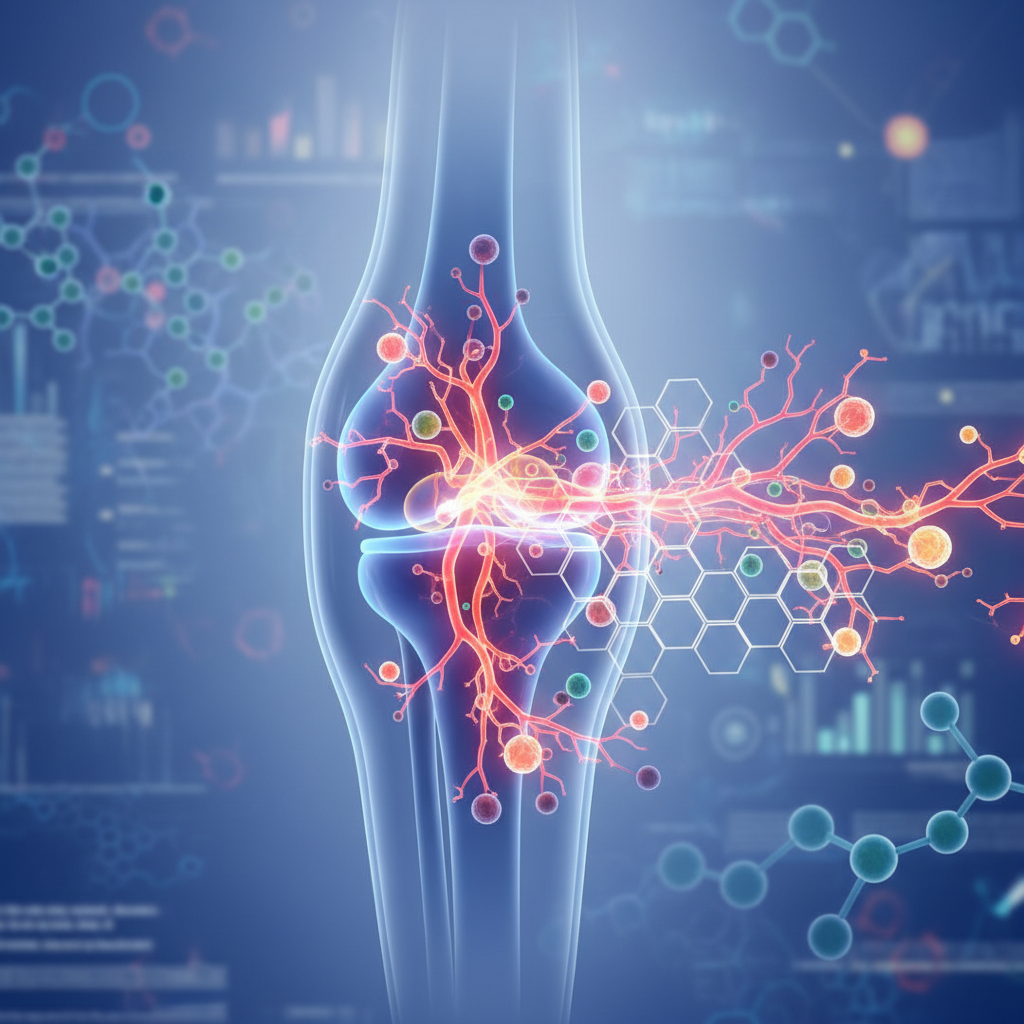
Entheseal inflammation, often overlooked in favor of synovial inflammation, thus proves to be a central element of pathogenesis. This recognition could explain why some patients do not respond optimally to current treatments that primarily target synovial cytokines.
Towards Personalized and Targeted Treatments
These discoveries open several innovative therapeutic avenues. Researchers are notably considering the development of agents that specifically block the binding of platelets to white blood cells, thereby disrupting the inflammatory cascade at its source.
Modulators of CLEC12A signaling represent another promising pathway. These small molecules could act more selectively than current treatments, potentially reducing side effects while maintaining optimal therapeutic efficacy.
In parallel, the development of drugs that enhance A20 activity could help restore the body's natural inflammatory balance. This approach is part of a regenerative medicine logic that aims to reactivate endogenous healing mechanisms.
These new approaches would complement the existing therapeutic arsenal, which includes JAK inhibitors, biological anti-TNF agents, and even emerging techniques like vagus nerve stimulation.
The Future of Inflammatory Research
This discovery is part of a broader context of research on autoimmune diseases. As highlighted by recent advances in the field of inflammatory myopathies, the understanding of inflammatory mechanisms is progressing rapidly, offering new therapeutic hopes.
Rheumatoid arthritis, which primarily affects perimenopausal women according to epidemiological data from the Merck Manual, could thus benefit from a revolutionized therapeutic approach. This systemic disease, which attacks not only the joints but also other organs, indeed requires more sophisticated and personalized treatments.
The identification of these new inflammatory pathways underscores the importance of fundamental research in the development of therapeutic solutions. It also illustrates how seemingly technical discoveries can have concrete repercussions on patients' quality of life.
A Perspective of Hope for Patients
These scientific advances represent a turning point in the management of rheumatoid arthritis. They offer the hope of more effective, better tolerated, and personalized treatments for each patient.
Research continues to reveal the complexity of inflammatory mechanisms, showing that rheumatoid arthritis is not a single disease but rather a set of pathologies with varied mechanisms. This refined understanding paves the way for precision medicine in rheumatology.
The challenge now is to translate these discoveries into concrete clinical applications. Upcoming clinical trials will determine which of these new therapeutic targets can effectively improve the management of patients with rheumatoid arthritis.
This research perfectly illustrates how science progresses through the accumulation of knowledge and the questioning of established paradigms. It also shows that unexpected connections, such as those between the immune system and microbiota described in other research on cognitive disorders, can revolutionize our understanding of complex diseases.