Microbiota and Cognitive Disorders: Beyond Depression
For decades, researchers focused on the links between gut microbiota and mood disorders. Anxiety, depression, stress: the gut-brain axis seemed confined to these emotional manifestations. However, a new dimension is emerging from contemporary research. Intestinal dysbiosis – this imbalance in our microbial ecosystem – could affect much more targeted cognitive functions: memory, attention capacities, executive functions, and even social cognition.
This discovery revolutionizes our understanding of the intestinal "second brain" and opens up unexpected therapeutic perspectives for neurodegenerative and neurodevelopmental pathologies.
The Gut-Brain Axis: A Neurochemical Highway
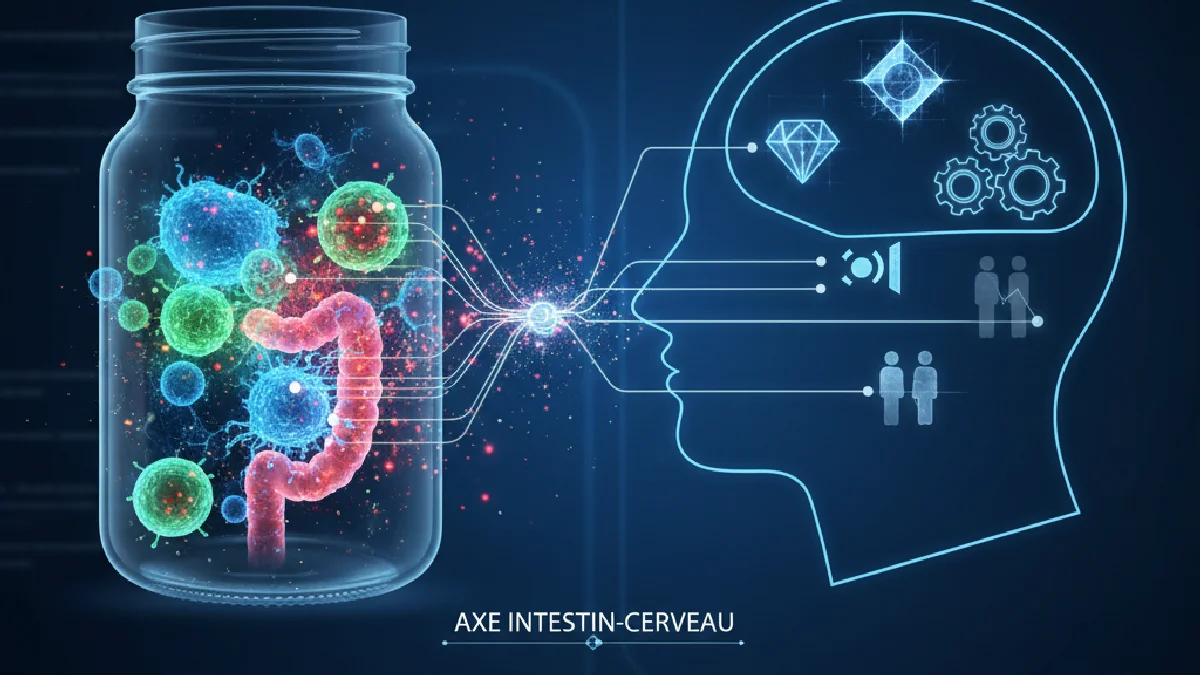
The concept of the gut-brain axis relies on sophisticated bidirectional communication mechanisms. The gut microbiota doesn't just digest our food: it produces and modulates essential neurotransmitters like serotonin, dopamine, GABA, and tryptophan metabolites.
These molecules cross the blood-brain barrier or act via the vagus nerve to directly influence synaptic plasticity and hippocampal neurogenesis. The intestine indeed contains millions of neurons and produces over 90% of serotonin, establishing a true neurochemical connection with the brain.
The vagus nerve is the fastest communication pathway between these two organs. It plays a crucial role not only in gastrointestinal motility but also in transmitting cognitive information between the gut and higher brain centers.
Specific Mechanisms of Action on Cognition
Intestinal dysbiosis triggers a cascade of reactions that extend far beyond traditional emotional disorders. An alteration in the microbial profile promotes the release of pro-inflammatory cytokines and neurotoxic metabolites, particularly kynurenine derivatives.
This chronic neuroinflammation disrupts the integrity of the intestinal barrier and, by extension, the blood-brain barrier. The consequences are multiple:
- Impaired synaptic plasticity: neuronal connections lose their ability to adapt
- Hippocampal neurogenesis dysfunction: the production of new neurons in the hippocampus decreases
- Myelination disruption: the insulation of nerve fibers deteriorates
These mechanisms explain why some patients exhibit cognitive disorders without apparent depressive manifestations.
Neurodegenerative Disorders: When Bacteria Accelerate Decline
Recent research reveals troubling links between dysbiosis and neurodegenerative pathologies. In Alzheimer's disease, microbial imbalances worsen neuronal loss and promote the amyloid deposits characteristic of the pathology. Exploring the links between dysbiosis and depression further highlights the extent of the microbiota's impact.
The beta-amyloid protein can spread from one brain region to another, and the gut microbiota contains similar proteins that could migrate to the brain via the vagus nerve.
For Parkinson's disease, dysbiosis contributes to dopaminergic degeneration. Research shows that the microbiota plays an essential role in neuroinflammation and aging processes, two key factors in this pathology.
Emerging clinical studies identify specific microbial signatures associated with early cognitive decline, paving the way for early diagnostic biomarkers.
Impact on Neurodevelopmental Disorders
In patients with neurodevelopmental disorders like autism, microbial disturbances take on a particular dimension. A decrease in microbial GABA production by Lactobacillus and Bifidobacterium species has been associated with sensory processing deficits. More broadly, the microbiota is also being studied in the context of mental pathologies.
These imbalances alter the brain connectivity networks responsible for executive functions and emotional regulation. Affected children often exhibit:
- Difficulties with planning and organization
- Hypersensitivity to environmental stimuli
- Sustained attention deficits
- Deficits in social interactions
The microbiota-gut-brain axis is particularly involved in these neurodevelopmental pathologies, suggesting that early interventions on the microbiota could improve prognosis.
Cognitive Aging and Microbial Signatures
In aging adults, specific microbiota imbalances correlate with measurable cognitive deterioration. Studies notably identify:
- An overrepresentation of pro-inflammatory bacteria (Enterobacteriaceae)
- A deficiency in short-chain fatty acid-producing bacteria
These alterations are correlated with a deterioration in working memory and processing speed in elderly subjects, reinforcing the hypothesis of a causal role of the microbiota in early cognitive decline. To learn more about the impact of age, consult our article on the real problem of aging.
Aging naturally involves changes in microbial composition, which could explain some of the alterations in cognitive functions observed with age.
Therapeutic Perspectives and Targeted Interventions
These discoveries open up innovative therapeutic avenues. Psychobiotic interventions – using specific bacterial strains to improve cognitive functions – are the subject of promising clinical trials.
Approaches include:
- Targeted probiotics: strains specifically selected for their cognitive impact
- Functional prebiotics: substrates promoting beneficial bacteria
- Dietary modulation: anti-inflammatory diets preserving microbial diversity
- Fecal transplantation: for cases of severe dysbiosis
Optimizing pharmacy advice becomes crucial to integrate this new knowledge into the daily management of patients.
Summary of Therapeutic Interventions
| Type of Intervention | Mechanism of Action | Objective |
|---|---|---|
| Targeted Probiotics | Supply of beneficial bacterial strains | Direct improvement of cognitive functions |
| Functional Prebiotics | Stimulation of existing bacterial growth | Promote a healthy microbiota |
| Dietary Modulation | Reduction of inflammation, maintenance of diversity | Overall support for intestinal health |
Towards Personalized Microbiota Medicine
Research is moving towards a personalized approach that considers individual microbial profiles. Patient-specific microbial signatures could guide tailored therapeutic interventions.
This precision microbiota medicine still requires technological advancements to rapidly and economically analyze complex microbial ecosystems. But initial results suggest that we are entering a new era of preventive neurology.