Why Some Species Live 200 Years and Humans Don't

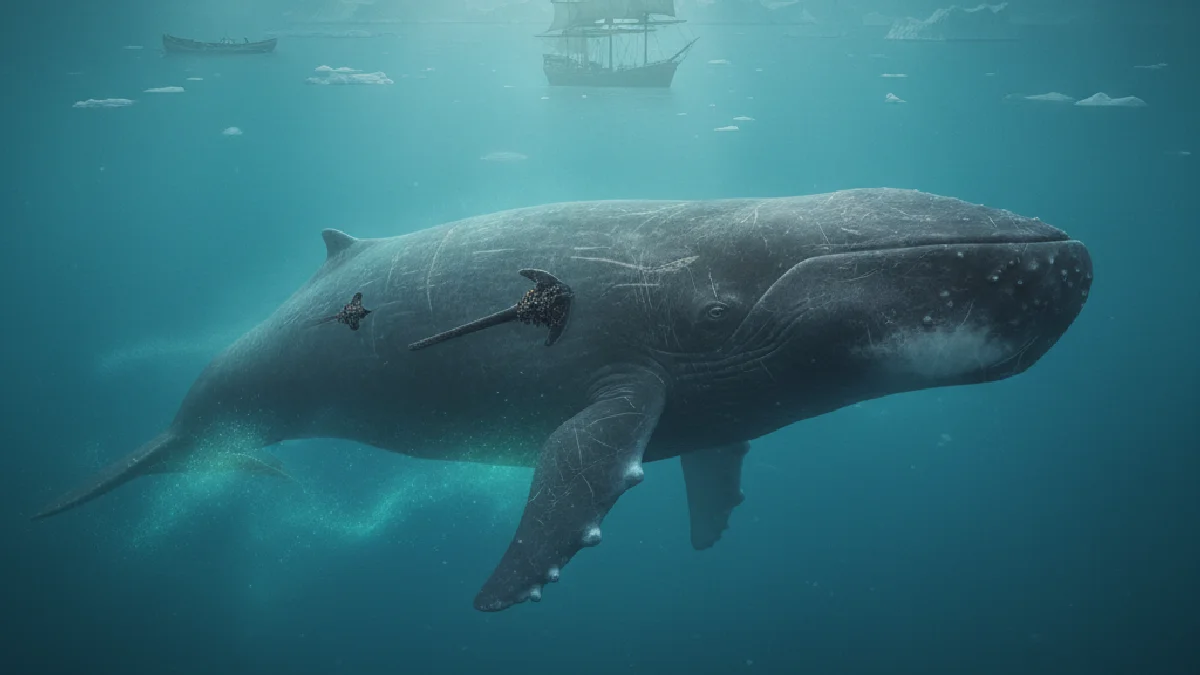
In the icy waters of the Arctic, a bowhead whale swims peacefully, its tissues bearing the chemical traces of ancient harpoons dating back to the 19th century. This imposing marine mammal has likely lived for over 200 years, having traversed eras with a serenity that we humans can only envy. Meanwhile, our species remains inexorably limited to a maximum of about 120 years, despite all our medical advancements. And few humans even reach that age, which already seems implausible on our scale.
This fascinating disparity raises a fundamental question: what are the biological secrets that allow some species to live for centuries when others, like us, seem condemned to a shorter existence? The answer lies in a complex combination of evolutionary, metabolic, and cellular factors that science is only just beginning to decode.
Champions of Animal Longevity
Nature abounds with astonishing examples of extreme longevity. Among the most impressive, the quahog mollusk (Arctica islandica) holds the official record with Ming, a specimen that lived for 507 years. Bowhead whales can exceed 200 years, while some giant tortoises easily reach 190 years, as explained in this article on longevity.
Even more surprisingly, small creatures defy our intuitions about the size-longevity relationship. The olm, a blind cave amphibian from the Balkans, can live for over 100 years despite its modest size. This exceptional lifespan is explained by a particular DNA that gives it remarkable cellular repair capabilities.
| Species | Maximum Longevity |
|---|---|
| Quahog (Ming) | 507 years |
| Bowhead whale | > 200 years |
| Giant tortoise | > 190 years |
| Olm | > 100 years |
Biological Mechanisms of Relative Immortality
Slow Metabolism: The Key to Suspended Time
The first secret of centenarian species lies in their exceptionally slow metabolism. Bowhead whales, for example, maintain a low body temperature and a slowed heart rate, which limits the accumulation of oxidative damage. This metabolic strategy reduces the production of free radicals, destructive molecules that accelerate cellular aging.
Giant tortoises perfectly illustrate this principle. Their metabolism can drastically slow down during resting periods, allowing them to "pause" certain degradation processes. This metabolic adaptability is a major evolutionary advantage for longevity.
Telomeres and DNA Repair: Perfect Cellular Maintenance
At the cellular level, these exceptional species exhibit remarkable genetic maintenance mechanisms. Their telomeres – the protective "caps" on chromosomes – shorten very slowly with age, unlike what happens in humans.
"The bowhead whale possesses exceptionally active DNA repair genes, allowing it to efficiently correct genetic errors that naturally accumulate over time."
Even more impressively, some species like Brandt's bat see their DNA repair capacity improve with age, a counter-intuitive phenomenon that defies our usual understanding of aging.
Stable Environment and Reduced Stress
The environment plays a crucial role in this longevity equation. The oldest species often evolve in particularly stable environments:
- Seabeds with constant temperatures for mollusks
- Caves with invariable climatic conditions for olms
- Isolated island ecosystems for some tortoises
This environmental stability limits oxidative stress and allows organisms to develop long-term survival strategies rather than rapid reproductive adaptations.
Why Are Humans Limited to 120 Years?
Evolutionary Constraints of Our Species
The human species evolved under different selective pressures than those of centenarian species. Our hunter-gatherer ancestors had to prioritize rapid reproduction and resistance to infectious diseases rather than extreme longevity. This evolutionary history shaped our biology towards an optimization of reproductive survival rather than maximum longevity.
Unlike whales or tortoises, humans have developed a high metabolism necessary for the functioning of our complex brain. This brain consumes about 20% of our total energy, inevitably generating more oxidative stress than in slow-metabolism species.
Human Cellular Limitations
At the cellular level, our maintenance mechanisms have intrinsic weaknesses. Our telomeres progressively shorten with each cell division, and our DNA repair capacity decreases with age. This progressive degradation explains why even the oldest humans rarely exceed 115-120 years.
Recent research shows that certain genes like FOXO3 and APOE can influence human longevity, but their effects remain modest compared to the spectacular adaptations observed in centenarian species. As physician Manuel Puntschuh explains, a life expectancy of 200 years already seems extremely difficult to achieve.
Programmed Senescence
Humans also seem subject to a form of programmed senescence, where certain cells stop dividing and accumulate dysfunctions. This phenomenon, while it can prevent cancer by limiting uncontrolled cell proliferation, also contributes to the aging of tissues and organs.
Avenues for Prolonging Human Life
Understanding the mechanisms of animal longevity opens fascinating perspectives for human medicine. Researchers are exploring several promising avenues, from telomere manipulation to imitating the slow metabolism of centenarian species.
Some approaches aim to reproduce the cellular mechanisms observed in the oldest animals, particularly by strengthening our DNA repair systems. Other research focuses on reducing oxidative stress through nutritional or pharmaceutical interventions.
Nevertheless, these advances face fundamental constraints of our biological architecture. Unlike technological innovations explored in other scientific fields such as graphene manufacturing or nanotechnologies applied to agriculture, modifying the profound mechanisms of human aging represents a challenge of incredible complexity.
The Future of Human Longevity
Recent advances in genetic engineering and regenerative medicine hint at unprecedented possibilities. Gene therapies could one day allow us to acquire some of the adaptations that contribute to the evolutionary success of centenarian species.
However, the path to significantly increased human longevity remains fraught with considerable scientific, ethical, and social obstacles. The biological causes of aging remain multiple and interconnected, making any simple intervention difficult.
Nature teaches us that extreme longevity is possible, but it comes with major evolutionary trade-offs. Species that live for centuries have generally sacrificed reproductive speed, cognitive complexity, or environmental adaptability. Humanity will have to determine whether it is willing to accept such compromises to gain a few extra decades, or if our current longevity already represents an optimal balance between lifespan and quality of existence.