Exploring the Abyssal Depths: ROVs and Submersibles Revolutionize Deep-Sea Life Discovery
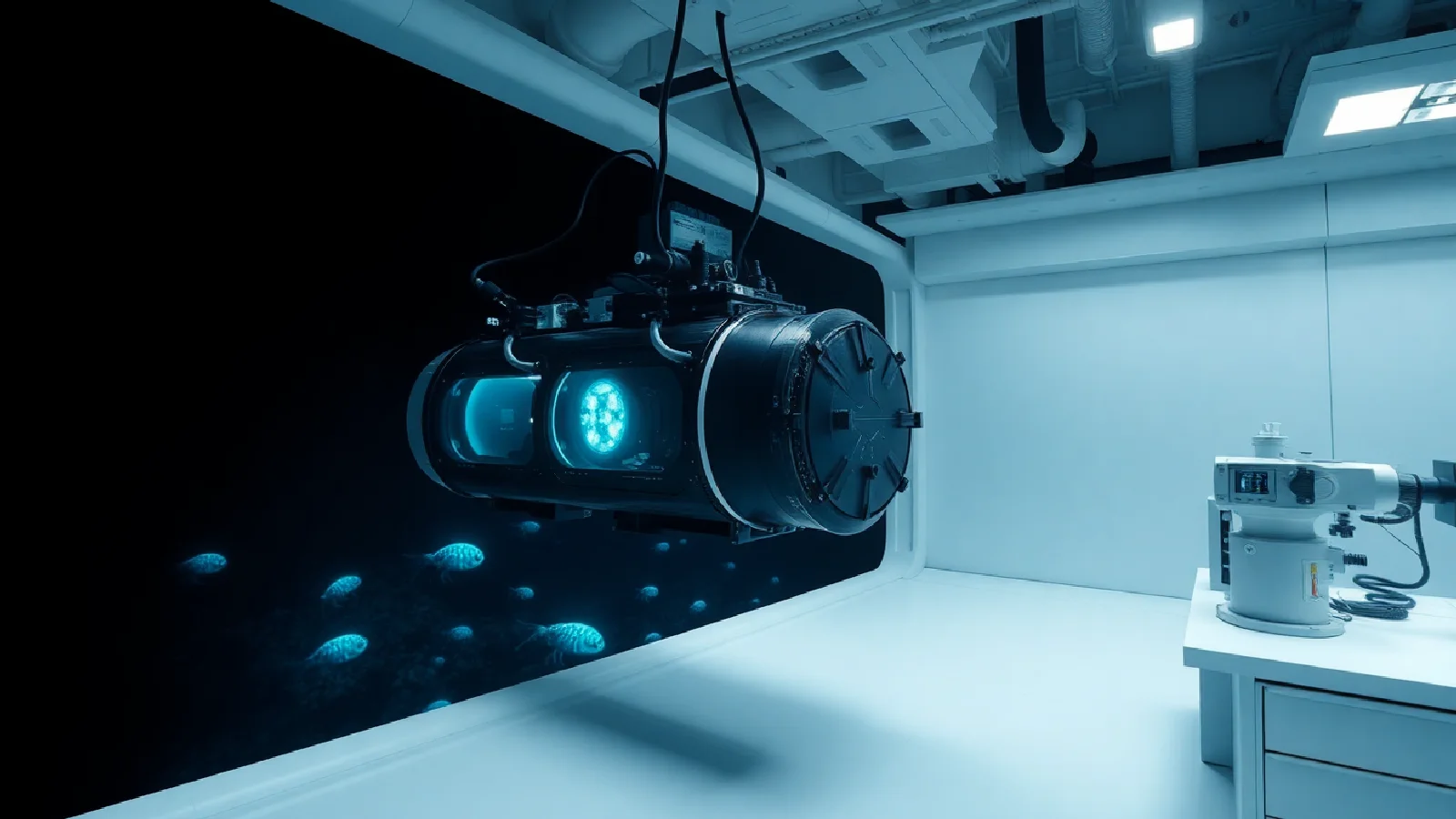
The unfathomable depths of the ocean, the abyssal plains, have long fueled human imagination and curiosity. Today, thanks to technological ingenuity, these distant worlds are becoming increasingly accessible. Remotely Operated Vehicles (ROVs) and next-generation manned submersibles are not just tools; they are the pioneers of a new era of exploration, revolutionizing our understanding of deep-sea marine biodiversity and the most extreme ecosystems on our planet.
These cutting-edge technologies don't just map the unknown; they enable the observation, sampling, and analysis of underwater life with unprecedented precision and autonomy. While only 5% of the deep sea has been explored and 25% mapped with fine resolution as of 2024, the potential for discovery is immense, as explained by Nausicaá. This thirst for knowledge is all the more crucial as deep-sea marine ecosystems are not only poorly understood but also highly vulnerable to increasing pressures from human activities.
The New Generation of Exploration Tools: ROVs and Submersibles
Deep-sea exploration has made giant strides, far from the first bathyspheres mentioned by Javier Escartin, a CNRS researcher in marine geosciences, on the ENS website. Today's ROVs and submersibles are technological marvels, designed to operate in hostile environments with remarkable efficiency.
Remotely Operated Vehicles (ROVs), such as Ifremer's Victor 6000, are underwater robots that enable extended missions by remaining connected to a surface vessel via an umbilical cable. This link provides real-time control and instant transmission of video data and measurements. The Nautile, Europe's only manned submersible capable of reaching 6,000 meters, ensures dives of several hours with a scientist on board, offering direct immersion into these distant worlds, according to Ifremer. Its planned modernization for 2025-2035 guarantees the continuation of this strategic capability for France, as reported by Mer et Marine.
| Exploration Tool | Type | Key Features | Depth / Duration |
|---|---|---|---|
| Victor 6000 | ROV (remotely operated) | Connected underwater robot, real-time control | Extended missions |
| Nautile | Manned submersible | Unique in Europe, direct scientist immersion | 6,000 meters, several hours |
A Revolutionized View of the Seabed
The observation capabilities of the deep sea have been radically improved thanks to advanced imaging and mapping technologies. High-definition cameras, combined with powerful lighting systems, allow for the capture of images with unparalleled clarity. But innovation doesn't stop there:
- Holographic vision systems: They film in three dimensions, offering an unprecedented spatial perception of abyssal habitats.
- 3D reconstruction software: From video data, this software recreates usable three-dimensional models on land, allowing for detailed analysis of complex environments.
- High-definition sonars: Essential for mapping underwater reliefs, they reveal geological structures and landscapes still unknown. The OceanXplorer, a private scientific vessel, perfectly illustrates the integration of these advanced technologies, according to National Geographic.
These advancements not only allow for a better understanding of seabed geology but also enable the visualization of interactions between species and their environment with unprecedented precision.
Abyssal Biodiversity in a New Light
The abyssal plains teem with unique biodiversity, adapted to extreme conditions of pressure, darkness, and cold. The discovery of hydrothermal vents in 1977 revealed a thriving ecosystem, entirely independent of sunlight. New technologies are crucial for studying these fascinating species without altering their ultra-specialized habitat. Pressurized samplers maintain living organisms in their original conditions, allowing for their study in the laboratory and the identification of new species.
"Three-quarters of the seafloor has not been mapped, and hundreds of thousands of marine species have yet to be identified." - The Ocean Decade, according to Ocean Decade
This exploration is all the more vital as many of these species could contain bioactive compounds with medical or industrial applications. A better understanding of this biodiversity is also essential for developing effective conservation strategies, particularly within the framework of initiatives such as the BBNJ agreement on high seas biodiversity protection.
Autonomy and Artificial Intelligence: Tomorrow's Assets
The integration of the latest advancements in robotics and artificial intelligence is radically transforming exploration missions. Autonomous ROVs and submersibles are increasingly capable of navigating on their own, analyzing data in real-time, and making decisions without constant human intervention. This increased autonomy extends exploration duration, makes even more remote areas accessible, and significantly reduces logistical costs.
Artificial intelligence also optimizes trajectories, avoids obstacles, and identifies areas of interest, which is particularly useful for discovering rare ecosystems or new species. This synergy between humans and machines opens up new perspectives for more efficient and collaborative research missions. By 2026, the autonomy of underwater vehicles is expected to reach new heights, with an in-situ data analysis capacity multiplied by five compared to 2020. These innovations could also find applications for the future of high-temperature superconductors or synthetic biology, fields that require extensive exploration of new materials and new life forms.
Conclusion
The exploration of the abyssal plains, led by next-generation ROVs and submersibles, is on the cusp of a major transformation. These technologies push the boundaries of what is observable, mappable, and sampleable, revealing the unsuspected richness of deep-sea marine biodiversity. From 3D imaging to pressurized samplers, and through artificial intelligence, each innovation contributes to a better understanding of these vulnerable and vital ecosystems.
By unveiling the secrets of these distant worlds, we are not just satisfying our curiosity; we are acquiring essential knowledge for the protection of the ocean, a fundamental pillar of life on Earth. The future of oceanographic research promises even more spectacular discoveries, with a profound impact on science, conservation, and even our blue economy.