
High-Temperature Superconductors: An Energy Revolution on the Horizon?
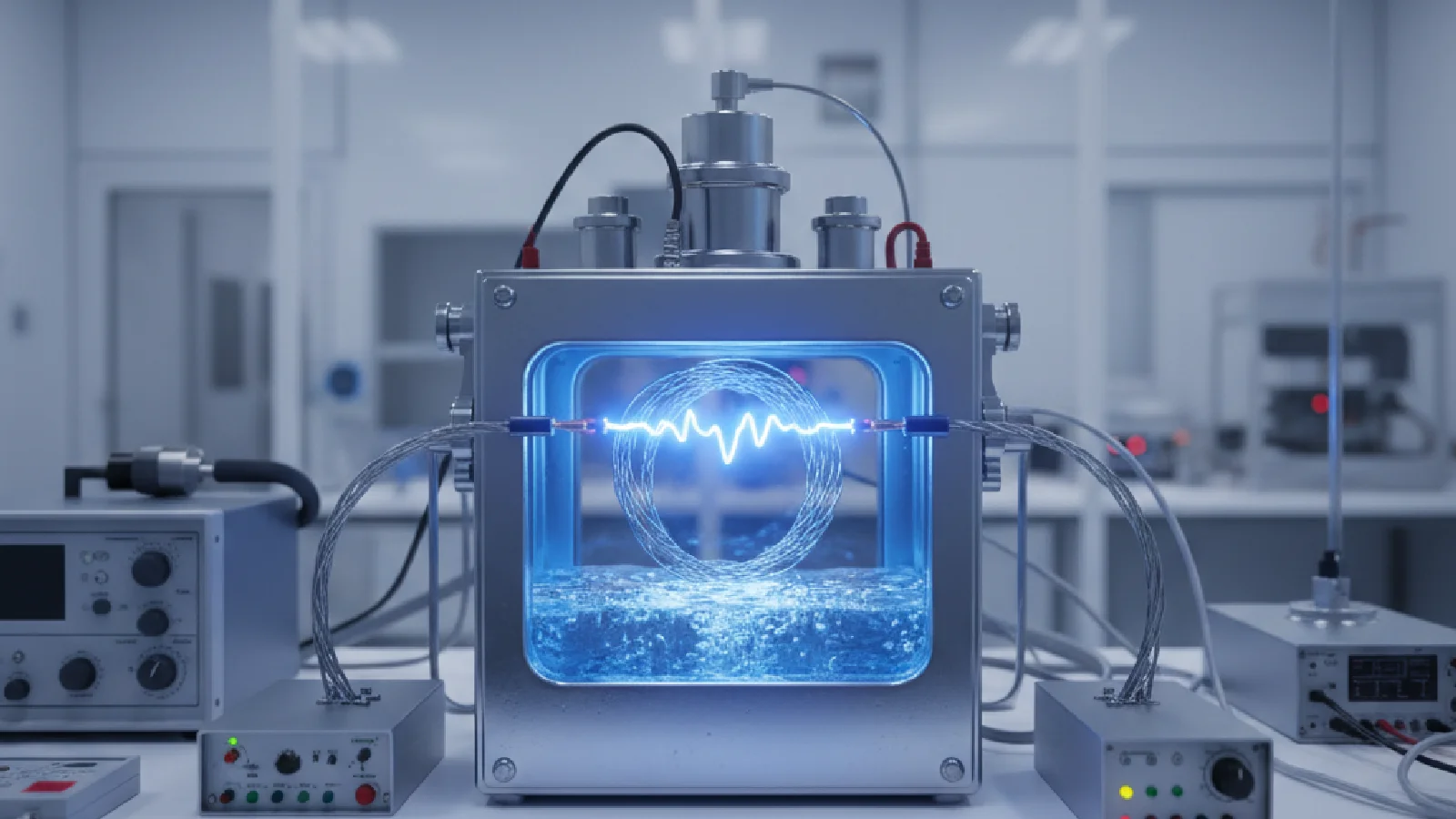
High-temperature superconductors are generating unprecedented renewed interest in the global scientific community. Since Heike Kamerlingh Onnes' historic discovery in 1911, observing the complete disappearance of electrical resistance in mercury at temperatures near absolute zero, researchers have continuously pushed the boundaries of this extraordinary property. To learn more about the fundamental concepts, Superconductivity provides additional information.
Today, recent advances suggest that an energy revolution could occur sooner than expected. From hydrogenated compounds reaching 203 K (-70°C) under extreme pressure to the discovery of natural materials like miassite, the prospects for concrete applications have never been so promising.
This potential transformation concerns two crucial areas: lossless energy transport and the development of quantum technologies. But what are the real stakes and challenges to overcome to make this revolution a reality?

Recent Breakthroughs in High-Temperature Superconductivity
Cuprates: Still Mysterious Pioneers
Since 1987, cuprate superconductors based on copper oxides have operated above 77 K, the temperature of liquid nitrogen. This discovery marked a major turning point, making superconductivity accessible with cooling systems less expensive than liquid helium.
However, the mechanism of electron pairing in these materials remains partially enigmatic. Current research focuses on understanding topological states and Planckian dissipation, phenomena that could pave the way for even more robust superconductors.
The Feat of Hydrides Under Pressure
In 2015, an international team achieved a decisive milestone by reaching 203 K with hydrogenated compounds subjected to pressures of around a million bars. This temperature, although still negative (-70°C), represents an absolute record that brings superconductivity closer to practical operating conditions.
These revolutionary materials demonstrate that the critical temperature can be significantly increased, but at the cost of major technological constraints related to the extreme pressures required.
Miassite: A Unique Case in Nature
More recently, the discovery of miassite, a natural mineral identified in Russia, has shaken up the field. This material exhibits superconducting behavior at a relatively high temperature without requiring extreme cryogenic cooling, as demonstrated by American researchers.
This unique discovery offers an unprecedented perspective: understanding how nature spontaneously produces superconducting properties could inspire the synthesis of new materials.
| Material | Record Critical Temperature | Conditions | Potential Applications |
|---|---|---|---|
| Cuprates | > 77 K | Liquid nitrogen, atmospheric pressure | Electrical grids, electronics |
| Hydrides under pressure | 203 K (-70°C) | Extreme pressure (million bars) | Temperature record |
| Miassite (natural mineral) | Relatively high | Atmospheric pressure | Inspiration for new materials |
Revolutionary Applications in Energy Transport
Zero-Loss Electrical Grids
The most immediate impact of high-temperature superconductors would concern electricity distribution networks. These materials would allow very intense currents to be transported without thermal dissipation, eliminating energy losses that currently account for 8 to 15% of global electricity production.
"Superconductors could transform our distribution networks, high-voltage direct current lines, and magnetic storage systems" - Analysis based on current research, as detailed in this CEA documentSuperconducting transmission lines would offer several decisive advantages:
- Total elimination of Joule effect losses
- Significantly increased transport capacity
- Significant reduction in infrastructure land footprint
- Increased stability of electrical grids
Revolutionary Magnetic Storage
Superconducting Magnetic Energy Storage (SMES) systems represent another promising application. These devices could store electricity without losses long-term, solving one of the major challenges of intermittent renewable energies.
The rapid response time of these systems, on the order of milliseconds, would make them particularly suitable for stabilizing electrical grids against fluctuations in solar and wind power generation.

Impact on Quantum Technologies
Superconducting Qubits and Extended Coherence
In the field of quantum computing, high-temperature superconductors could revolutionize Josephson-type qubits. The suppression of electrical resistance and extended coherence are essential for maintaining the quantum state of information bits.
Research conducted by the Institut quantique de l'Université de Sherbrooke demonstrates the crucial importance of these developments for "accelerating the quantum revolution" and training tomorrow's technological leaders. To explore other aspects of this field, see our article on quantum innovation.
Interconnections and Quantum Circuits
Superconducting interconnections would allow for the creation of more complex and stable quantum circuits. The ability to maintain quantum coherence over longer distances would pave the way for quantum processors of unparalleled power.
This advance could accelerate the development of concrete applications of quantum computing in areas such as cryptography, material simulation, or the optimization of industrial processes.
Technological Challenges and Industrialization Prospects
The Challenge of Extreme Pressures
Despite the exceptional performance of hydrides under high pressure, their industrialization remains problematic. Maintaining pressures of around a million bars in practical applications represents a considerable technological challenge. For more information on research challenges, the question "But what an idea to go looking for superconductivity ..." opens up interesting avenues, as discussed here.
Current research focuses on discovering materials with similar properties at ambient pressure, a goal that mobilizes international teams and massive investments.
Stability and Reproducibility
The long-term stability of new superconductors is another major issue. Industrial applications require reliable materials over several decades, a constraint that necessitates in-depth studies of aging and degradation.
Reproducibility of synthesis also represents a challenge for the large-scale production of these complex materials.
Costs and Economic Viability
The economic equation remains crucial for widespread adoption. While energy savings justify significant initial investments, economic viability will depend on the ability to reduce production and maintenance costs.
Prospective analyses suggest that the break-even point could be reached as early as 2030 for certain specialized applications, gradually paving the way for broader deployments.
Towards an Unexpected Energy Revolution
Technological Convergence
The convergence between advances in materials science, progress in quantum physics, and growing needs for energy efficiency creates a favorable context for a rapid revolution. Synergies between these fields could accelerate developments beyond current forecasts.
Integration with other emerging technologies such as graphene or synthetic biotechnologies could multiply innovation possibilities.
Geopolitical and Industrial Stakes
Mastering high-temperature superconductors represents a major geopolitical challenge. Nations that succeed in industrializing these technologies first will gain considerable competitive advantages in energy and quantum computing.
This technological race mobilizes significant public and private investments, particularly in Asia, Europe, and North America.
Conclusion
High-temperature superconductors are at a decisive turning point in their development. Between the temperature records of hydrides under pressure, the still unresolved mysteries of cuprates, and unexpected discoveries like miassite, the field is experiencing remarkable effervescence.
While technological challenges remain considerable, the prospects for revolutionary applications in energy transport and quantum technologies justify the growing optimism of the scientific community. The convergence between societal needs, scientific advances, and massive investments could indeed precipitate an energy revolution earlier than anticipated.
2026 could mark a turning point with the emergence of the first significant industrial deployments, paving the way for a profound transformation of our energy and computing systems in the following decade.