Nanotechnology and Bacteria: Revolutionizing Sustainable Agriculture
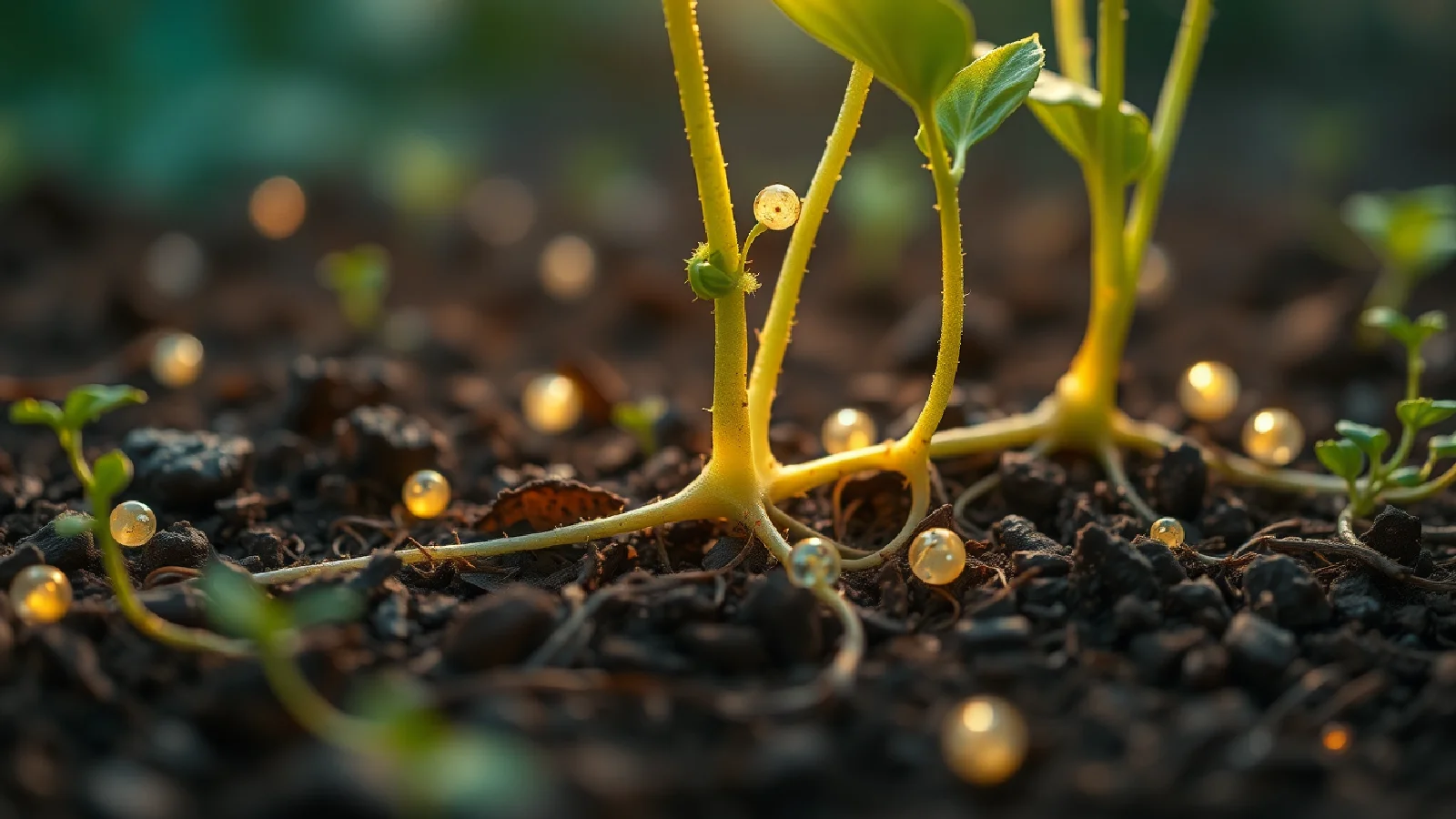
Modern agriculture faces a major challenge: feeding a growing global population while preserving the environment. While traditional fertilizers show their limitations in terms of efficiency and ecological impact, a new approach is emerging at the intersection of nanotechnology and microbiology. Nanocoated bacteria now represent a promising innovation that could revolutionize sustainable fertilization and transform our agricultural practices.
These beneficial microorganisms, coated with specially designed nanoparticles, combine the advantages of traditional biofertilizers with the unique properties of nanomaterials. This synergy opens new perspectives for more environmentally friendly and economically viable agriculture.
The Scientific Foundations of Nanocoated Bacteria
Nano-biofertilizers result from the encapsulation of beneficial microorganisms in nanoparticles of zinc oxide, aluminum oxide, silica, or biochar. This innovative approach protects bacteria from environmental stress conditions while optimizing their action on crops. Nanotechnology is a scientific field that manipulates matter at the atomic and molecular scale, creating structures, materials, and devices with novel properties.
The principle is based on the bacteria's ability to perform essential biological processes: atmospheric nitrogen fixation, inorganic phosphorus solubilization, and plant growth hormone production. The nanometric coating significantly improves the survival of these microorganisms in the soil and their efficiency in interacting with plant roots.

These revolutionary formulations increase the interaction surface between bacteria and their environment, thereby promoting nutrient adsorption and their controlled release near the roots. Targeted release allows for optimal utilization of nutritional resources by plants.
Recent research conducted in Mexico has isolated particularly effective bacterial consortia, capable of synergistically solubilizing phosphorus and fixing nitrogen. These discoveries pave the way for the development of low-cost local products that could replace high-carbon footprint industrial fertilizers.
Performance and Efficacy of Nano-Biofertilizers
Experimental results demonstrate the remarkable efficacy of nanocoated bacteria compared to conventional fertilizers. Nutrient use efficiency improves by 20 to 40%, representing a substantial gain for agricultural productivity.
This improvement is explained by several mechanisms:- Increased protection against UV and microbial competition
- Optimized rhizosphere colonization
- Gradual and controlled release of nutrients
Leaching losses significantly decrease, thereby reducing pollution of groundwater and waterways. At the same time, N₂O emissions, a particularly problematic greenhouse gas in intensive agriculture, are considerably reduced.
"The integration of nanotechnology into agriculture through nano-biofertilizers offers a sustainable solution to modern agricultural challenges, improving nutrient use efficiency while promoting better soil health." - Springer Nature Research
Soil health also benefits from these innovations, with a notable stimulation of microbial diversity. This increased biodiversity contributes to the resilience of the agricultural ecosystem and its ability to adapt to environmental stresses.
Practical Applications and Commercial Development
The nano-biofertilizer sector is experiencing rapid development, with diverse applications depending on crop types and pedoclimatic conditions. Formulations can be adapted to the specific needs of each agricultural system.
These technologies are primarily applied through:- Seed treatment before planting
- Foliar application during growth
- Direct incorporation into the soil
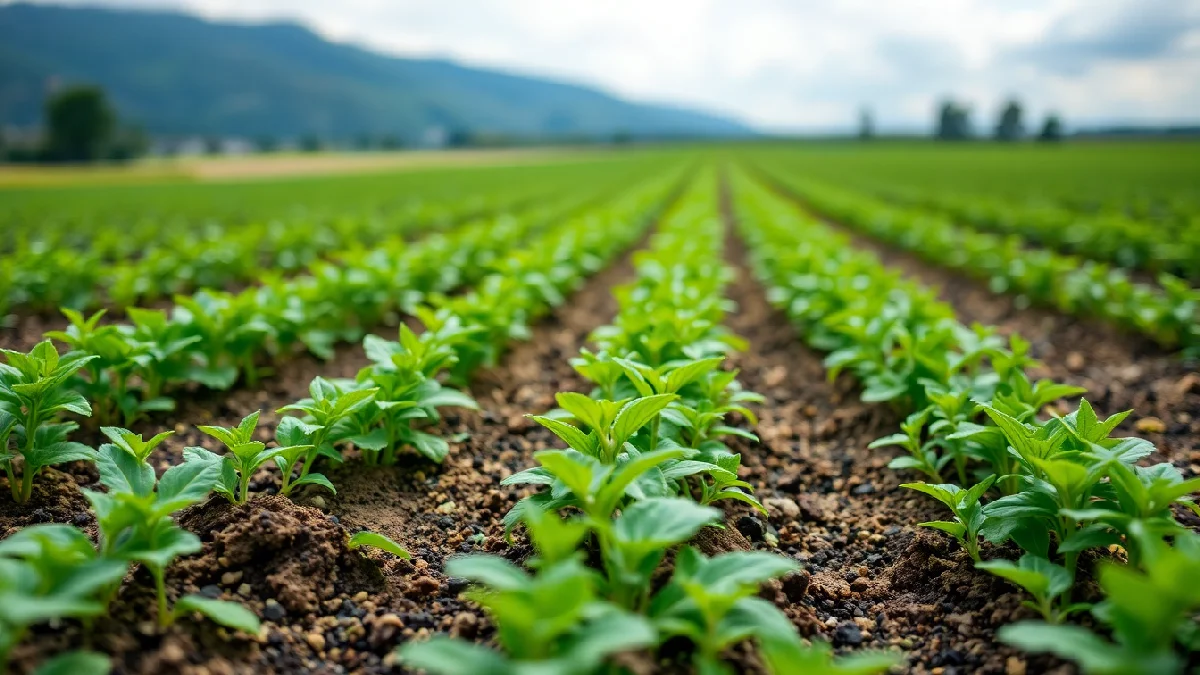
Production costs remain competitive compared to traditional fertilizers, especially since efficiency gains largely offset the initial investment. This economic viability encourages adoption by farmers, particularly in regions where access to chemical fertilizers is limited.
Collaborations between research institutes and agricultural companies accelerate the transfer of these technologies to farms. These partnerships allow for adapting formulations to local conditions and optimizing application protocols.
| Aspect | Characteristics |
|---|---|
| Production Costs | Competitive compared to traditional fertilizers |
| Economic Viability | Efficiency gains offsetting initial investment |
| Adoption | Favored in regions with limited access to chemical fertilizers |
| Development | Accelerated by research-industry collaborations for adaptation and optimization |
Environmental Impact and Sustainability
The adoption of nanocoated bacteria is part of a regenerative agriculture approach that aims to restore the natural fertility of soils. Unlike chemical fertilizers that can deplete soil resources in the long term, these bio-formulations enrich the microbial ecosystem.
The reduction in dependence on inorganic fertilizers offers several major environmental benefits. The carbon footprint of agricultural production significantly decreases, contributing to the agricultural sector's carbon neutrality goals by 2050.
Research conducted by INRAE demonstrates that soil microorganisms play a crucial role in the development of sustainable agriculture. This work confirms the strategic importance of innovations in the field of plant-microorganism interactions.
Integrating these technologies into agroecological practices allows farmers to maintain high yields while respecting natural ecosystems. This holistic approach meets the growing demands of consumers for responsible food production.
Technological Challenges and Future Prospects
Despite their undeniable advantages, nano-biofertilizers face several technological and regulatory challenges. The stability of formulations under different environmental conditions requires continuous research to optimize the viability of encapsulated microorganisms.
Questions of biosafety and long-term impact on natural microbial ecosystems require in-depth studies. Regulatory authorities are gradually developing specific frameworks for the evaluation and approval of these new technologies.
Scaling up production is a major industrial challenge. Manufacturing processes must be optimized to maintain product quality while reducing production costs. This industrialization requires significant investment in research and development.
Educating farmers on good usage practices also represents a crucial challenge. Training on application protocols and raising awareness of long-term benefits are essential to ensure the success of these technologies in the field.
This revolutionary approach, similar to innovations in synthetic biology, transforms our understanding of biotechnological interactions in modern agriculture.
Conclusion
Nanocoated bacteria represent a silent revolution in modern agriculture, offering a viable and sustainable alternative to intensive agricultural practices. This innovation, combining microbiological expertise and cutting-edge nanotechnology, paves the way for more environmentally friendly agriculture without compromising productivity.
The significant improvement in nutrient use efficiency, coupled with the reduction of environmental impacts, positions this technology as a key element of the agroecological transition. The promising results obtained in different geographical and climatic contexts confirm the universal potential of these solutions.
The future of sustainable agriculture is taking shape through these innovations that reconcile economic performance and environmental responsibility. Growing investments in the research and development of these technologies, combined with evolving regulatory frameworks, suggest widespread adoption in the coming years.
Just as advances in high-temperature superconductors are revolutionizing the energy sector, nano-biofertilizers are fundamentally transforming our approach to agricultural production, opening new perspectives for sustainably feeding a constantly growing global population.