Synthetic Biology vs. Biomanufacturing: The Biotech Industry Faces a Strategic Choice
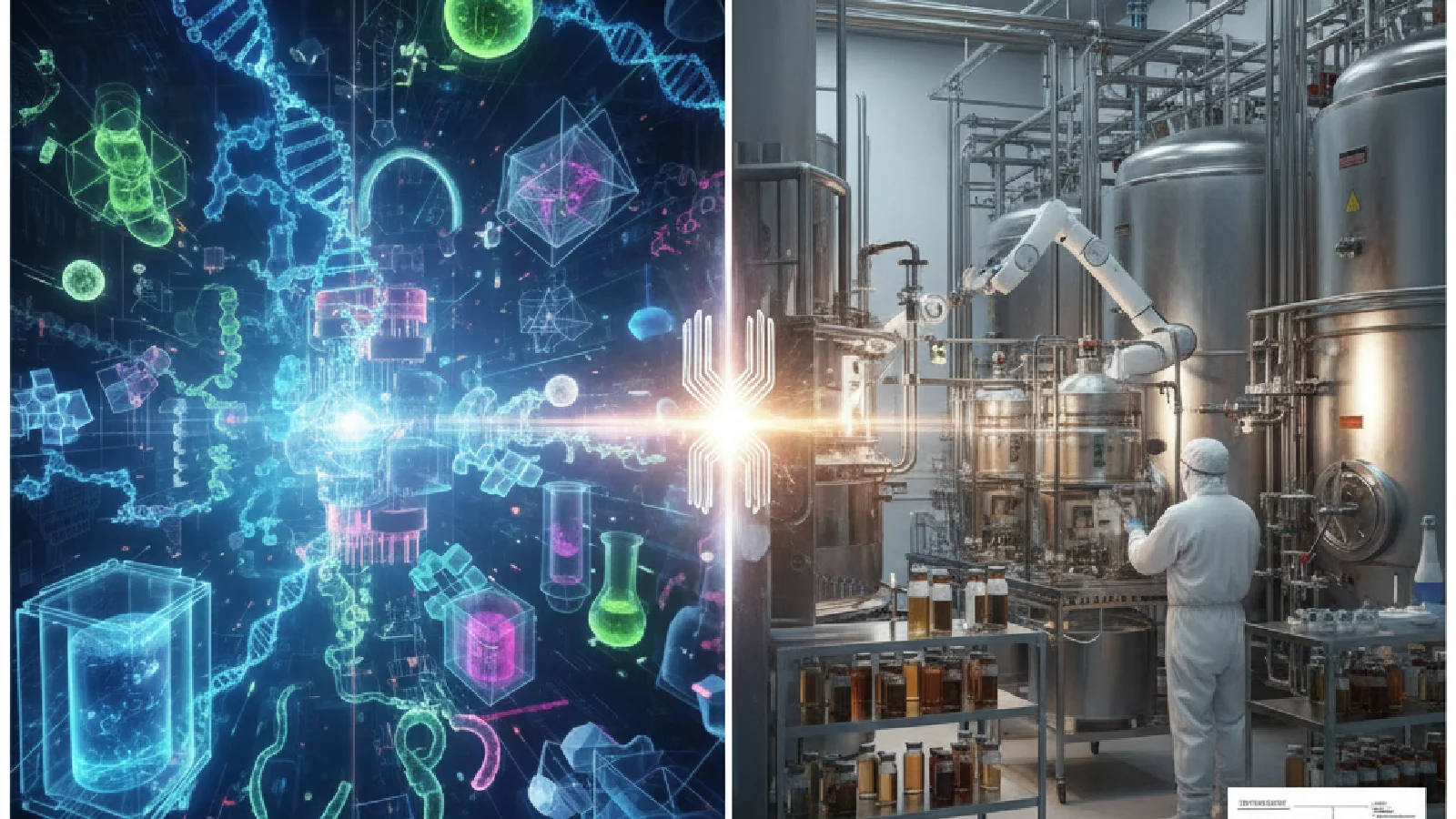
The biotechnology industry is entering a decisive decade where two major approaches are vying for investment and industry attention. On one side, synthetic biology promises to revolutionize the creation of entirely new products through cell reprogramming. On the other, traditional biomanufacturing continues to ensure the mass production of established molecules with proven reliability.
This duality raises a crucial question for decision-makers: which path should be prioritized between 2026 and 2036? Market data analysis reveals two complementary rather than competing trajectories, each addressing specific industrial needs with its own challenges and opportunities.
Markets with Contrasting Dynamics
Synthetic biology shows remarkable growth with an anticipated average annual rate of 15% over the 2026-2036 period, reaching a valuation of 35 to 40 billion USD. This expansion is driven by the emergence of new high-value-added segments:
- performance biopolymers
- custom industrial enzymes
- functional food ingredients
- advanced cell therapies
Traditional biomanufacturing, being more mature, exhibits more moderate growth of 8 to 10% annually, aiming for 50 to 60 billion USD by 2036. This approach consolidates its position in established markets:
- specialty chemicals
- therapeutic proteins
- conventional vaccines
- second-generation biofuels
"Synthetic biology creates new markets while biomanufacturing optimizes existing markets – two essential strategies for the biotechnology ecosystem."
Data from IDTechEx confirms this trend with increasing investments in emerging technologies, particularly in the sustainable biofuels sector where both approaches converge.
| Approach | Annual Growth (2026-2036) | 2036 Valuation (USD) | Target Markets |
|---|---|---|---|
| Synthetic Biology | 15% | 35-40 billion | New segments (biopolymers, custom enzymes, advanced therapies) |
| Biomanufacturing | 8-10% | 50-60 billion | Established markets (specialty chemicals, therapeutic proteins, vaccines, biofuels) |
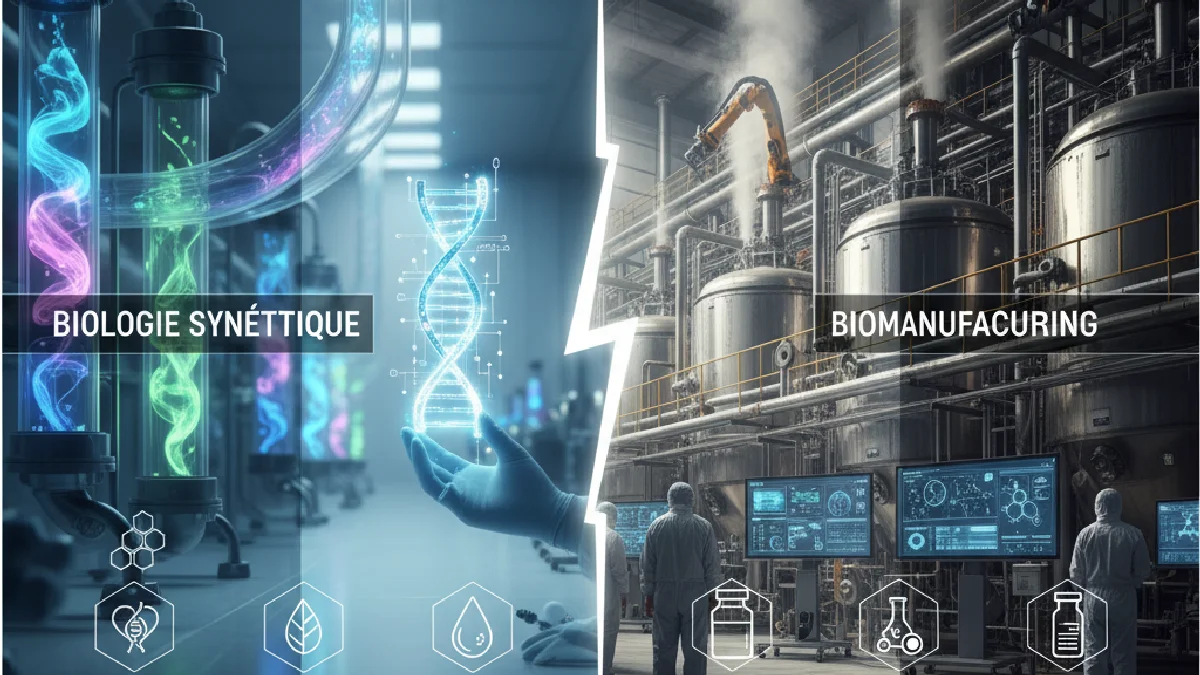
Technological Challenges: Complexity Versus Scaling
Synthetic Biology: Mastering Uncertainty
The challenges of synthetic biology primarily lie in:
- Reliable design of robust cellular chassis
- Standardization of "design-build-test-learn" cycles
- Management of metabolic toxicity of new products
- Regulatory harmonization for genetically modified organisms
The inherent complexity of cell reprogramming requires massive investments in fundamental research and intellectual property. Companies like Ginkgo Bioworks and Synthetic Biology are investing hundreds of millions to develop automated biological design platforms.
Biomanufacturing: Optimizing the Existing
Biomanufacturing faces different but equally critical challenges:
- Optimization of large-scale fermentation processes
- Control of variability in biological raw materials
- Strict compliance with Good Manufacturing Practices (GMP)
- Continuous reduction of purification and separation costs
The major challenge remains economic scalability, especially for biofuels where competitiveness against fossil fuels remains a permanent hurdle.
Economic Models: Innovation Versus Volume
High Margins Versus High Risks
Synthetic biology offers prospects for higher margins through:
- Shorter and more efficient biosynthetic pathways
- Creation of high-value-added market niches
- Significant product differentiation
- High technological barriers to entry
However, these advantages come with substantial initial investments and significant technological risks. Return on investment can take 8 to 12 years depending on development complexity.
Stability and Predictability of Biomanufacturing
Biomanufacturing prioritizes economic stability with:
- A mature and reliable supply chain
- Controlled technological risks
- Predictable revenue streams
- An established customer base
Margins are more modest, but revenue stability attracts institutional investors seeking regular returns.
| Economic Model | Key Advantages | Major Disadvantages/Risks |
|---|---|---|
| Synthetic Biology | Higher margins, high-value niches, differentiation | Massive initial investments, high technological risks, long ROI (8-12 years) |
| Biomanufacturing | Economic stability, predictable revenues, controlled risks | More modest margins |
Application Sectors and Strategic Positioning
Synthetic Biology: The Markets of Tomorrow
Emerging applications of synthetic biology focus on:
- Health: personalized gene therapies, next-generation mRNA vaccines
- Materials: custom bioplastics, bio-based textile fibers
- Food: alternative proteins, natural flavors and colorants
- Cosmetics: biosynthesized active ingredients, alternatives to controversial substances
Biomanufacturing: Optimized Mass Production
Biomanufacturing dominates established segments:
- Pharmaceuticals: monoclonal antibodies, recombinant hormones, traditional vaccines
- Chemistry: organic acids, bio-based solvents, chemical intermediates
- Energy: cellulosic ethanol, second-generation biodiesel
- Agri-food: industrial enzymes, probiotics, food additives
Technological Convergence and Hybridization of Approaches
The opposition between these two paths is gradually fading. Biomanufacturing facilities are increasingly integrating advanced synthetic circuits to optimize their processes. Conversely, synthetic biology companies are adopting scaling strategies inspired by traditional biomanufacturing.
This convergence is particularly evident in the development of hybrid platforms combining the flexibility of synthetic design with the robustness of proven industrial processes. Projects like CRISPR 2025 illustrate this trend towards technology hybridization.
Environmental Impact and Sustainability
Both approaches offer complementary advantages in terms of sustainable development. Synthetic biology enables the creation of bio-based alternatives to petroleum products, reducing the overall carbon footprint. Biomanufacturing optimizes the use of existing biomass, maximizing the energy yield of renewable raw materials.
The integration of advanced technologies like 3D bioprinting opens new perspectives for both sectors, particularly in the production of complex biological materials.
Conclusion
The opposition between synthetic biology and biomanufacturing actually conceals essential strategic complementarity. Synthetic biology emerges as the engine of disruptive innovation, creating new high-value-added markets but with high technological and financial risks. Biomanufacturing remains the pillar of mass production, offering economic stability and operational reliability.
The future of the biotechnology industry likely lies in the hybridization of these two approaches. The most successful companies by 2036 will be those that can combine the creativity of synthetic design with the efficiency of proven industrial processes, thus creating a third path that combines innovation and scalability.
This progressive convergence suggests that the choice will no longer be binary between synthetic biology and biomanufacturing, but strategic regarding the optimal allocation of resources between disruptive innovation and continuous optimization.