3D Bioprinting: Towards Complete Organs by 2026?
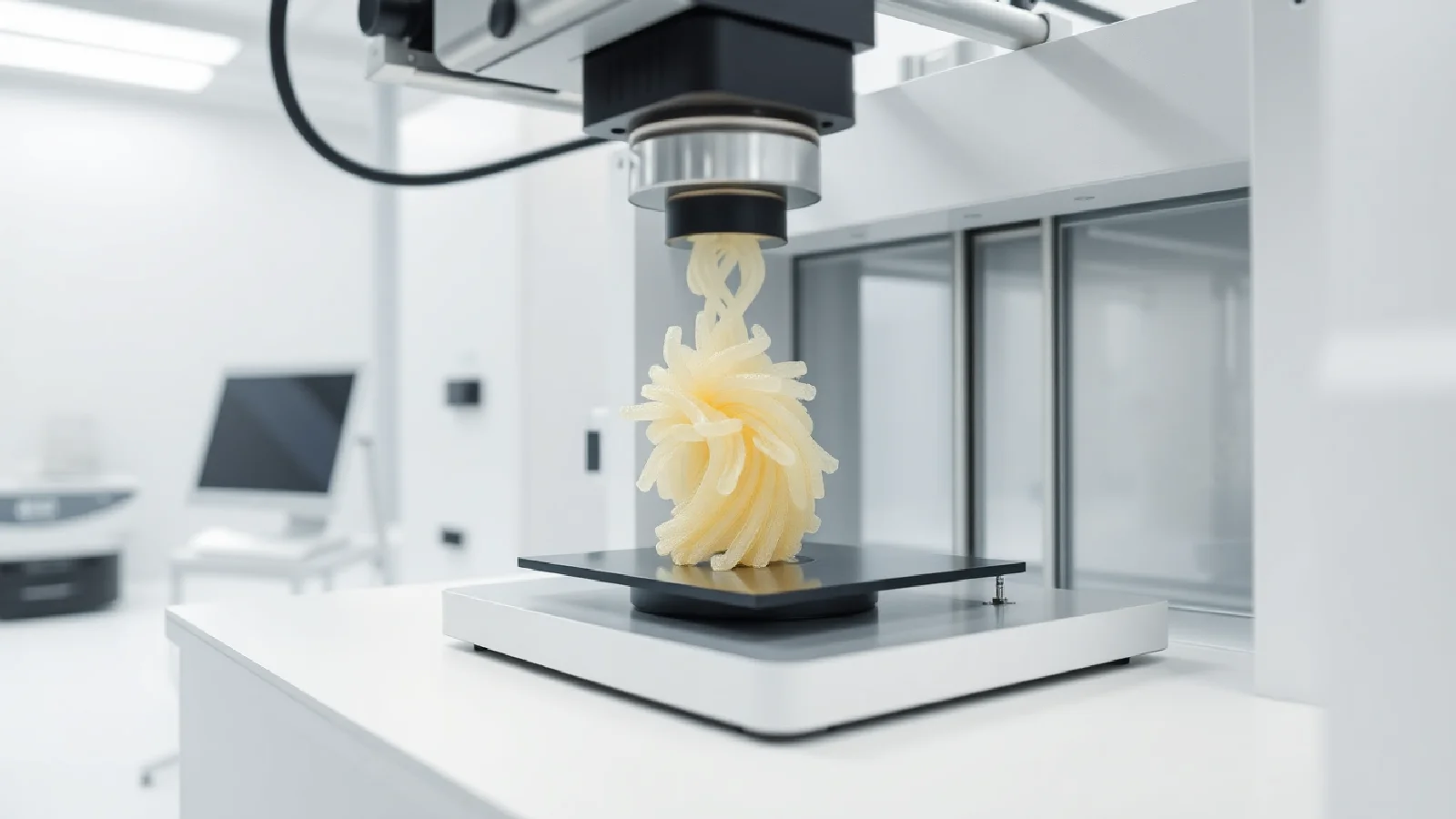
In 2025, 3D bioprinting is experiencing spectacular acceleration. This additive manufacturing technology, which layers bio-inks containing living cells, is now moving beyond simple tissue reconstruction to venture into the creation of complex functional organs. With over 26,000 patients awaiting a transplant in France, this innovation could revolutionize organ transplantation in the coming years.
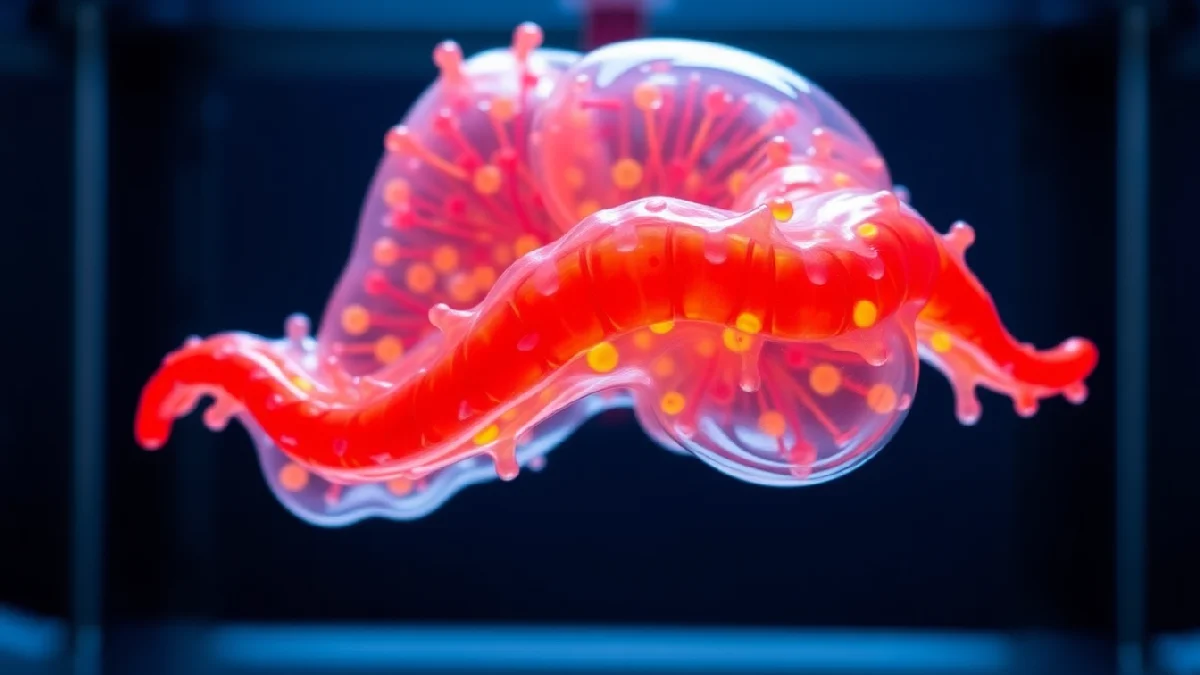
The global bioprinting market, valued at $2.15 billion in 2026, is projected to reach nearly $4 billion according to the latest forecasts. This explosive growth is driven by major technological advancements that are progressively transforming the futuristic vision of printed organs into a tangible clinical reality.
From Tissues to Organs: Current Bioprinting Achievements
Next-generation bio-inks now allow for the printing of biological structures of unparalleled complexity. Beyond initial successes with artificial skin and cartilage, research laboratories are now developing miniaturized organ prototypes capable of performing essential biological functions.
Teams at Carnegie Mellon University recently presented functional heart segments printed from collagen, capable of pumping blood for short periods. Simultaneously, researchers at Rensselaer Polytechnic Institute successfully printed 3D skin integrating blood vessels, thus overcoming a major obstacle in tissue vascularization.
"3D bioprinting could be used to address crucial public health challenges, such as the demand for human organ and tissue repair or transplantation" - World Health Organization, 2023
These advancements rely on the continuous improvement of printing techniques, including bio-ink extrusion, magnetic levitation, and high-precision laser processes. Each method offers specific advantages: extrusion for voluminous structures, laser for cellular precision, and magnetic levitation for delicate tissues.
| Printing Technique | Key Specifics |
|---|---|
| Extrusion | Voluminous structures |
| High-precision laser | Cellular precision |
| Magnetic levitation | Delicate tissues, self-assembly |
The Revolution of Functional Organoids
2025 marks a turning point with the development of cerebral organoids and miniaturized organs capable of metabolizing drugs. These biological models, though still small, faithfully reproduce the functions of their natural counterparts and open up considerable prospects for pharmaceutical research.
Specialized startups like Organovo and several university centers have demonstrated the viability of preclinical prototypes of liver, kidney, and heart. These miniature organs maintain their metabolic activity long enough to serve as models for studying pathologies and testing new treatments.
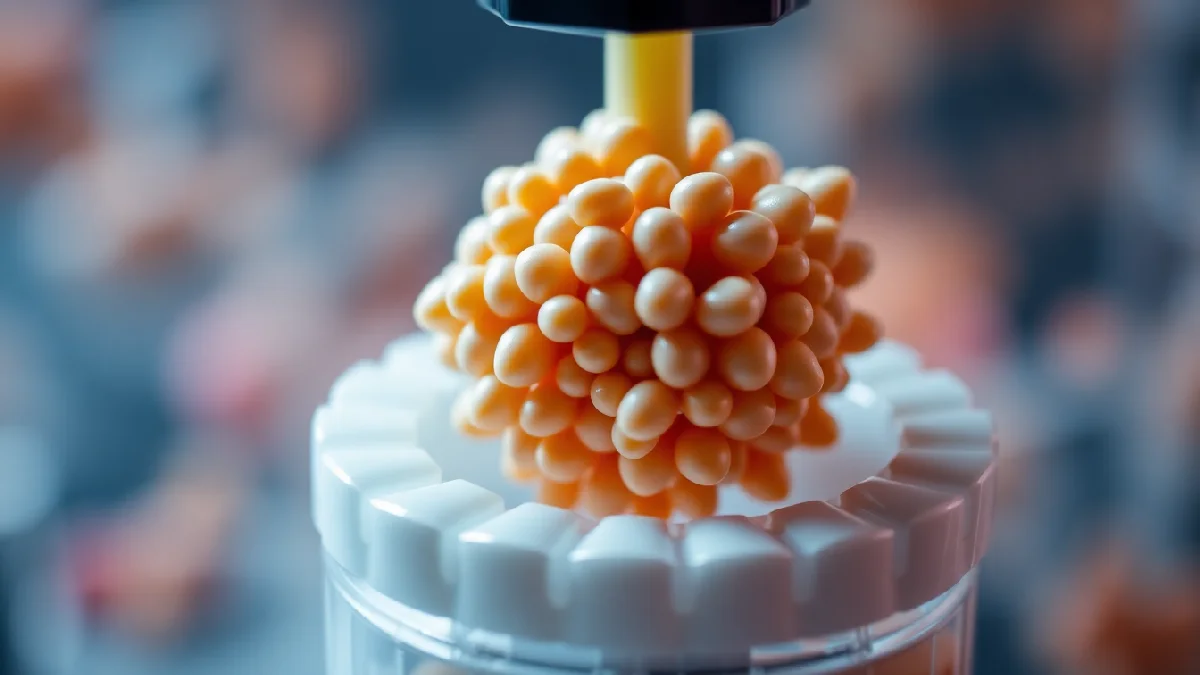
Precision medicine particularly benefits from these advances, allowing the testing of personalized therapies on organoids derived from the patient's cells. This approach revolutionizes new drug development by significantly reducing validation times and costs.
Technical Challenges: Vascularization and Cell Viability
Despite these remarkable progress, three major obstacles still hinder the transition to human-sized therapeutic organs. The first challenge concerns the creation of a dense and functional vascular system. A therapeutic-sized organ requires a complex capillary network to ensure oxygenation and nutrition of every cell.
Researchers are exploring several promising avenues:- Simultaneous printing of integrated vascular channels
- Use of growth factors to stimulate angiogenesis
- Development of self-organizing bio-inks
The second challenge relates to the standardization of manufacturing processes. Unlike traditional medical devices, each bioprinted organ has unique characteristics linked to cellular variability and printing conditions. This heterogeneity complicates regulatory validation and necessitates the development of new quality standards.
Regulatory and Clinical Perspectives for 2026
The World Health Organization published a foresight report in 2023 on 3D bioprinting and global health, emphasizing the importance of adapted regulation to oversee this emerging technology. Questions of quality, safety, efficacy, and equitable access remain at the heart of regulatory concerns.
Immunological validation is a crucial issue for the clinical acceptance of bioprinted organs. Although using the patient's own cells theoretically reduces the risk of rejection, bioprinting and tissue maturation processes can alter the antigenic properties of the cells.
By 2026, experts anticipate limited clinical use of bioprinted organs as temporary grafts or therapeutic bridges while awaiting traditional transplantation. This approach will allow for the acquisition of necessary clinical experience while preparing for the validation of durable organs by 2030.
Immediate Applications: Training and Research
In parallel with the development of therapeutic organs, 3D bioprinting is already transforming current medical practices. At Bordeaux University Hospital, printing models of tumor-affected kidneys optimizes surgical preparation and improves medical student training.
These "transitional" applications are already generating significant clinical impact by allowing surgeons to train on perfectly faithful anatomical models. This approach reduces operative risks and improves therapeutic outcomes, justifying current investments in this technology.
Integration with modern scientific research methods also accelerates the development of new bioprinting protocols. Artificial intelligence optimizes bio-ink design, while numerical simulations predict the behavior of printed tissues.
The Industrial Ecosystem in Full Structuring
The 3D bioprinting sector is attracting massive investments with an annual growth rate of 17.9% projected until 2035 according to market analyses. This dynamic fosters the emergence of a structured industrial ecosystem combining large pharmaceutical companies, technology startups, and academic research centers.
Public-private partnerships are multiplying to fund fundamental research while accelerating technology transfer to clinical applications. This collaboration between traditional healthcare players and technology companies creates an environment conducive to innovation, similar to dynamics observed in quantum innovation and AI.
Conclusion
3D bioprinting in 2026 stands at the crossroads between current successes with simple tissues and the ambition of complete functional organs. While the creation of human-sized therapeutic organs remains a major technical challenge, recent advances in vascularization and functional organoids pave a promising path towards this goal.
By 2026, experts anticipate the emergence of the first clinical applications of bioprinted organs as temporary solutions, preparing for the therapeutic revolution expected in the 2030s. This gradual transition will allow for the acquisition of the necessary regulatory and clinical experience to definitively validate this revolutionary technology.
The stakes go beyond mere technical prowess: it is about fundamentally transforming the approach to regenerative medicine and offering a sustainable alternative to the chronic shortage of organs. 3D bioprinting thus embodies one of the most promising innovations to revolutionize healthcare in the coming years.