Quantum Innovation and AI: The Role of Startups in 2025
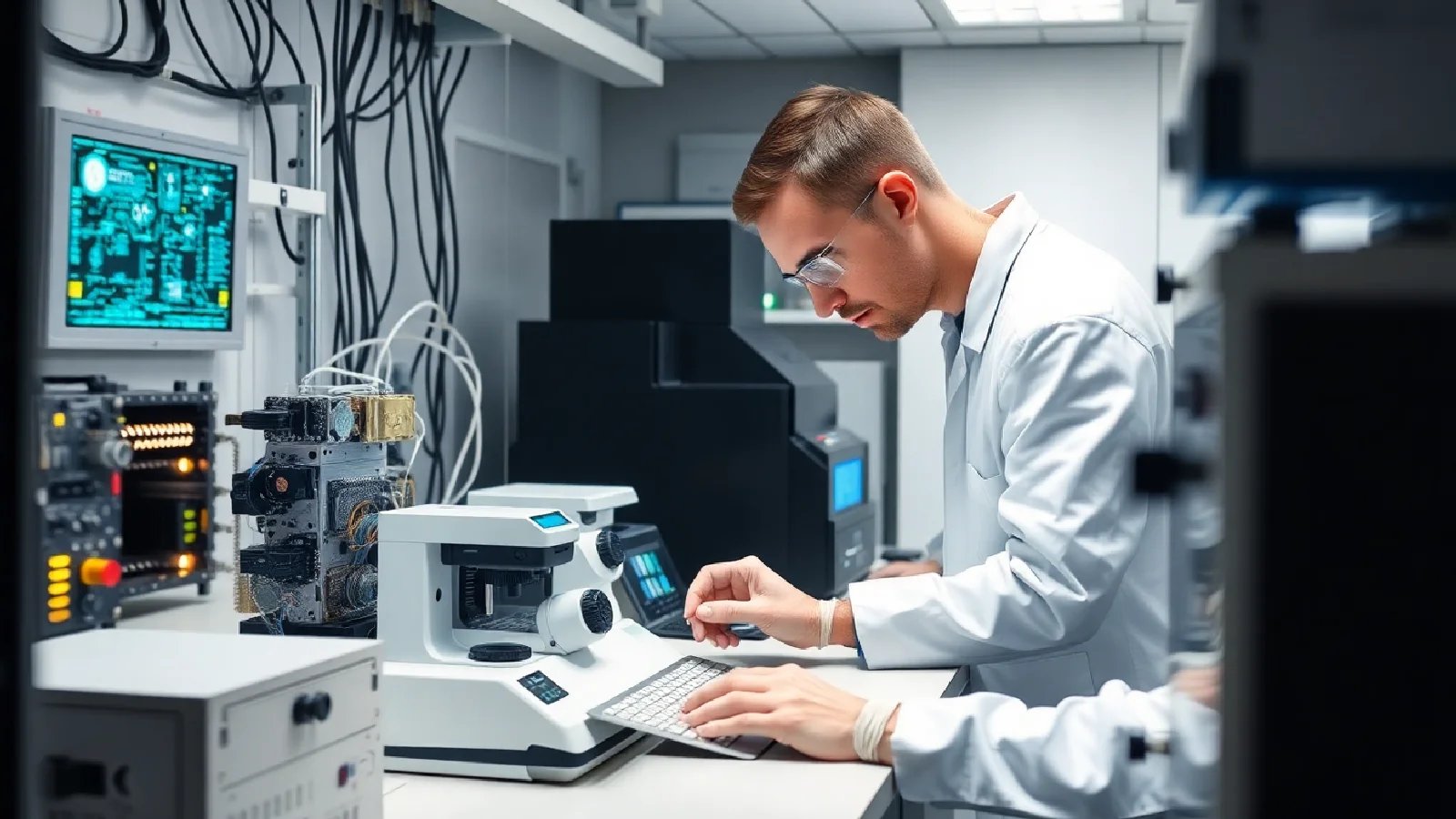
The year 2025 marks a decisive turning point in the landscape of scientific and technological research, where the dynamism of startups, both French and international, is proving to be the main driver of this transformation. By combining the rapid advances of artificial intelligence (AI), the promises of quantum chips, and the urgency of climate technologies, these young companies are redefining the boundaries of innovation and discovery. This synergy is not accidental, but rather the convergence of major societal challenges and unprecedented technological opportunities.
AI, with its generative models and advanced automation, has already permeated all sectors of the global economy, from industry to health and education. However, the market is characterized by a concentration of investments and resources in the hands of a few global players, raising legitimate questions about the ability of new startups to emerge. The 2025 Startup Festival, organized by Inria Startup Studio, highlighted this issue, emphasizing that despite a tight market, innovation niches still exist, provided that technically sound and relevant solutions are offered ¹.
It is in this dynamic and competitive context that startups are establishing themselves as key players. They specialize in niche applications, where generative AI can analyze immense experimental datasets, accelerate the discovery of new materials, and optimize climate models. Simultaneously, the integration of ethical considerations, sovereignty, and energy efficiency becomes an imperative, as public trust in science and technology is eroding, a phenomenon that scientific research methods: the engine of future innovations seek to counter.
Startups, Catalysts for Scientific Research through AI
Artificial intelligence is undeniably the technology with the greatest potential impact on economic activity, with 65% of decision-makers surveyed by Viva Technology in 2025 affirming this conviction, ahead of cybersecurity (41%) and cloud (39%). Consequently, 85% of companies plan to increase their investments in AI over the next 12 months. This dynamism opens up immense opportunities for startups positioning themselves at the forefront of scientific research. They leverage generative AI to analyze colossal volumes of experimental data, a task once unimaginable, thereby accelerating discovery processes that used to take years.
Generative AI and Material Discovery
Startups are emerging with AI-based solutions for the discovery of new materials. By using deep learning algorithms, they can simulate the properties of novel materials and predict their behavior even before their physical synthesis. This revolutionary approach not only saves time and resources but also paves the way for breakthroughs in critical areas such as energy or medicine. AI becomes an indispensable tool for researchers, complementing and augmenting their capabilities, as explained in precision medicine research.
Optimization of Climate and Energy Models
Facing the climate emergency, generative AI-focused startups are also tackling the optimization of climate models. They enable the refinement of forecasts, the simulation of the impact of different environmental policies, and the development of more effective mitigation strategies. This predictive capability is crucial for guiding decision-makers in formulating informed climate policies. Furthermore, AI is being used to design more efficient energy storage systems and low-carbon sensors, essential innovations for the energy transition.
| Key Impact of AI on Scientific Research | Detail |
|---|---|
| Experimental Data Analysis | Exploitation of colossal data volumes, acceleration of discoveries. |
| Discovery of New Materials | Simulation of properties, behavioral prediction before synthesis. |
| Optimization of Climate Models | Refinement of forecasts, simulation of environmental impacts. |
| Energy Design | High-performance storage systems, low-carbon sensors. |
The Dawn of the Quantum Era, Driven by Young Companies
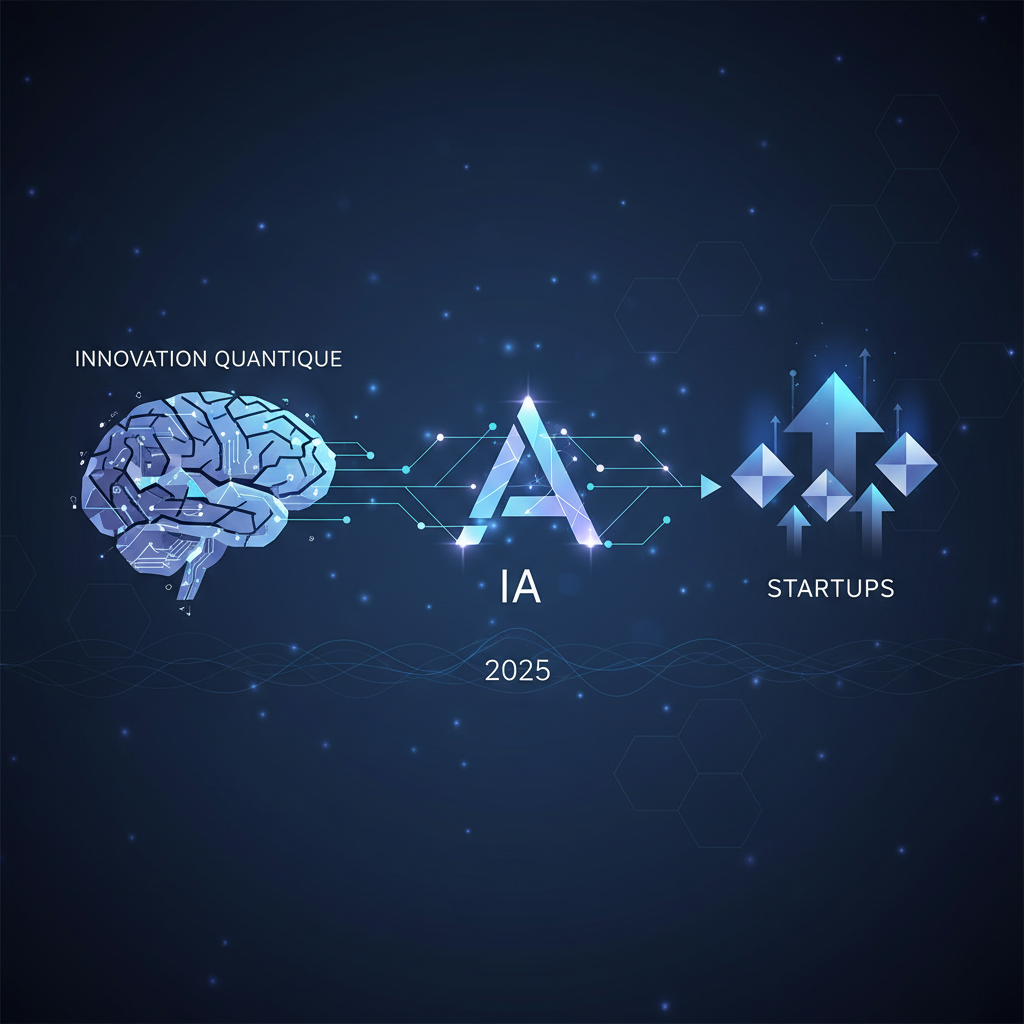
Quantum technologies represent a revolution in the making, offering a computational language capable of coding complex systems previously impossible to model ³. While they are not intended to permeate all scientific fields, they mark a decisive turning point, allowing a shift from a logic of accidental discovery to a capacity for systematized prediction. The market for "on-demand" quantum processors is estimated to exceed 20 billion dollars by the end of 2025, a figure that testifies to the growing interest in this technology. A first wave of startups, often originating from university laboratories, plays a crucial role in the commercialization of these advances.
Accessible Quantum Processors
Incubated and supported by structures such as Inria Startup Studio in France, Québec Quantique, or Numana, a catalyst for technological ecosystems in Quebec, these startups are making the first quantum processors accessible to researchers. These platforms allow the simulation of chemical and physical phenomena inaccessible to classical supercomputers, thus opening up new perspectives in understanding matter, developing new drugs, or cryptography. Canada, through initiatives like Numana, aims to position Quebec as a global player in strategic quantum niches ⁴.
Funding and Collaborations for Quantum
The rise of quantum startups is supported by targeted public funding that encourages large groups to co-invest. Dedicated support programs for quantum technologies, as well as bilateral collaborations between startups and research centers, create an ecosystem conducive to innovation. The combination of quantum computing power and AI algorithms is a promising synergy, capable of solving extremely complex problems, particularly in climate and energy research.

Integrating Requirements: Trust, Sovereignty, and Efficiency
In 2025, environmental, regulatory, societal, and European sovereignty concerns have become central to the AI sector ¹. Startups can no longer simply offer innovative solutions; they must also integrate these requirements from the design stage of their projects. The erosion of public trust, a major trend identified by NATO in its Science and Technology Trends 2025-2045 report, underscores the importance of responsible and ethical AI ².
Responsible AI and Data Sovereignty
Successful startups are those that develop responsible AI, respectful of privacy, and transparent in their operations. The issue of data sovereignty is also paramount, particularly in Europe, where the will is to control infrastructure and technologies to avoid excessive dependence on foreign actors. Support programs dedicated to responsible AI are being implemented to assist these young companies in this endeavor.
The Imperative of Energy Efficiency
Advanced technologies, whether AI or quantum, are energy-intensive. Startups are innovating by developing more efficient algorithms and optimized hardware architectures to reduce their carbon footprint. Energy efficiency is no longer an option but a necessity, at the heart of tech companies' concerns and innovations. These initiatives are part of a sustainable development approach, essential for even the most cutting-edge scientific discoveries to benefit society as a whole.
Here are the key requirements that startups must integrate in 2025:- Public Trust: Develop transparent and ethical solutions to counter the erosion of trust.
- Data Sovereignty: Control infrastructure and technologies to reduce dependence on foreign actors.
- Energy Efficiency: Design optimized algorithms and hardware architectures to reduce carbon footprint.
- Social Responsibility: Integrate environmental and regulatory concerns from project conception.
Conclusion
The year 2025 is undoubtedly the year when startups establish themselves as essential players in the transformation of scientific research. By navigating agilely between the challenges of AI and the opportunities of quantum, while integrating the imperatives of sustainability, they are creating an ecosystem where innovation is not only a source of technological progress but also of societal value. Targeted public funding, support programs, and collaborations with research centers are all levers that amplify their impact, thus stimulating a highly skilled workforce and bridging the gap between fundamental science and industrial applications. The prospects are immense, and the contributions of these young companies will undeniably shape our future. To learn more about these dynamics, discover our other articles on Science & Research.