Search for Extraterrestrial Life: NASA's New Biotechnology Tools
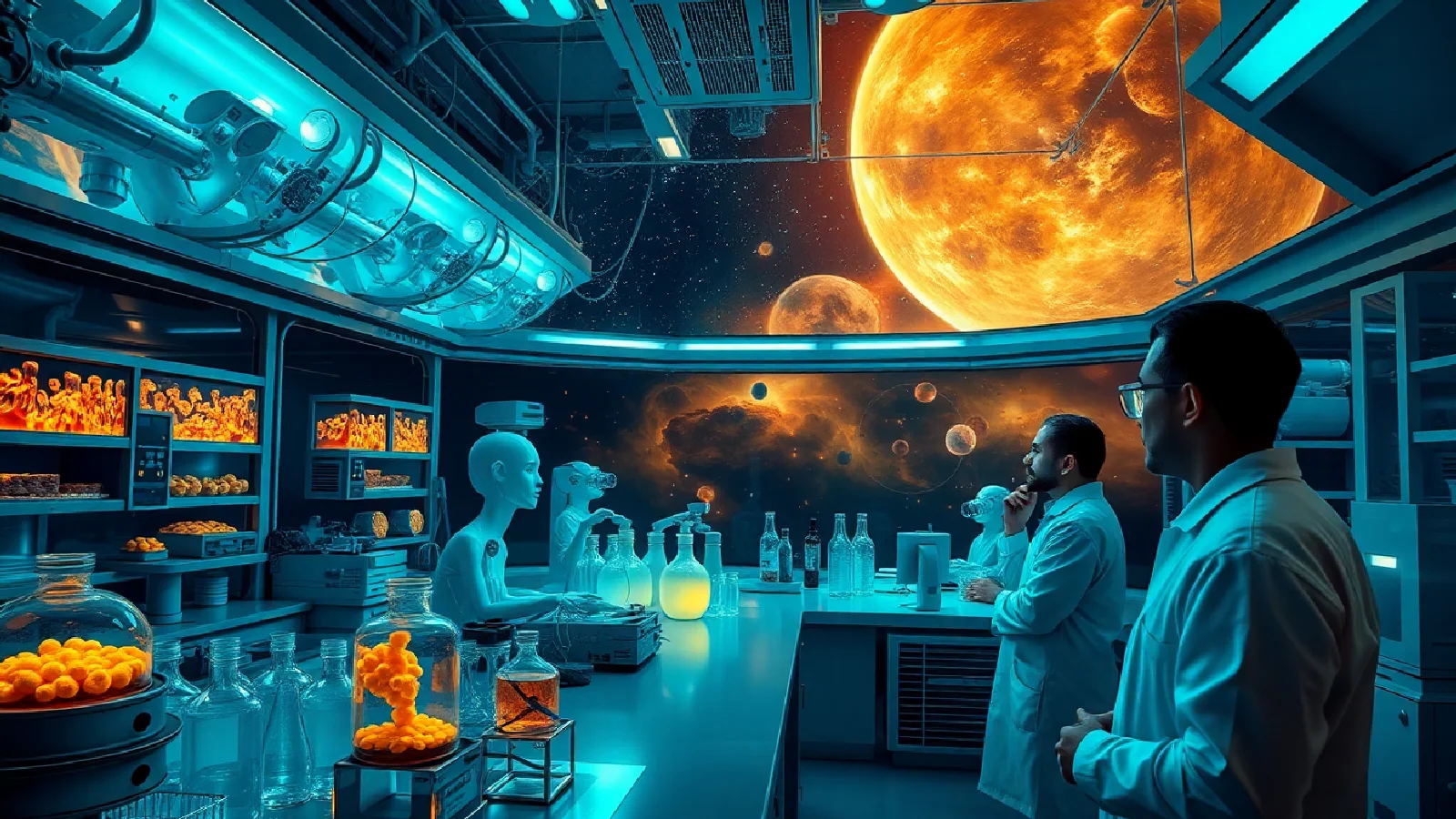
For decades, the question “are we alone in the Universe?” remained confined to laboratories and science fiction. Today, it's being asked in the cargo bays of space probes, equipped with instruments capable of tracking traces of life millions of kilometers from Earth. NASA has reached a decisive milestone: its exploration missions now carry miniaturized biological laboratories, designed to directly analyze Martian soils, lunar ice, and the subsurface oceans of Jupiter and Saturn's moons.
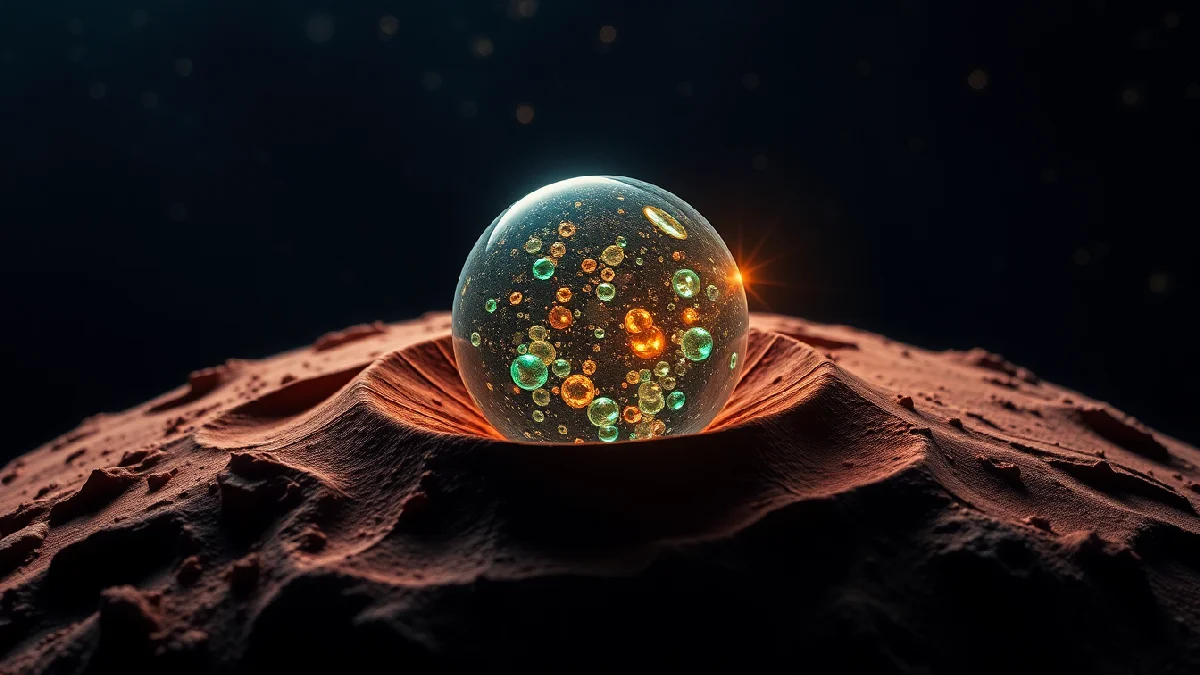
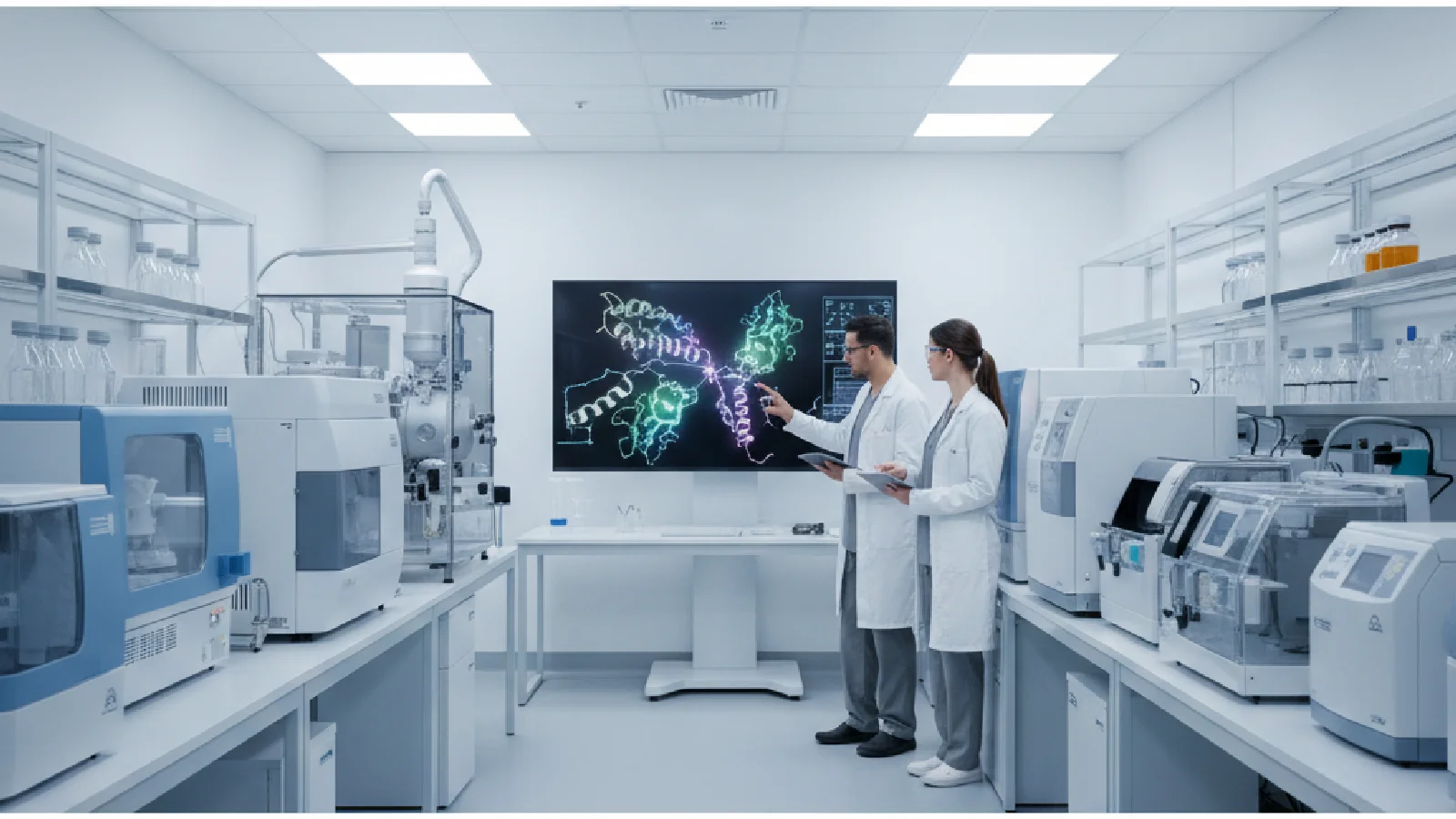
These advances are based on a combined approach: chemical detection, biological analysis, and computational processing of spectroscopic signals. Current sensors can identify carbon compounds, detect isotopes associated with living metabolisms, and even measure the informational complexity of organic molecules to distinguish living from inert matter. Welcome to the era of biosignature hunting.
Perseverance's Onboard Laboratories: Mars Under the Microscope
Since its arrival in February 2021, the Perseverance rover has been exploring Jezero Crater, a dried-up ancient lake that may have harbored conditions favorable to microbial life. Unlike its predecessors, Perseverance carries a suite of advanced biotechnological instruments, true artificial “noses” and “tongues” capable of analyzing the molecular composition of Martian rocks and soils.
SHERLOC and PIXL: Spectroscopy in Action
Among the technological jewels of the rover are SHERLOC (Scanning Habitable Environments with Raman & Luminescence for Organics & Chemicals) and PIXL (Planetary Instrument for X-ray Lithochemistry). The first uses an ultraviolet laser to excite organic molecules and analyze their light signature by Raman spectroscopy. The second, a micro-fluorescence spectrometer, maps the elemental composition of rocks at the grain scale.
These instruments act like molecular detectives: SHERLOC detects pigments, carbon compounds, and minerals that could signal past biological activity, while PIXL identifies the chemical elements that accompany them. By combining their data, scientists can reconstruct Mars' ancient geochemical environment and identify the most promising clues.
SAM: Gas and Isotope Analysis
The SAM (Sample Analysis at Mars) system, inherited from the Curiosity rover, complements this setup. It heats soil samples and analyzes the released gases, particularly looking for carbon and nitrogen isotopes. These isotopic ratios are crucial: on Earth, living organisms favor certain forms of carbon, leaving a distinctive isotopic signature. Finding this pattern on Mars could indicate ancient biological metabolism.
In September 2024, NASA announced the discovery of traces of ancient redox reactions in Jezero Crater, chemical processes that can be produced by life or by geological phenomena. Although the origin remains ambiguous, this finding illustrates the power of new tools: identifying potential biosignatures is finally becoming possible.
Europa Clipper and Hidden Oceans: Probing Icy Worlds
Mars is no longer the only hunting ground. The icy moons of the outer solar system, notably Europa (around Jupiter) and Enceladus (around Saturn), harbor subsurface oceans that may host forms of life. The Europa Clipper mission, scheduled for the mid-2020s, will carry a battery of biotechnological instruments designed to analyze these hostile but fascinating environments.
MASPEX: High-Resolution Mass Spectrometry
The MASPEX (MAss SPectrometer for Planetary EXploration) mass spectrometer is the analytical heart of the mission. Capable of detecting volatile molecules in Europa's tenuous atmosphere and in vapor plumes ejected from its surface, it will search for traces of methane, ammonia, and complex organic compounds — all potential markers of prebiotic or biological chemistry.
The instrument can measure isotopic ratios with unparalleled precision, allowing it to distinguish molecules produced by geological processes from those resulting from living metabolism. Scientists hope to detect chemical signatures similar to those observed near terrestrial hydrothermal vents, where microbial ecosystems thrive.
Dragonfly to Titan: Exploring Hydrocarbon Lakes
Even more audacious, the Dragonfly mission will send a rotorcraft to explore Titan, Saturn's largest moon, in 2027. This enigmatic world has a dense atmosphere and liquid hydrocarbon lakes. Dragonfly will carry chemical biosignature sensors, including a mass spectrometer and a gas chromatography system, to analyze the composition of soils and lakes.
The objective? To measure the chemical complexity of the organic molecules present and determine if prebiotic reactions — those that precede the appearance of life — are currently occurring on Titan. This data will shed light on our understanding of the conditions necessary for the emergence of life.
Synthetic Biology and Lab-on-a-Chip: The Ultimate Frontier
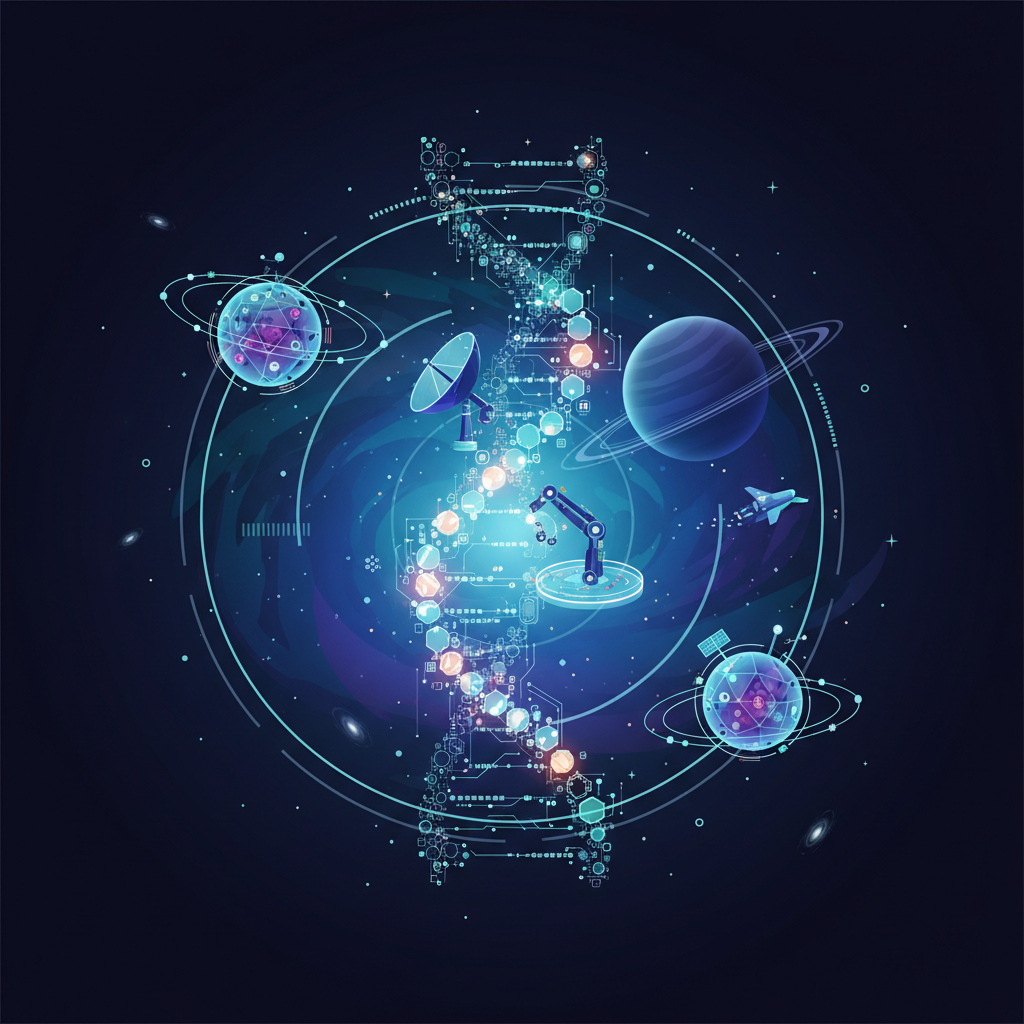
Beyond chemical sensors, NASA is exploring synthetic biology technologies to directly detect extraterrestrial genetic sequences. These approaches rely on lab-on-a-chip platforms — miniaturized laboratories integrated onto a chip — capable of extracting, amplifying, and analyzing DNA or RNA fragments.
CRISPR-Cas: Onboard Genetic Detector
One of the most promising concepts uses CRISPR-Cas technology, famous for its role in genomic editing. Adapted for detection, it could recognize specific nucleic sequences in extraterrestrial samples. If microorganisms exist on Europa or Enceladus, these chips could identify their genetic material with extreme sensitivity.
Prototypes are currently being tested in environments simulating space conditions: intense radiation, reduced gravity, extreme temperatures. Researchers are also cultivating model microorganisms under these conditions to compare their metabolic responses to those observed during in situ missions, as mentioned in this study on space synthetic biology.
Microfluidics and In Situ Culture
Microfluidic systems allow the manipulation of tiny volumes of liquid to cultivate potential biological samples and observe their behavior in real time. These devices could test whether extraterrestrial microbes react to nutrients, produce metabolic gases, or modify their chemical environment — all criteria defining life.
Coupled with spectroscopic sensors, these onboard laboratories offer a multi-angle approach: chemically, genetically, and metabolically analyzing samples to establish a converging body of evidence.
Informational Complexity Algorithms: Life as a Signal
Identifying a biosignature is not limited to detecting a molecule. It requires distinguishing biological order — structured, functional — from geochemical disorder. This is where informational complexity algorithms come in, deployed aboard probes to analyze spectroscopic signals in real time.
These algorithms calculate the complexity of detected molecular patterns. Life produces ordered but non-repetitive structures: proteins, nucleic acids, metabolites. These molecules possess an intermediate complexity, neither too simple (like a crystal) nor totally random (like a geochemical mixture). By measuring this complexity, instruments can identify non-random signatures suggesting biological activity.
“We are developing tools capable of recognizing the informational patterns specific to life, whatever its chemical form.”
This computational approach, developed notably by teams using artificial intelligence, makes it possible to process immense volumes of spectroscopic data and quickly identify the most promising biosignature candidates. It will be crucial for future missions to exoplanets, where atmospheric analysis will rely on interpreting light spectra captured by telescopes like James Webb.
From Mars to Exoplanets: The Horizon Expands
Current biotechnological technologies are also preparing for the study of exoplanets. New-generation space telescopes, such as the James Webb Space Telescope or the future Nancy Grace Roman Space Telescope, will analyze the atmospheres of distant planets to detect gaseous biosignatures: oxygen, methane, phosphine, or other imbalanced compounds that could betray biological activity. To learn more about space exploration, you can consult our exoplanets dossier.
These distant observations directly benefit from lessons learned from in situ missions. By understanding how terrestrial organisms modify their chemical environment, scientists can better interpret the atmospheric spectra of extrasolar worlds. The sensors developed for Mars, Europa, or Titan serve as test beds for algorithms that will one day scan the skies of potentially habitable exoplanets.
According to a survey cited by Science et Vie, the majority of astrobiologists now consider the existence of extraterrestrial life probable. This consensus reflects the optimism generated by these new tools: we finally have the technical means to transform a philosophical question into a scientific investigation.
Technical and Ethical Challenges of Detection
Despite these spectacular advances, obstacles remain. Ambiguous biosignatures pose a major challenge: many chemical compounds can be produced by both life and geological processes. Distinguishing between the two requires a multiplicity of independent and converging measurements.
The extreme conditions of the explored environments also complicate analyses. Intense radiation, freezing temperatures, and extreme pressures degrade instruments and samples. Onboard laboratories must withstand these conditions while maintaining sufficient sensitivity to detect infinitesimal traces of organic molecules.
Finally, an ethical question arises: if we do discover traces of extraterrestrial life, how do we protect them? Planetary protection protocols already require sterilizing probes to prevent cross-biological contamination. But the reverse — bringing extraterrestrial samples back to Earth — raises new questions about biological risks and the preservation of discovered ecosystems.
Here are some technical and ethical challenges of detecting extraterrestrial life:- Ambiguous biosignatures: Difficult distinction between biological and geological processes.
- Extreme environmental conditions: Degradation of instruments and samples.
- Planetary protection: Prevention of contamination and management of risks associated with samples.
Towards a New Era of Discoveries
The biotechnological tools deployed by NASA are radically transforming our ability to search for life elsewhere. From Perseverance's Raman spectrometers to developing CRISPR chips, and Europa Clipper's mass spectrometers, each instrument expands our field of investigation and refines our detection criteria.
These technologies are not just looking for “life like ours”: they are exploring potential biochemical diversity, opening up the possibility of discovering radically different forms of life. Terrestrial DNA may be just one solution among many for coding genetic information. Metabolisms based on methane, ammonia, or other solvents than water are becoming testable hypotheses.
The coming decades will see the deployment of even more ambitious missions: deep drilling on Mars, robotic submarines in Europa's oceans, ultra-sensitive atmospheric analyzers pointed towards temperate exoplanets. Each mission will bring its share of data, gradually refining our understanding of the conditions necessary — or simply favorable — for the emergence of life. For examples of extreme environment exploration, see our article on abyssal exploration.
NASA's new biotechnological tools are not just asking the question “are we alone?”. They are finally beginning to provide measurable, reproducible, and scientifically rigorous answers. And if extraterrestrial life exists, we now have the means to detect it.
| Mission/Instrument | Primary Target | Key Technology | Primary Objective |
|---|---|---|---|
| Perseverance (SHERLOC/PIXL) | Mars (Jezero Crater) | Raman & X-ray Spectroscopy | Detection of ancient biosignatures |
| Perseverance (SAM) | Mars | Gas/Isotope Analysis | Isotopic signature of metabolisms |
| Europa Clipper (MASPEX) | Europa (Jupiter's moon) | Mass Spectrometry | Search for organic molecules in plumes |
| Dragonfly | Titan (Saturn's moon) | GC-MS | Analysis of chemical complexity in lakes |
| Onboard CRISPR-Cas | Various (future) | Genomic Editing | Detection of genetic sequences |