Hall Ion Propulsion: Space Revolution Underway
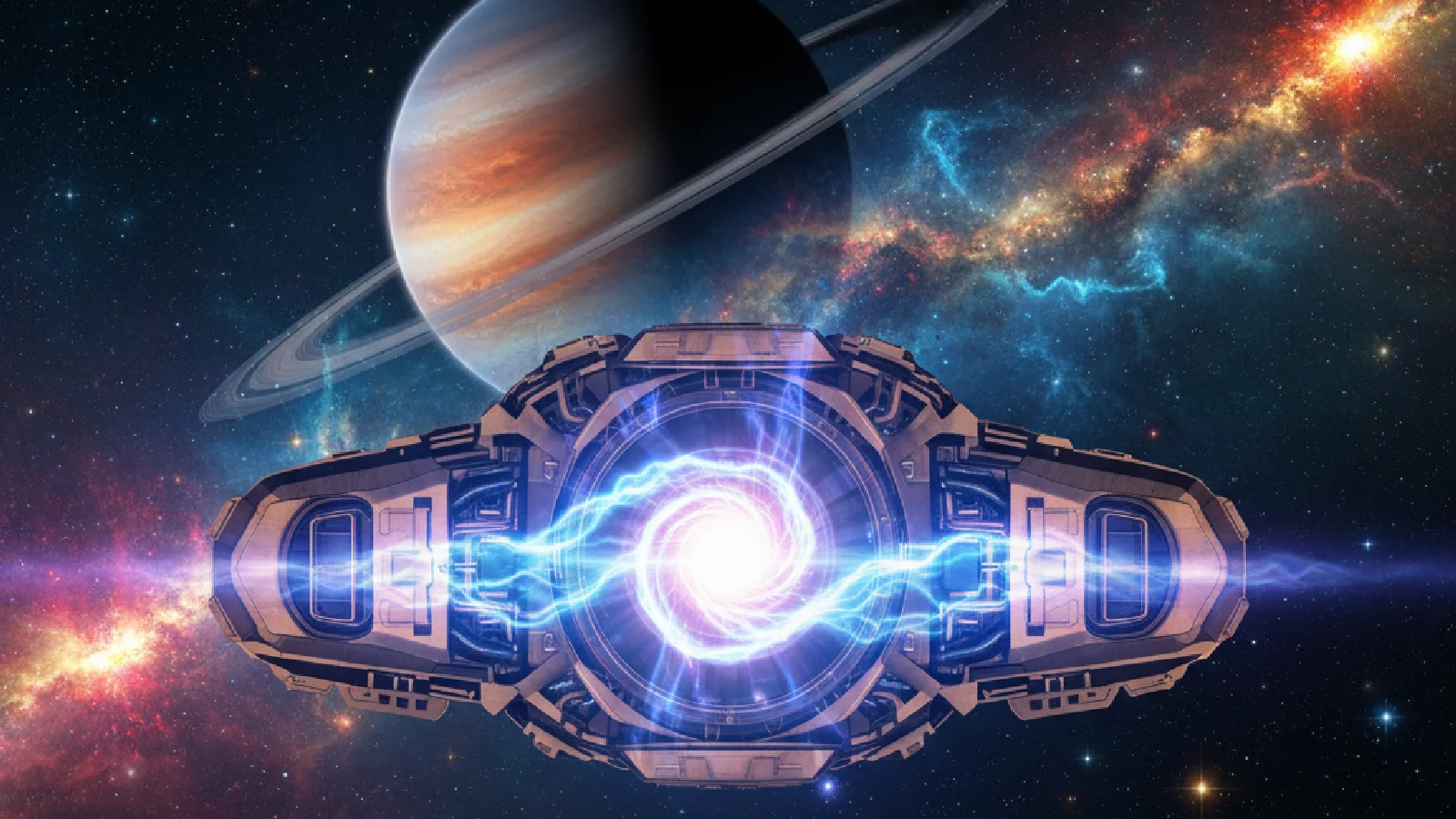
Imagine spacecraft capable of reaching Mars in half the traditional travel time, while consuming 20% less fuel. This futuristic vision is becoming a reality thanks to Hall effect thrusters, a technology that is redefining the standards of modern space exploration.
These electric propulsion systems, developed jointly by NASA and ESA, harness the properties of plasma to generate thrust with remarkable efficiency. Unlike traditional chemical rocket engines, they ionize xenon or krypton using electric and magnetic fields, achieving spectacular ejection velocities of 70 to 80 km/s.
The Revolutionary Principle of Hall Propulsion
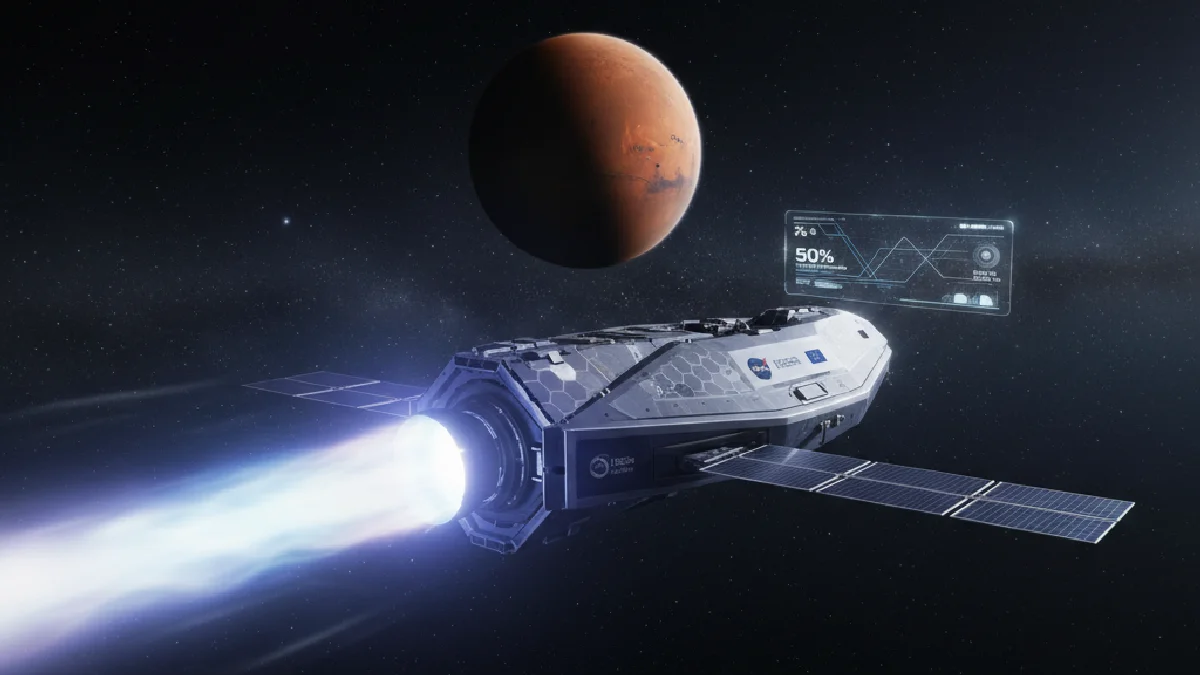
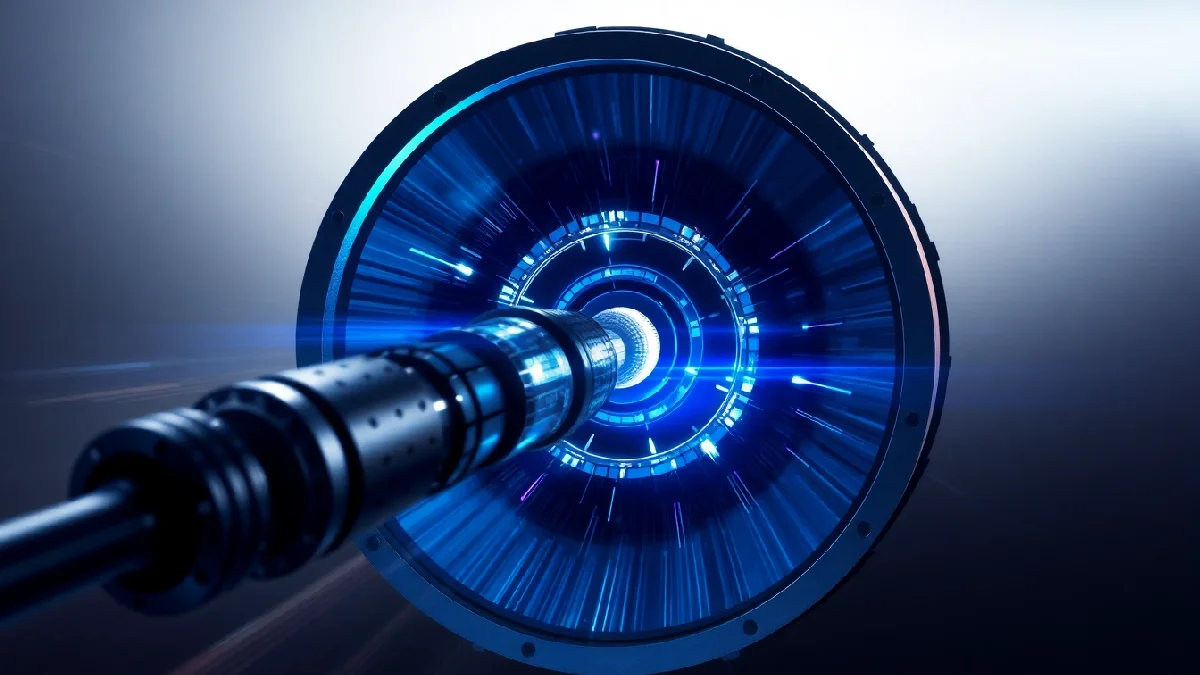
The Hall effect thruster operates on a fascinating physical principle. A magnetic field traps electrons in an annular chamber, creating a dense plasma. These electrons then ionize the propellant gas, typically xenon, while an electric field accelerates the positive ions outwards.
This configuration offers several decisive advantages:- Energy Efficiency: greater than 60%, compared to a maximum of 35% for chemical propulsion
- Specific Impulse: 1,500 to 2,500 seconds, 3 to 5 times more than traditional engines
- Lifespan: over 30,000 hours of operation thanks to boron nitride ceramic coatings
According to Hall effect thruster technology, these systems represent a major technological breakthrough in the space industry.
| Characteristic | Hall Effect Thruster | Traditional Chemical Propulsion |
|---|---|---|
| Energy Efficiency | > 60% | <= 35% |
| Specific Impulse | 1,500 – 2,500 s | 300 – 500 s |
| Ejection Velocity | 70 – 80 km/s | Lower |
| Engine Lifespan | > 30,000 hours (with boron nitride) | Lower |
Practical Applications: From Science Fiction to Reality
Successful Interplanetary Missions
The NASA Dawn mission perfectly illustrates the potential of this technology. Equipped with Hall thrusters, the probe successfully visited two asteroids, Vesta and Ceres, between 2007 and 2018. A feat impossible with traditional chemical propulsion.
Optimized Geostationary Satellites
Observation satellites like GEO-KOM use SPT-140 thrusters for station-keeping. This practical application allows for:- Reduction of fuel mass by 20% or more
- Significant increase in on-orbit lifespan
- Ultra-precise satellite repositioning
"Hall effect propulsion systems achieve ejection velocities of around 70-80 km/s, revolutionizing the efficiency of space missions." - Space Propulsion Expert
Advanced Technological Developments
Increased Power and Performance
The latest generations of Hall thrusters developed by European industry, notably the PPS-1350 model from Airbus/Snecma, operate at powers of 5 to 10 kW. These systems deliver up to 250 mN of thrust, a remarkable performance for their category.
Continuous innovation in this field pushes technological boundaries. The ESA plans for 10 kW systems for future lunar orbital transfers, paving the way for more ambitious exploration of our natural satellite.
Revolutionary Materials
Advances in ceramic coatings are transforming the durability of these thrusters. Boron nitride now allows for lifespans exceeding 30,000 hours, a critical threshold for long-duration missions to Mars or the outer reaches of the solar system.
This technical evolution addresses a major challenge: reducing maintenance costs and increasing the reliability of complex space missions.
The Future of Fast Space Travel
Accelerated Martian Missions
ESA is actively developing applications for interplanetary missions to Mars. These new systems promise to significantly reduce transit times, from the current 9 months to approximately 4-5 months for a Earth-Mars journey.
This acceleration would radically transform crewed space exploration, reducing exposure to cosmic radiation and the psychological challenges of long voyages.
Small Launcher Revolution
The European ESA-CNES program integrates Hall modules into small launchers to replace chemical thrusters during critical phases. This innovation allows for:- More precise orbital insertion
- Optimized trajectory correction
- Substantial fuel savings
These developments are part of a broader trend towards democratizing access to space, as illustrated by projects for new generation space telescopes and missions to explore extraterrestrial oceans.
Economic and Environmental Impact
Electric propulsion is revolutionizing the aerospace industry by drastically reducing operational costs. This economic transformation is accompanied by an environmental benefit: less fuel means less space debris and a reduced carbon footprint.
The widespread adoption of this technology could transform the space sector into a more sustainable and accessible industry, opening new perspectives for scientific and commercial exploration.
The advent of Hall effect thrusters marks a decisive turning point in the history of space exploration. These revolutionary systems combine energy efficiency, durability, and performance to pave the way for a new era of cosmic discoveries. From massive black hole mergers to the icy oceans of Jupiter's moons, this technology brings us closer every day to the mysteries of the universe.