Magnetars and Giant Radio Halos: Unlikely Cosmic Architects
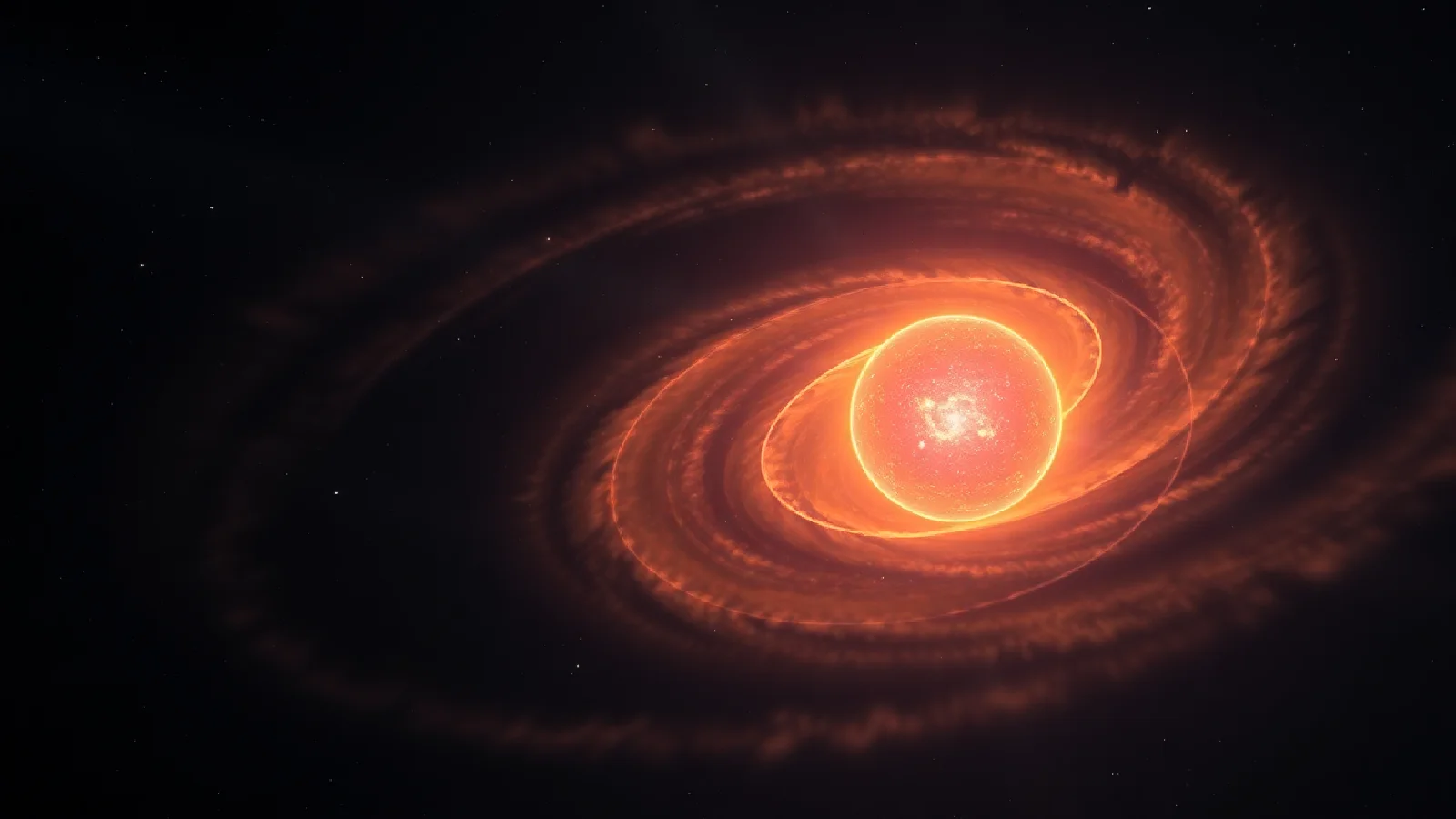
Imagine a magnet so powerful it could erase all credit cards on Earth from the distance of the Moon. Magnetars, these ultra-compact stellar remnants, possess magnetic fields thousands of billions of times more intense than our planet's. Recently, astronomers have wondered: could these magnetic monsters be the architects of gigantic cosmic structures, particularly the mysterious giant radio halos observed in galaxy clusters?
This bold hypothesis raises a fundamental question about the mechanisms that shape the Universe on a large scale. If magnetars indeed release enormous amounts of energy, could their influence extend far beyond their immediate vicinity to sculpt phenomena visible across several million light-years?
Magnetars: Magnetic Powerhouses
Magnetars represent an exceptional category of neutron stars, these ultra-dense remnants resulting from the gravitational collapse of massive stars during supernova explosions. Their peculiarity lies in their astonishingly intense magnetic fields, reaching 10¹³ to 10¹⁵ Gauss.
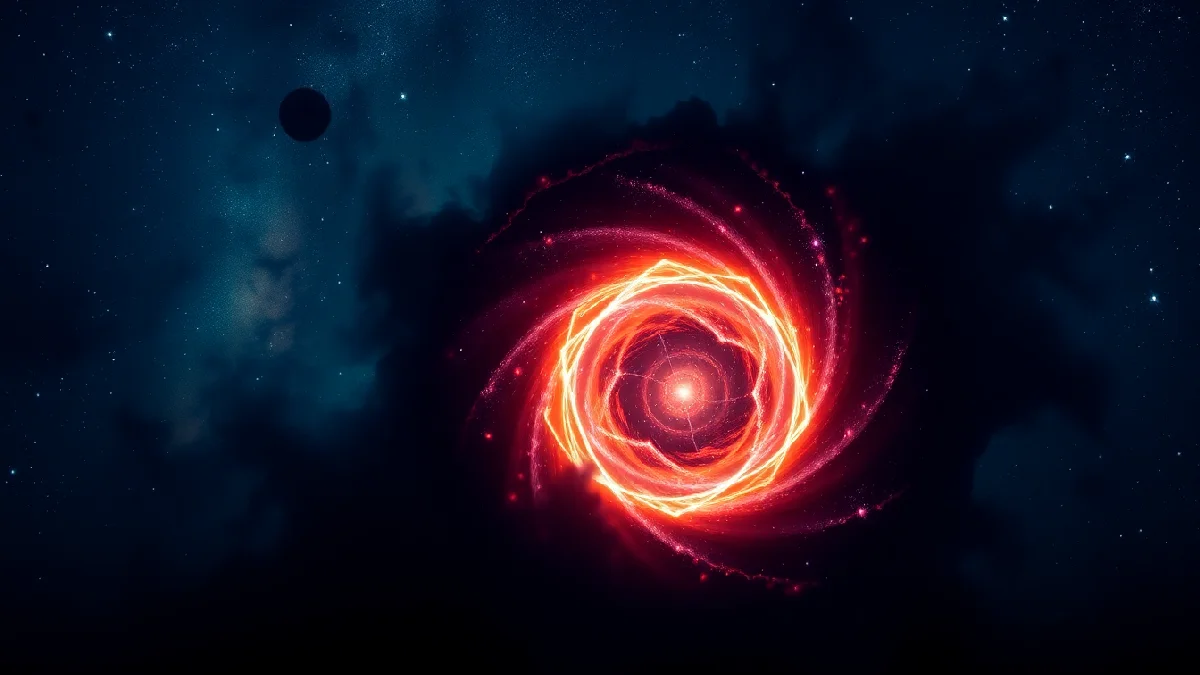
To put this power into perspective: a field of 10¹⁵ Gauss is about a million times more intense than that of a classical neutron star, already considered extreme. This colossal magnetic force causes violent phenomena on their surface. Sudden adjustments of their crust, called starquakes, release massive bursts of X-rays and gamma rays detectable thousands of light-years away.
Rare and Enigmatic Objects
According to current estimates, about one in ten supernovae gives birth to a magnetar. To date, only two dozen of these objects have been confirmed in our galaxy, the Milky Way. Their rarity is due to several factors:
- Formation requiring specific initial conditions (rapid rotation of the progenitor star)
- A relatively short "active" lifespan on an astronomical scale
- Energetic emissions that gradually attenuate over time
The European Southern Observatory (ESO) notably identified a magnetar in the Westerlund 1 star cluster, located 16,000 light-years away. This discovery helped shed light on a paradox: the progenitor star should have weighed about 40 solar masses, a mass that would normally have produced a black hole rather than a neutron star.
A Formation Mechanism Still Debated
The origin of these extraordinary magnetic fields remains the subject of intensive research. The dominant hypothesis invokes an extreme dynamo effect: during the collapse of the massive star, its ultra-rapid rotation combined with the complex movements of internal conductive fluids would amplify the initial magnetic field to these astonishing values.
Magnetars also emit Fast Radio Bursts (FRBs), brief but remarkably intense radio pulses. This characteristic has naturally led some researchers to wonder if these objects could contribute to other large-scale radio phenomena.
Giant Radio Halos: Cluster-Scale Enigmas
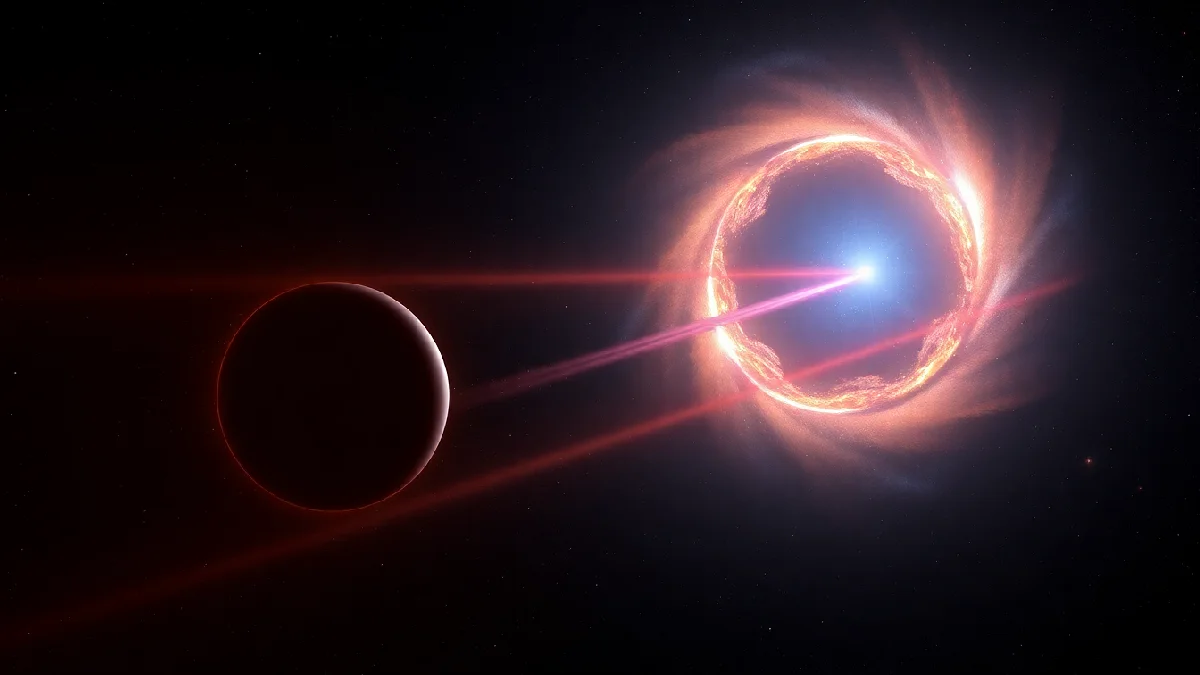
At the opposite end of the cosmic size spectrum, giant radio halos constitute one of the most spectacular phenomena observed in radio astronomy. These diffuse structures extend over several megaparsecs — millions of light-years — and envelop entire galaxy clusters.
Large-Scale Synchrotron Emissions
These halos emit synchrotron radiation, produced when relativistic electrons (moving at a significant fraction of the speed of light) spiral in a magnetic field. The observation of this diffuse radiation reveals the presence of enormous populations of energetic particles bathing in the intergalactic medium within clusters.
Unlike point radio sources like pulsars or active galactic nuclei, radio halos are homogeneous and do not show concentrated structure. This uniformity suggests a very large-scale energy distribution process.
The Role of Cluster Collisions
Observations reveal that giant radio halos appear mainly in colliding galaxy clusters. When two massive clusters merge, the colossal kinetic energy of this encounter generates intense turbulence in the intergalactic gas, heated to tens of millions of degrees.
This turbulence plays a key role: it re-accelerates pre-existing relativistic electrons (perhaps injected by ancient supernovae or active galactic nuclei) to energies sufficient to produce observable synchrotron emission. The cluster's magnetic field, although relatively weak (on the order of a microgauss), extends over gigantic volumes, allowing this process to manifest on the megaparsec scale.
Giant radio halos require a homogeneous distribution of energy over several million light-years, an energetic challenge that only cluster-scale processes can meet.
Magnetars as Architects: An Appealing but Fragile Hypothesis
The idea that magnetars could contribute to the formation of giant radio halos presents a certain apparent logic. After all, these objects release enormous amounts of energy in the form of relativistic particles and radiation. Some theoretical scenarios suggest that they could locally enrich the interstellar medium with ultra-energetic electrons.
Energetic and Spatial Limitations
However, several major obstacles challenge this role as cosmic architect:
Incompatible spatial scale: A magnetar, even the most powerful, remains a point object a few tens of kilometers in diameter. Radio halos extend over millions of light-years. For a magnetar to influence such a region, its particles would not only have to travel these immense distances but also be distributed remarkably homogeneously.
Insufficient energy budget: Although the emissions from a magnetar are spectacular on a stellar scale, the total energy required to maintain a giant radio halo far exceeds what a population of magnetars could provide. Cluster collisions, on the other hand, involve masses equivalent to thousands of galaxies and release colossal amounts of kinetic energy.
Magnetic field distribution: Radio halos require a magnetic field extended throughout the cluster volume. Magnetars possess intense but extremely localized fields. The magnetic field of clusters comes instead from the amplification of primordial fields by turbulence and the movements of intergalactic gas.
A Local Rather Than Global Contribution
While magnetars are unlikely to shape giant radio halos, this does not mean they are without influence. They probably contribute to the local enrichment of the intergalactic medium with high-energy particles. These particles could constitute a reservoir that the turbulent processes of cluster collisions would then re-accelerate.
From this perspective, magnetars would play the role of "suppliers" of energetic particles rather than direct architects of the observed radio structures. This contribution, although modest on a cosmic scale, remains scientifically relevant for understanding the energetic ecosystem of galaxy clusters.
Towards an Integrated Understanding of Cosmic Phenomena
The exploration of the potential link between magnetars and radio halos illustrates the complexity of the processes governing the Universe at different scales. While the hypothesis of direct architecture by magnetars seems ruled out, this investigation opens up fascinating perspectives.
Comparison of Key Characteristics
| Characteristic | Magnetar | Giant Radio Halo |
|---|---|---|
| Origin | Neutron star (supernovae) | Collisions of galaxy clusters |
| Typical Size | A few tens of kilometers | Millions of light-years (Mpc) |
| Key Phenomenon | Intense magnetic field, starquakes | Synchrotron emission, turbulence |
| Energetic Role (halos) | Local particle supplier | Massive electron re-acceleration |
The True Drivers of Radio Halos
Current research converges towards a model where cluster collisions constitute the main driver. The merger of two massive structures injects phenomenal energy into the intergalactic medium, creating shock waves and magnetohydrodynamic turbulence. These processes effectively re-accelerate particles and generate the characteristic synchrotron emissions.
Observations with new-generation radio telescopes, such as the Square Kilometre Array (SKA) currently being deployed, promise to refine our understanding of these mechanisms. By mapping radio halos with unprecedented resolution and sensitivity, these instruments will make it possible to distinguish between different energetic contributions.
The Importance of Magnetars in the Galactic Ecosystem
In parallel, the study of magnetars is progressing. Dedicated space missions for observing X-rays and gamma rays, such as those conducted by IRFU of CEA, are gradually revealing the details of their explosive activity. Each new detection of a fast radio burst or intense gamma-ray emission enriches our understanding of these extraordinary objects.
This research is part of a broader effort to understand how energy flows in the Universe, from stellar scales to massive cosmic structures. Magnetars, although not the architects of giant radio halos, remain fascinating natural laboratories for studying physics under extreme conditions impossible to reproduce on Earth.
Connections with Other Cosmic Mysteries
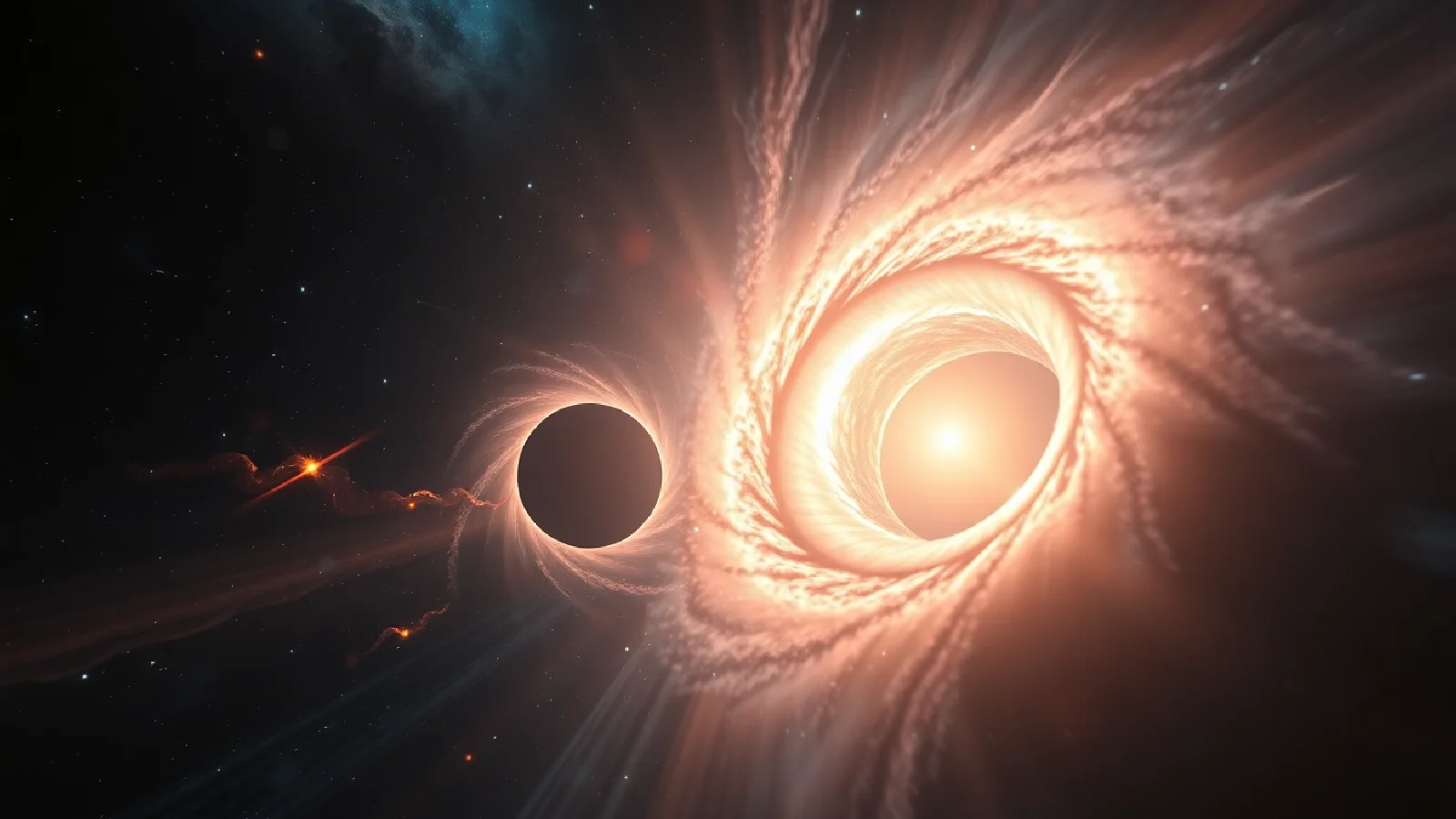
The study of ultra-dense compact objects like magnetars fits into a broader scientific context. Just as research on black hole mergers reveals the dynamics of the most massive objects in the Universe, the exploration of magnetars illuminates the energetic mechanisms at work in stellar remnants.
Similarly, the quest for extreme environments extends to the subglacial oceans of Europa and Enceladus, where NASA is searching for signatures of energetic processes that could harbor life. This multiplicity of approaches testifies to the richness of cosmic phenomena and their interconnectedness.
Perspectives: When the Unexpected Feeds Knowledge
The initial hypothesis — magnetars as architects of giant radio halos — perfectly illustrates the scientific approach. An appealing idea, formulated from partial observations, must be confronted with all available data and theoretical constraints. In this case, the analysis reveals that the energetic and spatial scales do not match.
This conclusion is by no means a failure. On the contrary, it refines our understanding by delimiting the real role of each phenomenon. Magnetars remain significant local energetic actors, while radio halos bear witness to cluster-scale processes that far exceed the influence of individual objects, however extraordinary they may be.
The Universe thus reminds us that reality often surpasses our initial intuitions. The true mechanisms at work in the cosmos emerge gradually, observation after observation, model after model. This quest for understanding, punctuated by tested and sometimes refuted hypotheses, constitutes the very essence of modern astrophysics.
As our instruments become more refined and our models gain in sophistication, new questions will inevitably emerge. Perhaps we will discover unexpected interactions between magnetars and the intergalactic medium, or identify other sources of energetic particles contributing to radio halos. Exploration continues, driven by the certainty that the Universe still holds countless surprises.