Edge AI and PLCs: Real-time Industrial Automation
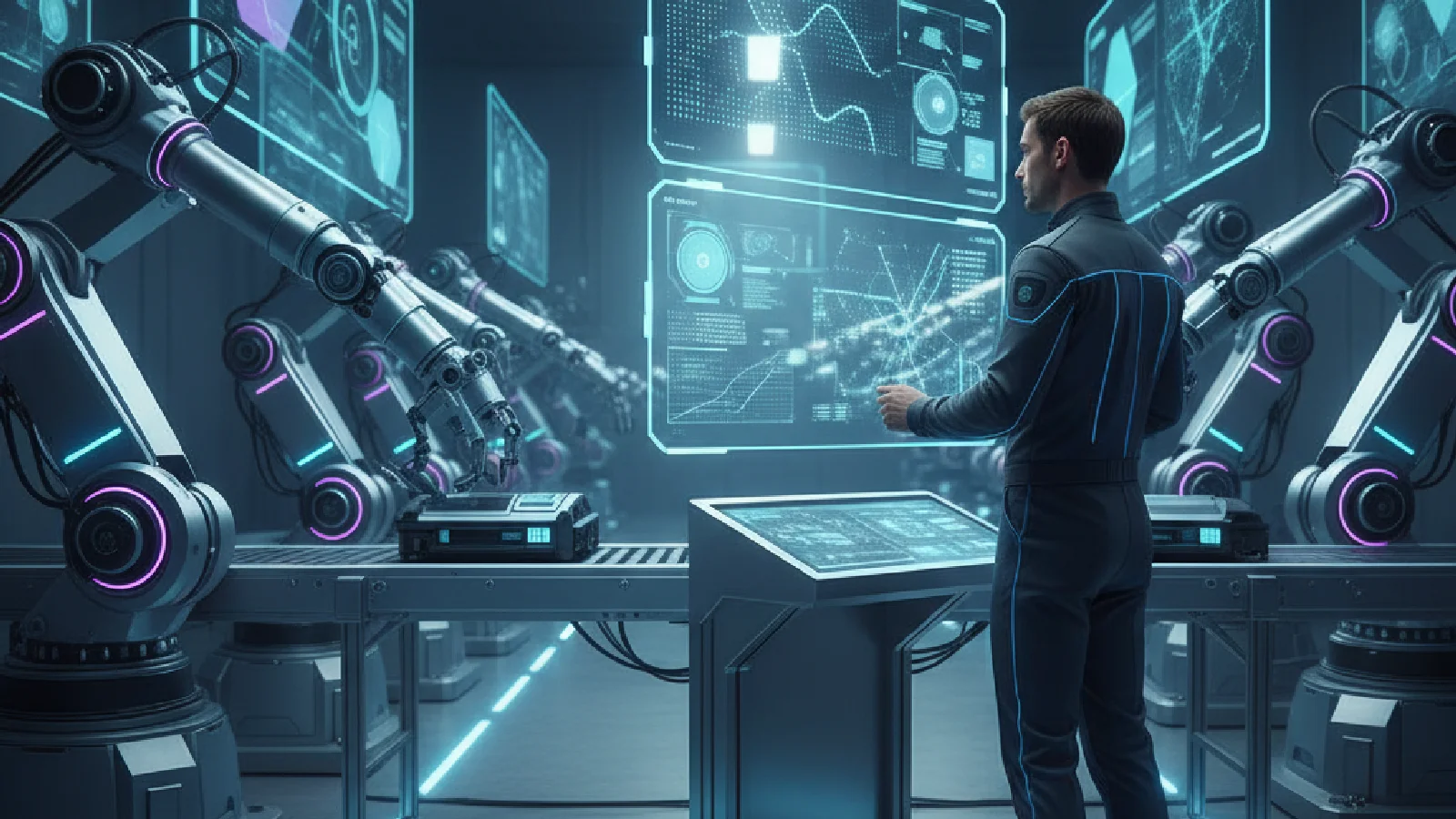
Industry is entering a new era where every millisecond counts. Imagine a production line where machines anticipate breakdowns before they occur, automatically adjust their parameters based on material quality, and continuously optimize their energy consumption. This vision is becoming a reality thanks to the integration of Edge AI into Programmable Logic Controllers (PLCs), radically transforming industrial automation.
The Technological Convergence Changing Everything
Programmable Logic Controllers have long been the brain of industrial automation, orchestrating operations according to predefined programs. Today, the integration of Edge Artificial Intelligence (Edge AI) gives them learning and autonomous decision-making capabilities.
This evolution addresses a critical need: processing information as close as possible to its source, without relying on cloud connections that are often inadequate for industrial environments. Edge AI involves running optimized AI models directly on devices located at the network's edge, allowing for local analysis rather than sending all data to remote servers.
Performance Redefining Standards
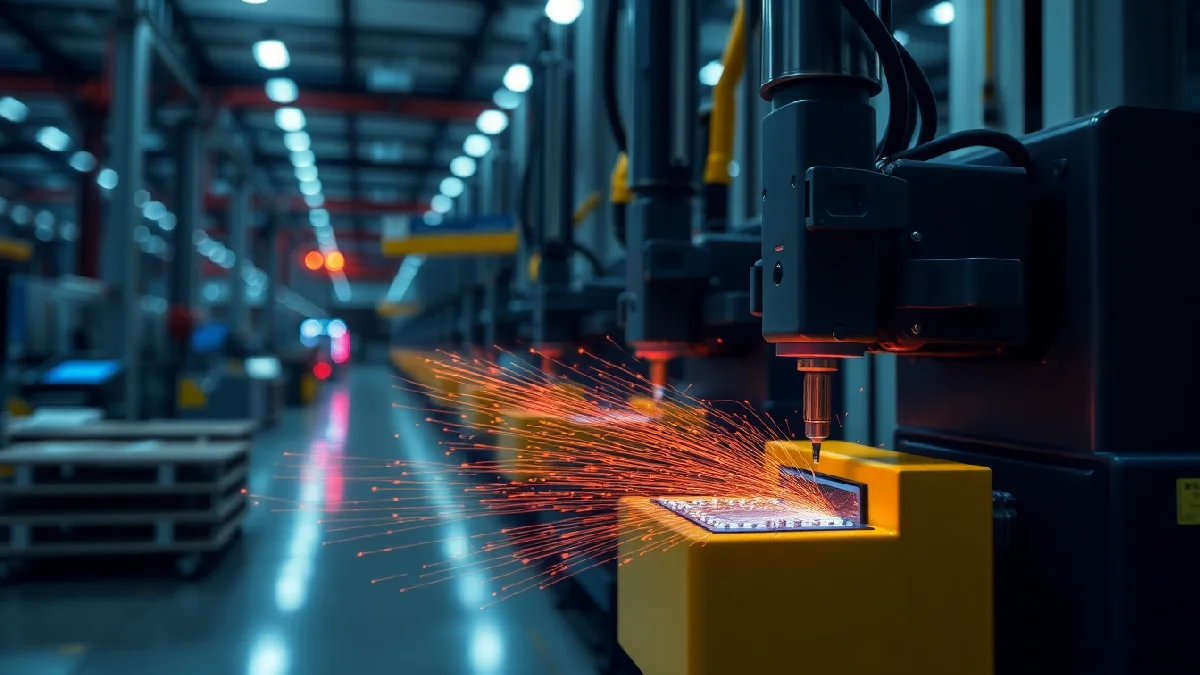
The integration of optimized processors and neural processing units (NPUs) into next-generation PLCs brings spectacular improvements. These intelligent controllers can now execute machine learning models in less than a millisecond, drastically reducing critical latency in industrial processes.
According to market data, the 26% increase in processing speed and the AI compatibility of over 12% of models sold in 2023 mark a decisive turning point for the industry.
Revolutionary Technical Capabilities
Today's smart PLCs integrate several key technologies:
- Model compression: quantification and pruning techniques enabling local execution
- Real-time inference: instantaneous processing of sensor data
- IoT interoperability: native connection with connected ecosystems
This architecture enables previously impossible applications: real-time predictive maintenance, automated quality control, and autonomous adjustment of production equipment.
Summary of Smart PLC Capabilities
| Characteristic | Key Benefit | Industrial Impact |
|---|---|---|
| Model Compression | Optimization for limited resources | AI execution on embedded hardware |
| Real-time Inference | Immediate data processing | Drastic reduction of critical latency |
| IoT Interoperability | Seamless integration into connected ecosystems | Native connection with IoT devices and platforms |
Concrete Applications Transforming Industry
Predictive maintenance perfectly illustrates this transformation. PLCs equipped with Edge AI continuously analyze vibrations, temperatures, and other critical machine parameters. They detect nascent anomalies and schedule interventions before breakdowns occur, reducing downtime by over 25%.
Continuous vibration analysis is a particularly striking use case. Traditionally performed periodically by specialized technicians, it is now carried out continuously thanks to embedded algorithms that learn the normal signatures of each piece of equipment.
Intelligent Energy Optimization
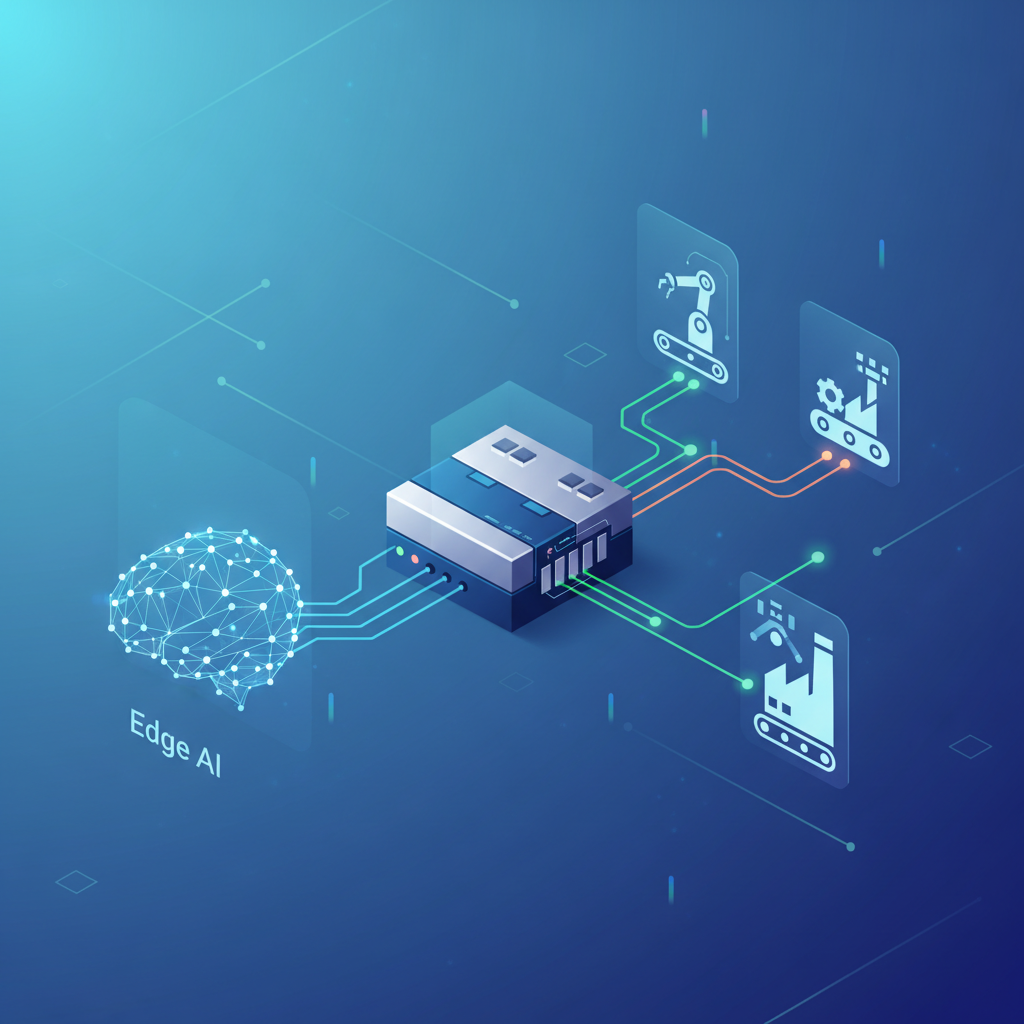
Energy efficiency also benefits from this distributed intelligence. PLCs automatically adjust operating parameters according to workload, environmental conditions, and variable energy tariffs. This proactive approach generates substantial savings while maintaining production performance.
The Industrial IoT Ecosystem Redesigned
The 19% growth in wireless PLC modules testifies to the evolution towards more flexible and modular architectures. These systems facilitate rapid deployment in complex industrial environments, without requiring extensive cabling work.
Interoperability with IoT platforms opens new perspectives. Production data, previously isolated in each machine, now feeds digital twins that aggregate information in real-time to optimize the entire value chain.
This convergence between industrial automation and embedded IoT redefines the possibilities for global optimization of manufacturing processes. Discover other technological advancements in our article on Wi-Fi 7 Mesh.
Technical Challenges and Innovative Solutions
The integration of Edge AI into PLCs nevertheless raises specific challenges. Energy constraint is the primary obstacle: running AI algorithms on resource-limited devices requires advanced optimizations.
Model compression techniques provide an effective solution. Quantification reduces numerical precision while preserving performance, while pruning eliminates redundant neural connections. These approaches allow sophisticated models to be executed on embedded hardware.
Enhanced Security and Reliability
Industrial security demands particularly high standards. Smart PLCs integrate real-time validation mechanisms that verify the consistency of AI decisions before their application. This double-check ensures production continuity even in the event of algorithmic malfunction.
Future Prospects: Towards Industry 5.0
The global Programmable Logic Controller (PLC) market is projected to reach USD 15,833.79 million in 2024 and is expected to reach USD 25,258.01 million by 2033, with a compound annual growth rate of 5.3%. This expansion testifies to the massive adoption of these technologies.
The evolution towards Industry 5.0 will rely heavily on these technological foundations. The increasing integration of AI into industrial automation will enable levels of efficiency and personalization previously unimaginable, while preserving human expertise in strategic decision-making processes. For secure integration, it will be crucial to follow new data protection regulations 2025.
Industrial wireless networks will play a crucial role in this transformation, allowing for deployment flexibility and rapid reconfiguration of production lines according to market needs.
This technological shift positions Edge AI and smart PLCs as the pillars of tomorrow's industrial automation, capable of reacting in real-time while continuously learning from their environment. An approach that promises to revolutionize not only productive efficiency but also the sustainability and adaptability of manufacturing systems.