RISC-V: India and Europe Assert Open-Source Power
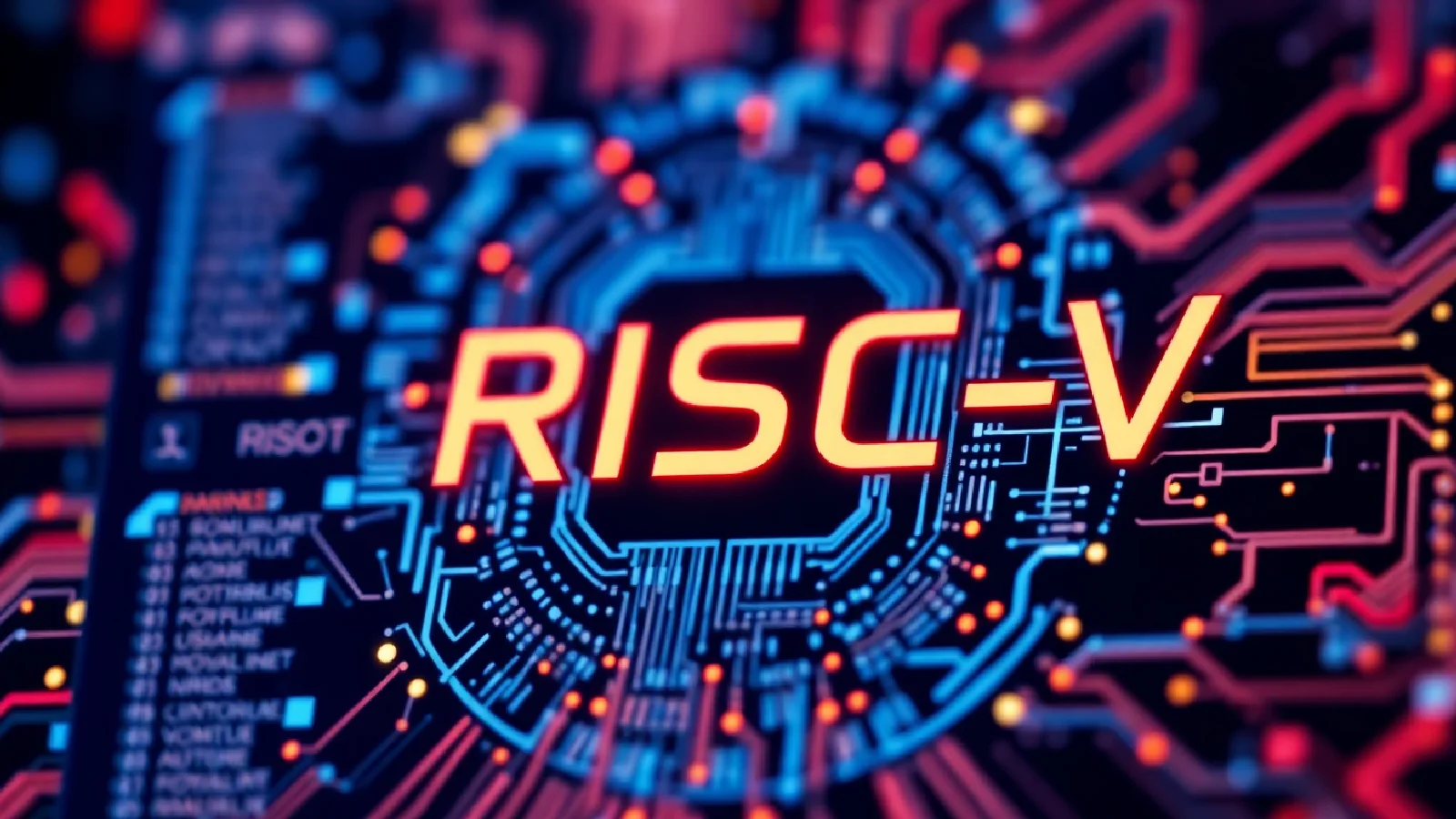
The reliance on proprietary architectures within the semiconductor ecosystem is now pushing strategic players to seek sovereign alternatives. At the heart of this transformation is RISC-V, an open-source processor architecture that allows countries and research institutions to design their own chips without being dependent on American giants. India and Europe are now positioning themselves as pillars of this nascent ecosystem, multiplying initiatives to assert their technological independence.
From IIT Madras's SHAKTI project to the fully customizable DHRUV64 core, and the work of the Technical University of Munich, these initiatives are redrawing the geography of innovation in semiconductors. Far from being mere academic demonstrators, these projects aim for concrete deployments in defense, embedded systems, automotive, and even supercomputers.

India Forges Digital Sovereignty with SHAKTI
The SHAKTI project, born at the Computer Science Research Centre of IIT Madras, embodies India's ambition to master the processor value chain. Initiated in partnership with the French group Thales and industrial partners like Altair, SHAKTI has given rise to a complete range of RISC-V cores adapted for various uses.
A Family of Processors for Diverse Sectors
The SHAKTI family comes in several versions:
- SHAKTI-C: designed for embedded systems and IoT applications
- SHAKTI-E: optimized for mobile devices and consumer electronics
- SHAKTI-U: conceived for critical defense needs and sensitive infrastructure
This diversification allows India to reduce its dependence on imported processors while developing national expertise in integrated circuit design. The partnership with Thales, a major player in defense and security, underscores the strategic dimension of the project: it's not just about economic autonomy, but also about national security.
"SHAKTI represents a decisive step for India in its quest for technological independence, combining academic excellence with leading industrial partnerships."
The program is fully aligned with the "Make in India" policy, aiming to transform the country into a high-tech manufacturing hub. SHAKTI chips are now being tested in real-world applications, from power grid management to military communication systems.
DHRUV64: A 64-bit Core for Critical Applications
In parallel with SHAKTI, the Indian startup DHRUV has developed DHRUV64, a fully customizable 64-bit RISC-V core. Unlike fixed architectures, DHRUV64 offers complete flexibility to system designers, allowing them to adapt the processor to the specific constraints of their applications.
A Response to Security Needs
The DHRUV64 architecture stands out for:
- Reduced power consumption, ideal for autonomous devices
- Security mechanisms integrated from the design stage
- Extensive customization for regulated sectors (aerospace, defense, healthcare)
This processor benefits from government support under the "Make in India" program and primarily targets markets where data sovereignty and system security are paramount. In a geopolitical context where backdoors and hardware vulnerabilities raise serious concerns, having a verifiable open-source architecture becomes a major strategic asset.
DHRUV's business model is based on customization and technical support, rather than the sale of proprietary licenses. This approach democratizes access to high-performance processors while ensuring complete traceability of the design.
Europe Bets on RISC-V for Strategic Independence
On the other side of the globe, Europe is intensifying its efforts not to rely exclusively on x86 and ARM architectures. The Technical University of Munich (TUM) is emerging as a key player in this ecosystem, through the "RISC-V @ TUM" program, which develops high-performance cores and open-source AI accelerators.
Prototypes for Supercomputers and Automotive
TUM researchers are working on vector processors adapted to the needs of high-performance computing and artificial intelligence. These prototypes target two strategic markets for Europe:
- Supercomputers for scientific research and climate modeling
- The automotive industry, where real-time processing and functional safety requirements are critical
TUM collaborates closely with the OpenHW consortium and the European Processor Initiative (EPI), two pillars of Europe's strategy to ensure independence from foreign suppliers. As the dynamics of the global RISC-V ecosystem illustrate, the ratification of multiple technical specifications and the launch of educational programs demonstrate growing industrial adoption.
A Thriving Academic and Industrial Community
Europe benefits from a strong academic community around RISC-V, with laboratories in Switzerland (ETH Zurich), France (CEA-Leti), and the Netherlands (TU Delft). This effervescence translates into dense scientific production and rapid technology transfers to industry.
Companies like Bosch are investing heavily in RISC-V for their future automotive embedded systems, while European defense players are exploring sovereign solutions for their critical equipment. This convergence between public research and industrial needs creates fertile ground for the emergence of a European RISC-V semiconductor sector.
Strategic Stakes of Open-Source in Semiconductors
Beyond technical performance, the adoption of RISC-V by India and Europe addresses deep strategic imperatives. Mastering processor architecture conditions the digital sovereignty of nations, their ability to protect critical infrastructure, and to innovate without external constraints.
An Alternative to Monopolies
x86 (Intel, AMD) and ARM architectures currently dominate the market, imposing their technological roadmaps and licensing models. RISC-V offers a third way, where users are no longer captive to a single vendor. This freedom is particularly valuable for:
- Governments that want to audit the entire code of critical systems
- Startups that can innovate without paying prohibitive licensing fees
- Researchers who have an open platform to experiment with new architectures
The transparency inherent in open-source also allows for faster detection and correction of security flaws, a major asset in a context of increasing cyber threats.
A Lever for International Cooperation
Paradoxically, RISC-V also fosters international cooperation. The RISC-V International foundation brings together hundreds of members from all continents, working together on standards and specifications. This collaborative governance contrasts with closed proprietary models.
India and Europe can thus benefit from global advancements while developing their own implementations. This dynamic is reminiscent of what propelled Linux in the 2000s: a common kernel, national or sectoral variations, and decentralized innovation.
Challenges and Prospects for the RISC-V Ecosystem
Despite these promising advances, the RISC-V ecosystem still faces several challenges to compete with established architectures.
Software Maturity and Tooling
While RISC-V hardware is progressing rapidly, the software ecosystem is still under construction. Compilers, operating systems, and debugging tools need to reach the maturity level of x86 or ARM. Significant efforts are being made to port major Linux distributions, AI frameworks, and scientific libraries to RISC-V.
The open-source community plays a decisive role here, with active contributions from Google, Huawei, and public research institutes. Interoperability with existing solutions is crucial for large-scale industrial adoption.
Attractiveness for Developers
For a hardware ecosystem to thrive, it needs an active developer base. Educational initiatives, such as those launched by the RISC-V International foundation, aim to train the next generation of engineers on this architecture. India and Europe are investing heavily in these programs, aware that the battle is also being fought in universities and engineering schools.
Affordable development boards and online simulators facilitate experimentation. Ultimately, if RISC-V becomes a standard skill in computer science and electronics curricula, industrial adoption will naturally follow.
Industrial Production and Economies of Scale
Designing a processor is one thing; manufacturing it in mass at a competitive cost is another. India and Europe must strengthen their semiconductor production capabilities, a field largely dominated by East Asia. European gigafactory projects and Indian investments in foundries aim to close this gap.
The diversification of foundry suppliers (TSMC, Samsung, GlobalFoundries) offering services for RISC-V expands possibilities. As volumes increase, production costs will decrease, making RISC-V competitive even in consumer markets.
To learn more about hardware trends, discover how USB4 and Thunderbolt 5 are revolutionizing external storage, or how Edge AI is transforming industrial automation.
A New Era for Technological Sovereignty
The emergence of RISC-V as a credible alternative to proprietary architectures marks a turning point in the history of semiconductors. India and Europe, by investing massively in SHAKTI, DHRUV64, and cutting-edge research like that of TU Munich, are not just following a trend: they are shaping a new technological order.
This dynamic is part of a broader context of geopolitical rebalancing, where mastery of disruptive technologies conditions international influence. After long depending on innovations from across the Atlantic or East Asia, India and Europe are regaining control over the fundamental building blocks of modern computing.
The coming years will be decisive. If current projects deliver on their promises and the software ecosystem continues to mature, RISC-V could well become the de facto standard for critical applications and embedded systems. The battle of architectures is no longer just technical: it is eminently strategic, economic, and political.
In this race, open-source is not just a development model: it is a lever for sovereignty, a guarantee of transparency, and a vector for collaborative innovation. India and Europe have understood this, and they do not intend to miss this historic opportunity.
| Feature / Country | India | Europe |
|---|---|---|
| Key Projects | SHAKTI, DHRUV64 | RISC-V @ TUM, EPI, OpenHW |
| Major Objectives | Digital sovereignty, national security, "Make in India" | Strategic independence, H.P.C., automotive |
| Partnerships | Thales, Altair | OpenHW, EPI, Bosch |
To understand other hardware sovereignty issues, see our analysis on the ARM vs. Intel/AMD battle in datacenter servers.
FAQ (JSON format - translate question and answer fields only):