TSMC and the Race for Sub-1 nm Chips: Challenges for 2029
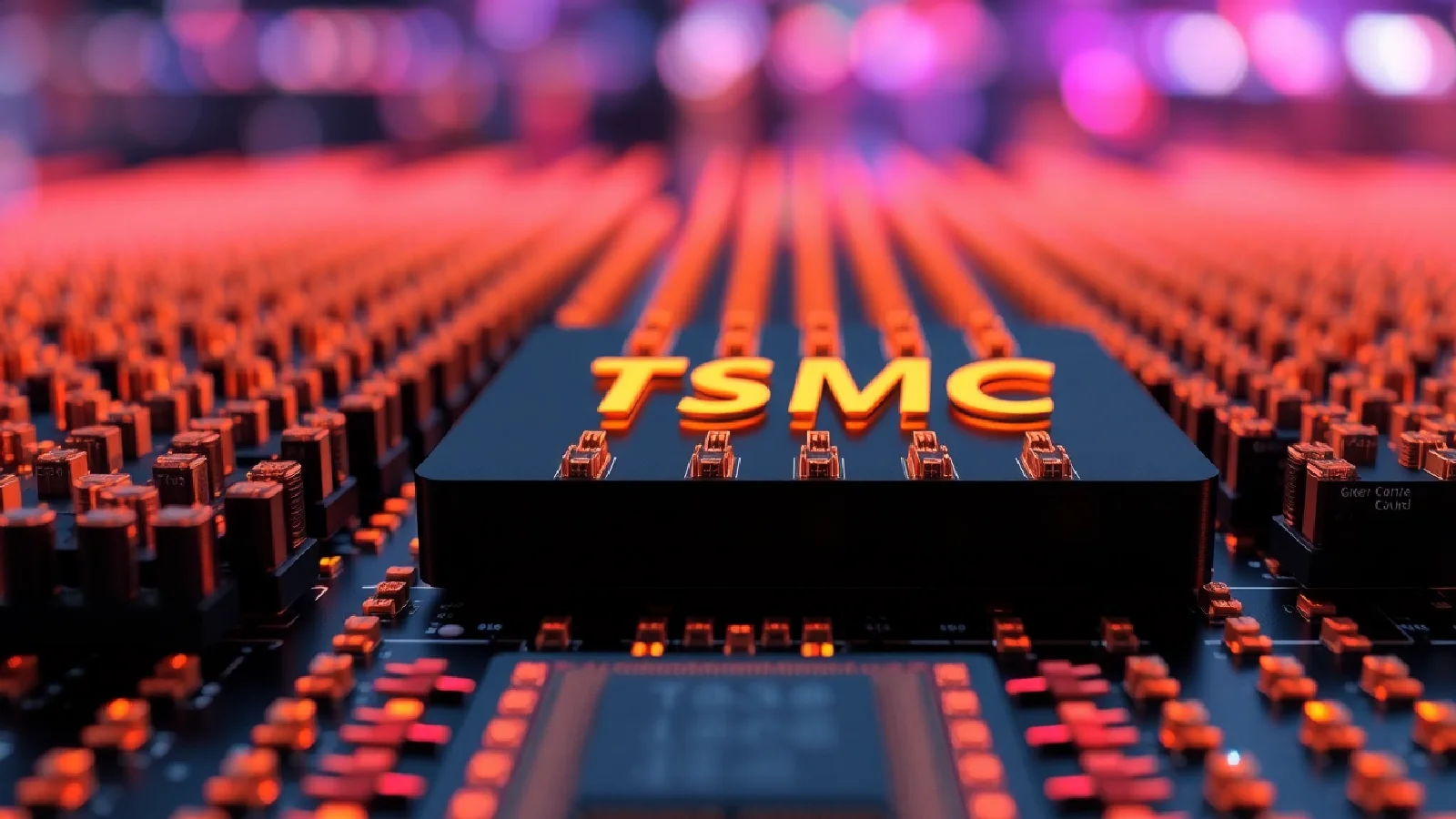
Taiwanese giant TSMC (Taiwan Semiconductor Manufacturing Company) is not slowing down. While the industry is still struggling to master 3 nm and 2 nm technology nodes, the foundry is already announcing its ambition: to launch trial production of sub-1 nm chips as early as 2029, with volume manufacturing planned for 2030. This frantic race towards the infinitely small poses unprecedented technical questions and requires radical innovations.
Behind the impressive figures lies a complex reality: achieving sub-1 nm is no longer simply about progressive miniaturization, but a complete overhaul of transistor architectures, lithography techniques, and integration strategies. For TSMC, this transition relies on an ambitious roadmap that must first stabilize its intermediate 1.6 nm and 1.4 nm nodes before reaching the A10 generation in 2029.
An "Equivalent-Scaling" Strategy
TSMC officially unveiled its technology roadmap at the IEDM conference, confirming its commitment to producing ever denser and more powerful chips. According to information reported by PC Gamer, the A10 generation represents much more than a simple generational leap: it embodies a paradigm shift in semiconductor manufacturing.
The strategy, dubbed "equivalent-scaling," combines several technological innovations to compensate for the physical limits of classical miniaturization. Rather than focusing solely on reducing transistor size, TSMC is betting on a multidimensional approach that integrates:
- New vertically stacked transistor architectures
- Redesigned power delivery techniques to limit losses
- Massive 3D integration to increase functional density
This approach allows for continued improvement in performance and energy efficiency, even as purely geometric miniaturization reaches its physical limits.
GAA and CFET Transistors: The Evolution of Fundamentals
At the heart of this technological transformation are second-generation nanosheet transistors, also known as GAA (Gate-All-Around) transistors. These structures are gradually replacing the FinFET transistors used for over a decade. The advantage of GAA lies in their ability to better control electron flow, thereby reducing current leakage and improving energy efficiency.
But TSMC doesn't stop there. The company is actively exploring CFET (Complementary Field-Effect Transistor) transistors, an architecture in which N-type and P-type transistors are stacked vertically. This configuration significantly reduces the footprint of each logic cell, freeing up space to integrate more components on the same surface.
"TSMC's goal is to achieve over a trillion transistors per package by 2030, thanks to 3D stacking of chiplets and advancements in advanced packaging."
This ambition reflects a vision where performance is no longer measured solely at the individual transistor level, but at the level of the complete system, integrating multiple interconnected chips in a single package.
High-NA EUV Lithography: A Decisive Turning Point
One of the most anticipated innovations for the sub-1 nm node concerns high-numerical-aperture EUV lithography (high-NA EUV). This technology, developed in partnership with Dutch manufacturer ASML, allows for the etching of even finer patterns with better precision. While classic EUV tools use a numerical aperture of 0.33, new high-NA equipment reaches 0.55, significantly increasing resolution.
According to Tom's Hardware, TSMC plans to integrate this technology into volume production for the first time with the A10 node. The challenge is colossal: each high-NA machine costs several hundred million dollars, and its deployment requires adapted infrastructure, both in terms of cleanroom and logistics.
The adoption of this technology also represents a major financial risk. Manufacturing costs increase exponentially with each new generation, and the slightest difficulty in ramping up production can delay the return on investment. TSMC must also contend with the limitations of photolithographic masks, which are becoming increasingly complex to produce at these extreme dimensions.
Thermal Management and Power Delivery: The Hidden Challenges
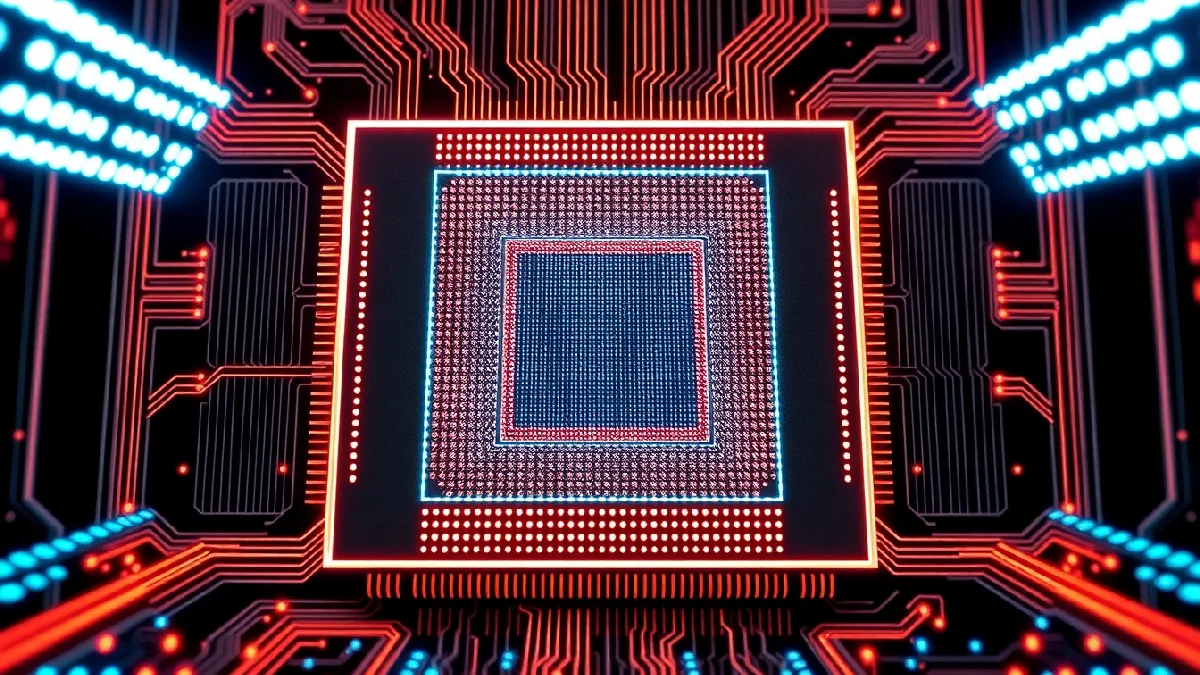
While transistors and lithography capture attention, power delivery and thermal dissipation management are equally critical issues. At these nanometric scales, power density reaches unprecedented levels, generating intense heat concentrated on a tiny surface.
TSMC is banking on SPR (Super Power Rail) technology, or backside power delivery. Rather than routing electricity through the upper layers of the circuit, this approach uses the backside of the silicon to deliver power. This frees up space on the surface for logic signals, reduces parasitic resistances, and improves power integrity.
This technical innovation comes with new mechanical and thermal constraints. Vertically stacked structures, coupled with extreme transistor density, require advanced cooling systems and a redesigned thermal design from the earliest stages of circuit development.
Production Yields: A Precarious Balance
One of the key indicators of the viability of a new technology node remains the yield rate, i.e., the percentage of functional chips per wafer produced. For TSMC's N2 node, currently in production ramp-up, yields fluctuate between 65% and 75%. For sub-1 nm, maintaining or exceeding these figures will be a major challenge.
Sources of defects multiply as dimensions decrease: particulate contamination, etching defects, doping variations, misalignment of successive layers. Every step of the manufacturing process must achieve near-perfect precision, and the slightest deviation can result in the loss of hundreds of millions of dollars in production.
TSMC plans an initial production of approximately 5,000 wafers per month for the A10 node in its Tainan factory, a relatively modest volume that reflects the necessary learning phase. Ramping up to tens of thousands of wafers per month, essential to meet global demand, will likely take several years.
TSMC Node Production Schedule (Estimates)
| Technology Node | Planned Trial Production | Estimated Volume Production | Key Technologies |
|---|---|---|---|
| 1.6 nm | Ongoing / Soon | 2026-2027 | GAA, Backside Power |
| 1.4 nm | 2027-2028 | 2028-2029 | GAA, Backside Power |
| Sub-1 nm (A10) | 2029 | 2030 | CFET, High-NA EUV |
3D Integration and Chiplets: A Complementary Approach
In parallel with transistor miniaturization, TSMC is developing 3D integration and advanced packaging technologies to assemble multiple chips in a single package. This approach, already used for high-end processors and GPUs, is becoming essential to achieve the goal of a trillion transistors per package.
Technologies like CoWoS (Chip-on-Wafer-on-Substrate) and future vertical interconnection systems allow for stacking multiple dies (chips) while maintaining high data rates and minimal latency. This strategy also offers design flexibility: different chiplets can be manufactured on distinct technology nodes, optimizing the cost and performance of each component.
For applications requiring artificial intelligence or data centers, where memory bandwidth and raw computing power are essential, this modular approach represents a major competitive advantage. It also helps circumvent certain yield limitations, by replacing only defective chiplets rather than discarding an entire monolithic die.
The integration of these packaging technologies with open-source chips, such as those based on the RISC-V architecture, could also open new perspectives for ultra-performing modular systems.

New Materials and Etching Chemistries
The transition to sub-1 nm also necessitates the development of new materials for interconnects, insulators, and transistor gates. Copper, long favored for interconnects, is beginning to show its limits in terms of resistivity at these scales. Alternative materials like ruthenium or cobalt are being studied to improve conductivity and reduce electrical losses.
Low-k dielectrics must also evolve to minimize parasitic capacitances between interconnects, which increase power consumption and reduce switching speed. Each new material introduced requires years of research to ensure its compatibility with existing manufacturing processes and its long-term reliability.
Etching and deposition chemistries must be adapted to process patterns a few atoms thick, while preserving the integrity of surrounding structures. This level of atomic control requires absolute mastery of the chemical and physical processes involved, as well as metrology instrumentation capable of measuring defects at the nanometer scale.
The Supply Chain Under Pressure
Beyond purely technical challenges, TSMC must orchestrate a global supply chain of unprecedented complexity. Manufacturing equipment, supplied by a limited number of players (ASML for lithography, Applied Materials, Lam Research, Tokyo Electron for deposition and etching equipment), represents colossal investments and delivery times that span years.
Ultra-pure materials, special gases, 300 mm silicon wafers with sub-micrometer tolerances: every link in this chain must function flawlessly. A shortage or delay from a supplier can jeopardize the production schedule for the entire roadmap.
Geopolitics also plays an increasing role. Trade tensions between the United States, China, and Taiwan, combined with reindustrialization efforts in Europe and North America, are changing supply chain dynamics. TSMC is building fabs in the United States and Japan, diversifying its production base while exposing itself to higher operational costs.
Stakes for Industry and Consumers
If TSMC manages to adhere to its schedule, the first sub-1 nm chips could equip high-end smartphones, data center processors, and AI accelerators as early as the beginning of the next decade. The expected gains in terms of performance and energy efficiency are substantial, with chips capable of performing more calculations while consuming less power.
For applications requiring ultra-fast connectivity, such as systems utilizing USB4 v2 and Thunderbolt 5 standards, the combination of sub-1 nm chips and advanced interconnection technologies could transform computing architectures, particularly in distributed computing and high-performance storage environments.
However, this advancement comes at a price. Development and manufacturing costs are skyrocketing, and only a few global players can afford to design chips on these nodes. This concentration raises questions of technological sovereignty and resilience in the face of geopolitical or health crises.
Outlook and Next Steps
TSMC's trajectory towards sub-1 nm is part of a global race where Intel and Samsung are also trying to catch up or maintain their technological lead. Intel, with its A18 and A14 roadmap, also targets equivalent nodes by the end of the decade, while Samsung explores similar architectures.
This competition stimulates innovation, but it also raises questions about the sustainability and environmental impact of this industry. The consumption of water, energy, and chemicals by modern fabs reaches considerable levels, and each new generation amplifies these needs. The industry will have to find a balance between technological performance and ecological responsibility.
In the short term, attention will focus on the ramp-up of 2 nm and 1.4 nm nodes, whose performance and yields will determine the credibility of the sub-1 nm schedule. The coming months will be crucial to observe how TSMC crosses these intermediate milestones and what adjustments will be necessary.
The success of this ambition will depend on a convergence of technical innovations, industrial mastery, and coordination with the entire semiconductor ecosystem. While the path is fraught with pitfalls, the stakes are high: shaping tomorrow's digital infrastructure and maintaining the pace of technological progress that has fueled the global economy for decades.