Vision Pro: YouTube and Cloud Gaming Redefine Its Adoption
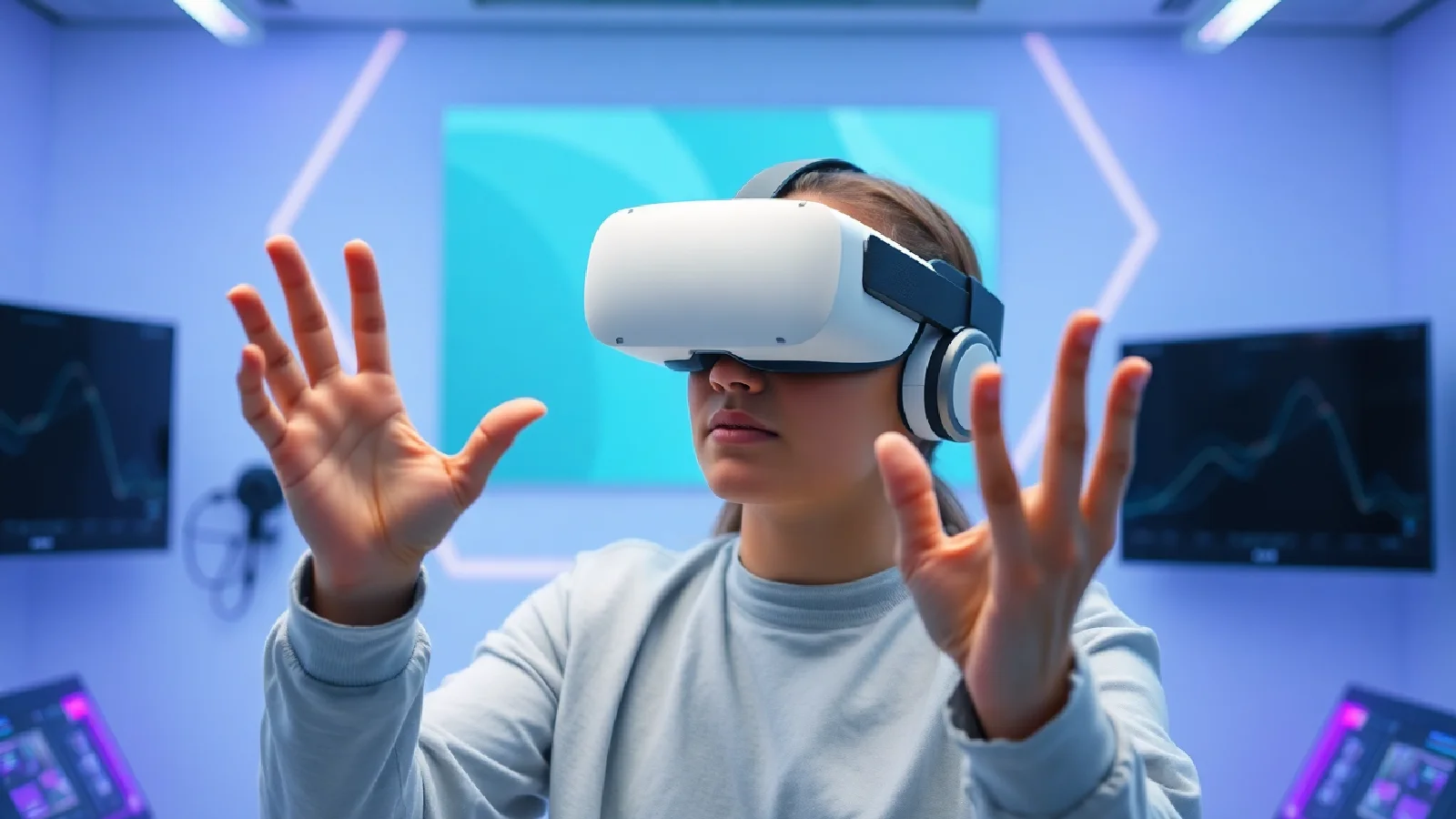
For two years, Vision Pro owners had to make do with a clunky solution: watching YouTube via Safari, never truly benefiting from a native experience worthy of the “spatial computing” promised by Apple. This glaring omission weighed on the headset's appeal, sold for nearly 4,000 euros. Then, in February 2026, things changed. Google launched YouTube for visionOS, a native application that opens up a catalog of millions of videos to users. Simultaneously, cloud gaming arrived on the headset with demanding titles like iRacing and X-Plane, transforming the Vision Pro into an immersive entertainment platform capable of attracting a much wider audience than tech-savvy early adopters.

Native YouTube App: A Long-Awaited Gap Filled
The absence of YouTube on Vision Pro was almost a paradox. How could one imagine a “spatial computer” without fluid access to the world's most visited video platform? Until February 2026, users had to juggle with Safari, losing all the features that make the YouTube ecosystem so rich: playlists, synchronized history, comments displayed in context.
YouTube for visionOS radically changes the experience. The dedicated app offers:
- Full access to subscriptions, playlists, and history once logged in
- Viewing of 180-degree VR content and 360-degree 3D content
- Support for 8K videos on models equipped with the M5 chip
- Display of Shorts and 2D videos in a customizable spatial environment
According to Numerama, Google caught Apple off guard with this surprise launch, which wasn't even highlighted on the App Store homepage at the time of publication. An unexpected gift that addresses a massive demand from the Vision Pro community.
“Imagine yourself comfortably seated in your living room, a headset on your eyes, and suddenly an immense virtual canvas opens before you, broadcasting your favorite YouTube video in a format that almost touches the ceiling.”
— Vision Startups
This native application gives the Vision Pro a strong selling point for those on the fence. Video consumption represents a major part of global media usage, and YouTube is at its heart. By filling this gap, Google inadvertently offers Apple a decisive commercial lever for 2026.
Cloud Gaming: iRacing, X-Plane, and Immersive Simulations
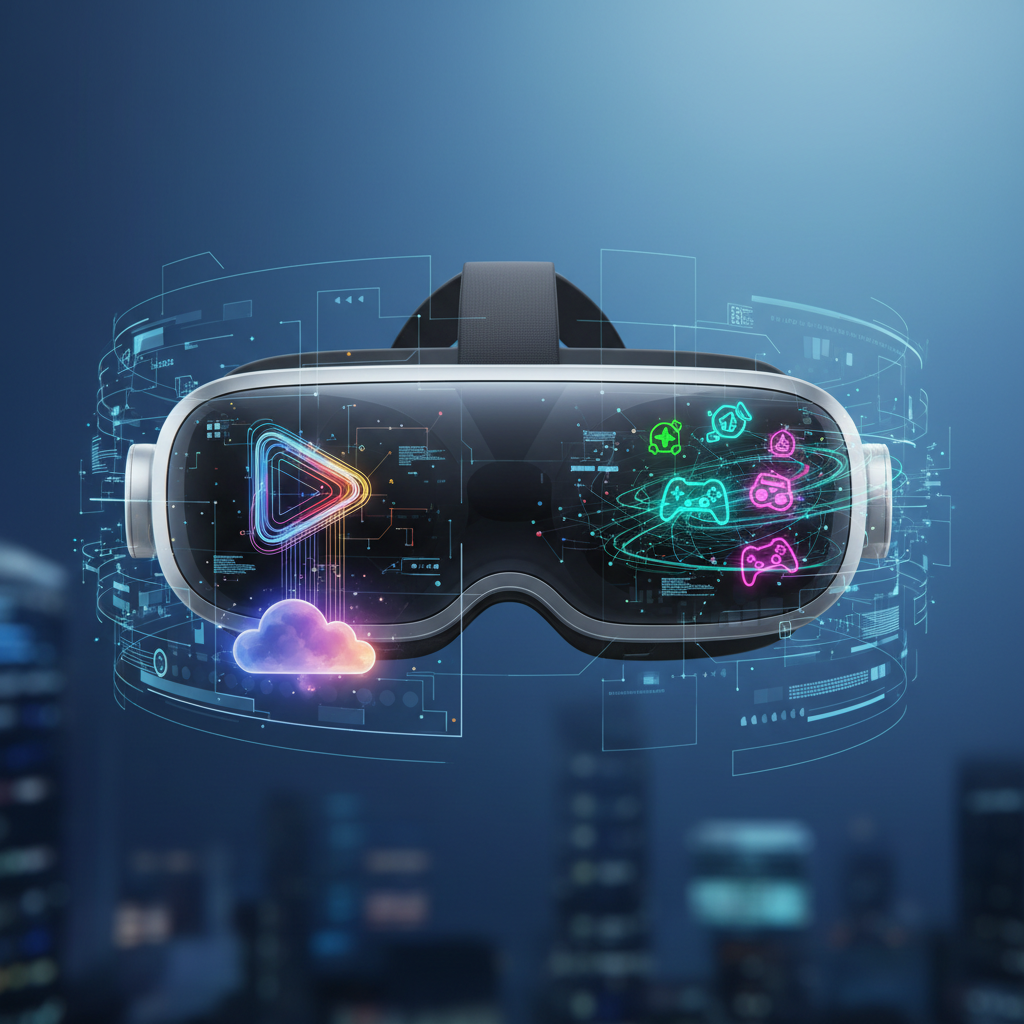
While YouTube meets the needs of video content enthusiasts, cloud gaming targets a different audience: fans of high-end simulation and gaming. Official compatibility with streaming services now allows demanding titles like iRacing (ultra-realistic car simulation) and X-Plane (reference flight simulator) to be launched directly from the headset.
Unlike traditional VR headsets, the Vision Pro offers a high-resolution experience with spatial audio, transforming a simulation session into total immersion. Driving a race car on the Nürburgring or performing an emergency landing in a Boeing 737 becomes an unprecedented sensory experience, without requiring the purchase of a powerful gaming PC or console.
Why Cloud Gaming Changes the Game
The main obstacle to gaming on Vision Pro was twofold: the absence of an ambitious native catalog and limited computing power for AAA games. Cloud streaming bypasses these obstacles:
- No heavy hardware investment: calculations are performed on remote servers
- Access to high-fidelity titles without graphical compromise
- Native spatial audio that enhances immersion in cockpits and cabins
- Giant virtual screens for optimal readability of onboard instruments
For simulation enthusiasts, the Vision Pro becomes a credible alternative to costly multi-screen setups. A perfectly calibrated virtual cockpit, a 360-degree panoramic view, and controlled latency thanks to 2026's high-speed connections.
A Strategic Repositioning for Apple
The joint arrival of YouTube and cloud gaming is no coincidence. Apple observed a drop in sales in 2025, mainly due to the prohibitive price (around 4,000 euros) and a perceived too-limited application catalog. In 2026, the strategy evolves with the launch of more affordable models equipped with the M5 chip, and above all, a deliberate positioning towards mainstream entertainment.
The Vision Pro is no longer just a productivity tool for creative professionals. It becomes a media consumption and immersive gaming platform, capable of competing with high-end televisions and premium gaming setups. This transformation attracts a wider audience: families seeking a home cinema experience, gamers curious about new sensations, virtual travelers via apps like Explore POV (Apple's Vision Pro App of the Year).
The integration of YouTube definitively anchors the headset in the daily digital lives of millions of users. Watching favorite creators, following tutorials, viewing 180-degree VR concerts: all these uses are now fluid and accessible.
| Feature | Before (2025) | After (2026) |
|---|---|---|
| YouTube Access | Via Safari (non-native) | Native YouTube for visionOS app |
| VR Content | Limited or non-existent | 180° / 360° videos supported |
| Gaming | Low (limited native catalog) | Cloud Gaming (iRacing, X-Plane) |
| Strategic Positioning | Pro tool / technophile (niche) | Mainstream entertainment / Immersive gaming |
| Adoption Goal | Early adopters | Wider audience / Families / Gamers |
Adoption Facilitated by the Apple Ecosystem
One of the Vision Pro's major assets remains its integration into the Apple ecosystem. Developers can use SwiftUI, RealityKit, and ARKit to create spatial experiences without reinventing their tools. Unity also facilitates the porting of existing apps to visionOS, as illustrated by the success of Blackbox or Super Fruit Ninja, reinvented for spatial computing.
This technological continuity allows for a rapid increase in the application catalog. While Netflix remains absent in 2026, YouTube largely compensates by offering almost unlimited access to varied content. Independent developers, like James Hustler with Explore POV, find in the Vision Pro a platform to offer immersive experiences impossible elsewhere. The Explore POV app was also named Apple Vision Pro App of the Year.
For users, the promise is becoming a reality: a hybrid device, halfway between virtual reality and augmented reality, that enriches reality without cutting them off from the world. Floating windows, intuitive gesture control, and display quality place the Vision Pro in a category of its own, far from traditional VR headsets.
Persistent Challenges Despite Advances
Despite these notable advancements, the Vision Pro faces structural obstacles. The price remains a major barrier, even with the slightly more accessible M5 models. At nearly 4,000 euros, the headset remains a niche product, far from the hoped-for democratization.
Ergonomics constitute another point of friction. After an hour of intensive use, the weight of the headset becomes noticeable, limiting prolonged gaming or viewing sessions. Apple is banking on progressive improvements, but the current design prioritizes display quality at the expense of long-term comfort. A more in-depth analysis of ergonomics can be found in a related article.
Finally, the application catalog is still under construction. While YouTube and cloud gaming represent important milestones, the absence of native Netflix, Amazon Prime Video, or major AAA game publishers still hinders mass adoption. The Vision Pro excels in custom immersive experiences (180° videos, 3D environments), but struggles to convince for classic daily uses compared to an iPad or MacBook.
Impact on Sales and Headset Perception
Initial field reports in 2026 suggest a measurable resurgence of interest. Those on the fence, who were waiting precisely for YouTube and credible gaming use, are starting to take the plunge. Apple Stores report an increase in demonstrations and sales of M5 models, driven by these software novelties.
Vision Pro is now positioned as a premium entertainment device, an indirect competitor to high-end home cinemas and multi-screen gaming setups. For early adopters, the arrival of YouTube validates their initial investment and significantly enriches the daily use of the headset.
Online communities, particularly on Reddit and specialized forums, show a change in tone: less criticism about the lack of apps, more sharing of successful immersive experiences. The narrative is evolving, moving from “expensive gadget” to “pioneer of a new category.”
It remains to be seen if this dynamic will be confirmed in the long term. The year 2026 appears to be a decisive test: Apple must capitalize on these advancements to convince a wider audience and justify the Vision Pro's pricing. The presence of YouTube and cloud gaming provides a solid foundation, but the ecosystem will need to continue to grow to succeed.
Outlook: Towards a Mainstream Vision Pro?
The arrival of YouTube and cloud gaming marks a turning point in Apple's strategy for the Vision Pro. In 2026, the headset is no longer limited to a niche tool for creatives and tech enthusiasts. It aims to become an essential entertainment platform, capable of competing with established solutions.
To achieve this, Apple will need to pursue three strategic axes:
1. Enrich the catalog: attract Netflix, Amazon, Disney+ natively, and multiply partnerships with game publishers 2. Reduce the price: offer an entry-level version under 2,500 euros to broaden the audience 3. Improve ergonomics: lighten the headset and increase battery life for prolonged sessions
The Vision Pro now has the essential building blocks to appeal beyond pioneers. YouTube opens the door to millions of content, cloud gaming legitimizes intensive immersive use, and the visionOS ecosystem is gradually maturing. If Apple maintains the pace of innovation and software enrichment, the gamble on spatial computing could well turn into a commercial success by 2027.
In the meantime, current users are fully enjoying these developments. Watching a travel video in 180° VR, then a flight simulation session on X-Plane, then checking emails in a calming spatial environment: these are all uses that redefine our relationship with digital technology. The Vision Pro does not yet replace the computer or television, but it is beginning to offer a credible and differentiating alternative for certain usage scenarios.