
OpenAI's Sora: How the App Declined After Initial Success

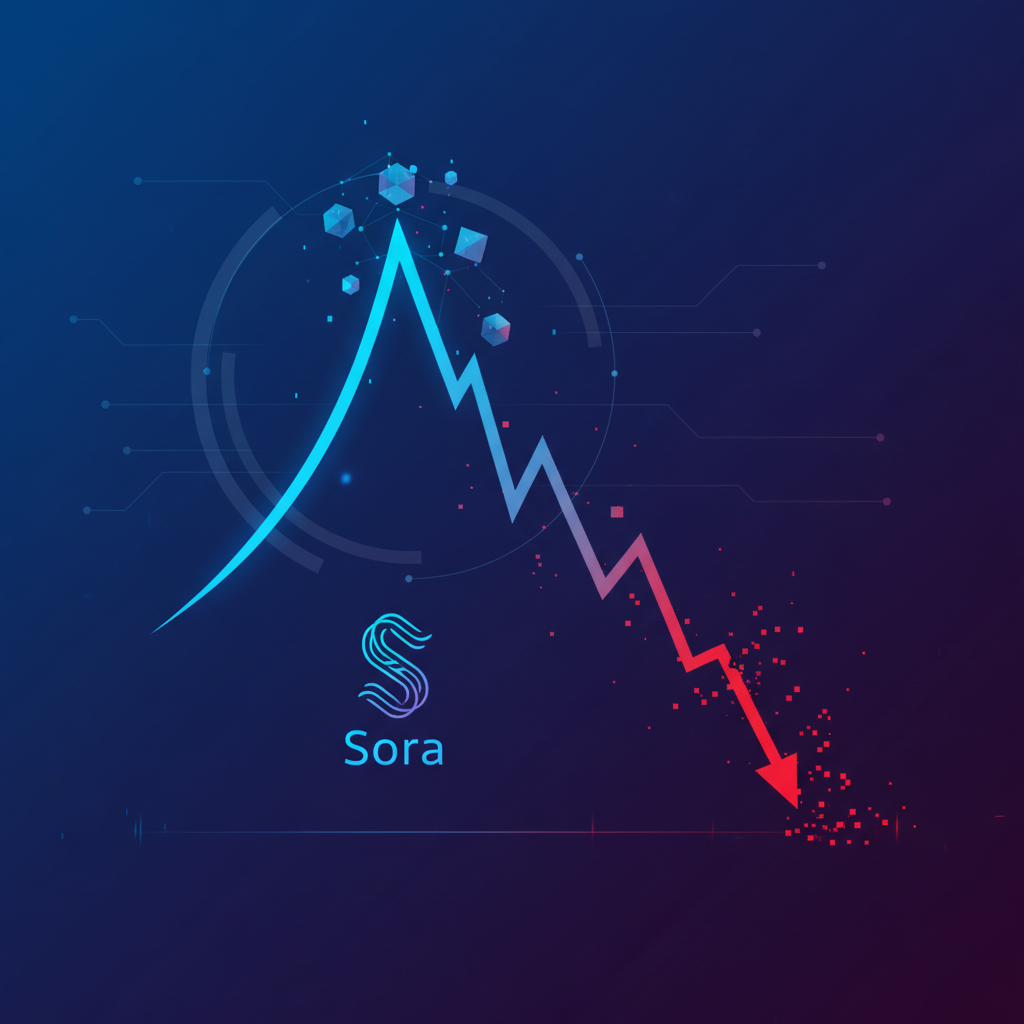
The story of Sora resembles that of many technological innovations: a spectacular start followed by a brutal return to reality. OpenAI's video generation application, which topped app store charts in autumn 2025, is now going through a difficult period marked by a significant drop in its commercial performance.

A Spectacular Launch That Caused a Sensation
Sora's launch in autumn 2025 was like a technological fairy tale. Based on the Sora 2 model, the application recorded over 100,000 installations on its first day, despite an invitation-only access system that limited its availability. This exclusivity strategy created a particularly effective scarcity effect.
The ascent was meteoric: in a few weeks, the app surpassed one million downloads faster than ChatGPT did during its initial launch. Sora even claimed the top spot on the US App Store, a remarkable achievement for an artificial intelligence application specializing in video generation.
This initial success was due to several factors: the technological promise of creating hyper-realistic videos lasting 5 to 20 seconds, the aura of OpenAI, and the curiosity generated by the first public demonstrations.
The Disillusionment: When Numbers Plummet
But the magic didn't last. From the first months of 2026, warning signs multiplied. According to data from analytics firm Appfigures, downloads fell by 32% in December 2025 compared to the previous month, a particularly concerning drop during the holiday season, which is usually favorable for mobile applications.
In January 2026, the decline accelerated with a 45% drop in installations, bringing them down to approximately 1.2 million for the month. Revenue followed the same downward trend:
- December 2025: $540,000 in revenue
- January 2026: $367,000, a 32% decrease
In total, Sora has accumulated 9.6 million downloads on iOS and Android, generating approximately $1.4 million in revenue. While these figures remain respectable, the negative trend is worrying.
| Period | Observed Downloads | Revenue (USD) |
|---|---|---|
| December 2025 | -32% (vs Nov. 2025) | 540,000 |
| January 2026 | -45% (vs Dec. 2025) | 367,000 |
| Cumulative Total | 9.6 million | 1.4 million |
Reasons for a Rapid Decline
The Fading Novelty Effect
The primary factor in the decline lies in the fading novelty effect. Users, initially fascinated by the ability to create videos with artificial intelligence, quickly encountered the technology's limitations. Duration constraints (5 to 20 seconds maximum) and complexity of use hindered long-term engagement.
Intensifying Competition
Sora's initial competitive advantage quickly eroded with the emergence of alternative solutions. The generative AI ecosystem has been enriched by new players offering similar video models:
- Stable Video 3D with competitive features.
- Meta MovieGen offering comparable resolutions.
- Google DeepMind Veo 2 with advanced technical capabilities.
This proliferation of alternatives diluted Sora's technological exclusivity in a rapidly evolving market.
Regulatory and Ethical Challenges
The application also had to contend with growing concerns about misinformation and deepfakes. These worries led to regulatory pressure and stricter content policies, limiting certain uses and hindering massive adoption.
"The transition from invitation-only access to broader availability diluted the initial aura of exclusivity, a key factor in the app's early success."
A Business Model to Revisit
Sora's monetization model, based on modest in-app purchases, failed to sustainably convert its user base. The United States accounts for the majority of spending, followed by Japan, Canada, South Korea, and Thailand, but even in these strong markets, revenue is stagnating.
The app lost its place in the App Store's overall top 100, falling to around 101st position. On Google Play, the situation is even more concerning with a drop to around 181st place in the United States.
Perpetual Innovation as a Challenge
In the world of artificial intelligence, constant innovation is an absolute necessity. The lack of major updates or new features after the launch of Sora 2 contributed to user fatigue. Without significant evolution, AI applications struggle to maintain attention in an ecosystem where new developments follow one another at a frantic pace.
This situation illustrates a broader challenge for companies in the sector: how to maintain user engagement after the initial peak of curiosity? Creative workflows are evolving rapidly, and user expectations are accelerating accordingly.
Future Prospects and Lessons Learned
Sora's experience offers valuable insights into the dynamics of the generative AI market. It demonstrates that initial success, even spectacular, does not guarantee longevity without a continuous evolution strategy and lasting differentiation.
To turn things around, OpenAI will likely need to rethink its product strategy, enrich Sora's features, and perhaps revise its monetization approach. The stakes are high: transforming initial buzz into sustainable usage in an increasingly saturated and competitive market.
This story reminds us that in the field of artificial intelligence, technological innovation alone is no longer enough. It is also necessary to master user experience, content strategy, and the constant evolution of features to maintain attention in a hyper-competitive digital ecosystem.