Biodiversity 2026: New Emerging Threats According to IUCN

While traditional threats to biodiversity continue to wreak havoc, the International Union for Conservation of Nature (IUCN) is sounding the alarm about new dangers emerging on the horizon for 2026. These emerging threats, often invisible or overlooked, could unpredictably disrupt ecosystems and accelerate the decline of many species. For a thorough understanding of these issues, the IUCN offers an analysis of the "United for Nature on the Road to 2045" strategies and a key report on the "One Health" concept.
New-generation pollution: the invisible enemy
New-generation pollution is now one of the IUCN's major concerns for the coming years. Unlike conventional pollutants, these substances have novel characteristics that largely escape traditional monitoring systems.
Pharmaceutical residues are massively infiltrating soils and waterways, disrupting the endocrine systems of aquatic wildlife. These molecules, designed to be biologically active, create hormonal imbalances in many species, affecting their reproduction and development.
Nanoparticles, for their part, represent a particular challenge due to their ability to cross biological barriers. Their microscopic size allows them to penetrate cells and accumulate in the food chain, with consequences for ecosystems that are still poorly understood.
"Emerging pollutants are infiltrating soils, water, and air, creating ecological disruptions whose full extent we do not yet fully grasp" - IUCN Report 2026
Exposure to electromagnetic waves is also becoming a concern, particularly for species that use the Earth's magnetic fields for orientation, such as many migratory birds and pollinating insects. A better understanding of these phenomena is crucial, as highlighted by the National Biodiversity Strategy.
Microplastics and fragmentation: when infrastructure threatens ecological corridors
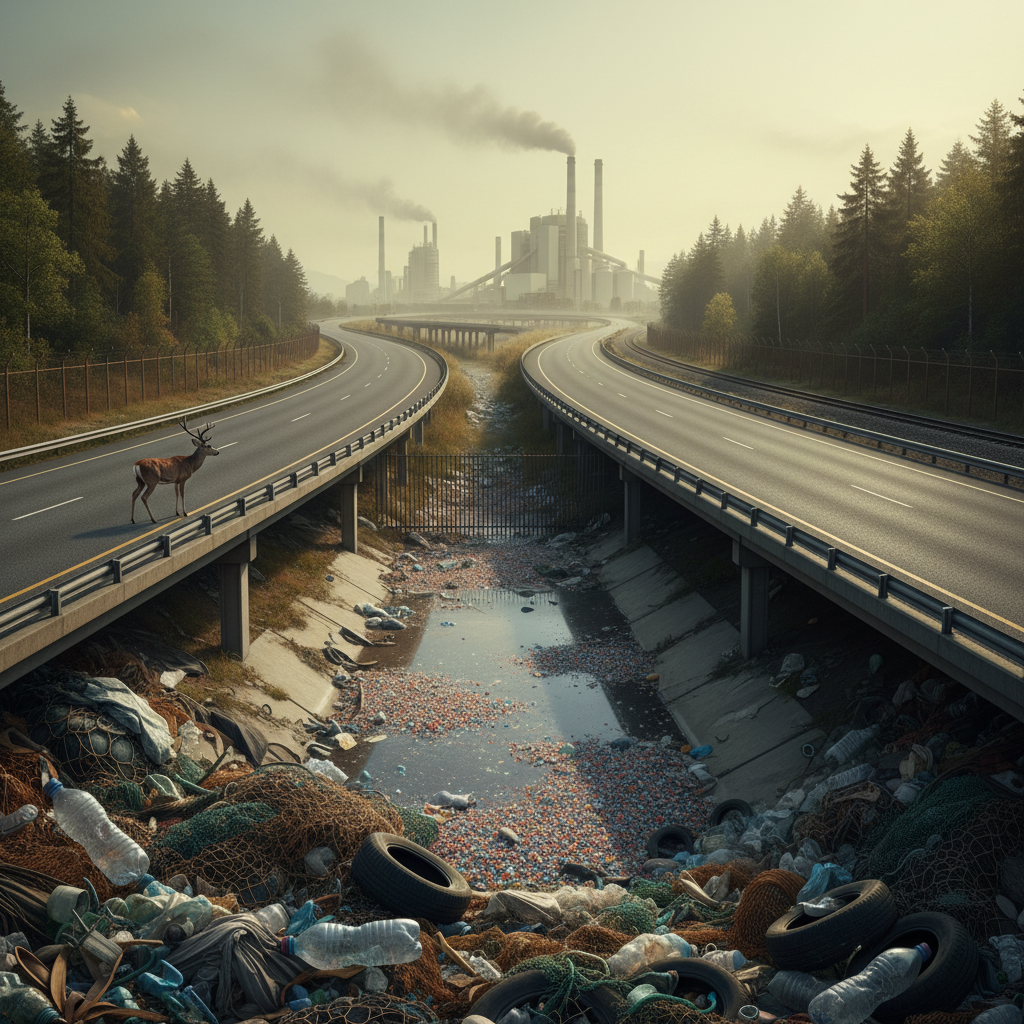
The proliferation of macro and microplastics in all environments poses a growing threat to biodiversity. These particles, ingested by wildlife, cause digestive obstructions and release toxic substances into animal organisms.
At the same time, the creation of linear waste – roads, railways, fences – dangerously fragments natural habitats. This fragmentation hinders species migration and isolates populations, reducing their genetic diversity and adaptive capacity. The impact of these infrastructures is particularly concerning for migratory species, as detailed in the interim report on the state of migratory species in the world.
Renewable energy infrastructures, while essential for the ecological transition, also generate new challenges. The rapid expansion of wind and solar farms creates obstacles to wildlife movement, particularly for birds and bats. This issue illustrates the complexity of current environmental challenges, where climate solutions can sometimes conflict with biodiversity preservation, as discussed in analyses on accelerating decarbonization. Other similar challenges in the energy sector are explored in this article on offshore wind power.
The amplified climate challenge: a biological race against time
Climate change continues to intensify pressure on ecosystems, but in a more insidious way than anticipated. Ecological niches are shifting faster than species' adaptive capacity, creating critical temporal and geographical mismatches.
Extreme heat events are no longer limited to causing direct mortality. They disrupt reproductive cycles, alter migration patterns, and degrade habitat quality in a lasting way.
Ocean acidification and the progressive loss of natural carbon sinks exacerbate this situation by reducing ecosystems' ability to absorb CO2, creating a vicious cycle of accelerating climate change.
These rapid transformations compromise the complex ecological interactions that maintain ecosystem balance. The disappearance of key species can cause cascading effects, disrupting entire food webs.
| Amplified Climate Threat | Impact on Ecosystems |
|---|---|
| Shifting ecological niches | Species maladaptation |
| Extreme heat events | Disruption of reproductive cycles |
| Ocean acidification | Reduction of carbon sinks |
| Disappearance of key species | Cascading effects on food webs |
"One Health": when pathogens cross all borders
The "One Health" concept highlighted by the IUCN reveals the growing interconnectedness between human, animal, and environmental health. The accelerated introduction of invasive species and pathogens creates unprecedented health risks.
Tropical and island areas are particularly vulnerable to these biological invasions. The geographical isolation that historically protected these ecosystems becomes a handicap in the face of the sudden arrival of allochthonous species.
Emerging pathogens no longer recognize borders, facilitating the transmission of diseases between wild, domestic, and human species. This increasing permeability of health barriers requires an integrated approach to conservation, simultaneously considering all health compartments.
Traditional conservation strategies, focused on protecting isolated species or habitats, show their limits in the face of these systemic challenges that require strengthened international coordination.
Weak signals disrupting biological cycles
Some emerging threats, long considered negligible, are now revealing their destructive potential. Noise pollution, generated by intensified traffic and industrial activities, disrupts communication between animals and alters their reproductive behaviors.
Light pollution, constantly expanding, desynchronizes the biological cycles of many species. Nocturnal insects, attracted by artificial light sources, see their survival compromised, indirectly affecting the ecosystems that depend on their pollination services.
These seemingly minor disturbances accumulate and interact with other environmental stressors, creating combined effects whose magnitude exceeds the sum of individual impacts.
The IUCN emphasizes that these weak signals require increased monitoring and preventive measures, before they become major irreversible threats. This prospective approach to conservation represents a necessary paradigm shift to effectively preserve biodiversity.
The urgency of a systemic approach to conservation
Faced with this proliferation of emerging threats, the IUCN advocates a profound transformation of conservation strategies. The traditional fragmented approach, targeting specific species or habitats, must evolve towards a systemic vision integrating all disturbance factors.
- Adaptation of environmental monitoring: Early detection of invisible threats.
- Development of new tools: Biomarkers to anticipate impacts.
- Integration of climate and biodiversity issues: Avoiding conflicts of use in energy solutions.
- Strengthening collaboration: Between scientists, managers, and decision-makers.
Environmental monitoring must adapt to detect these new threats, which are often invisible or difficult to quantify. The development of new detection tools and biomarkers becomes crucial to anticipate impacts before they become irreversible.
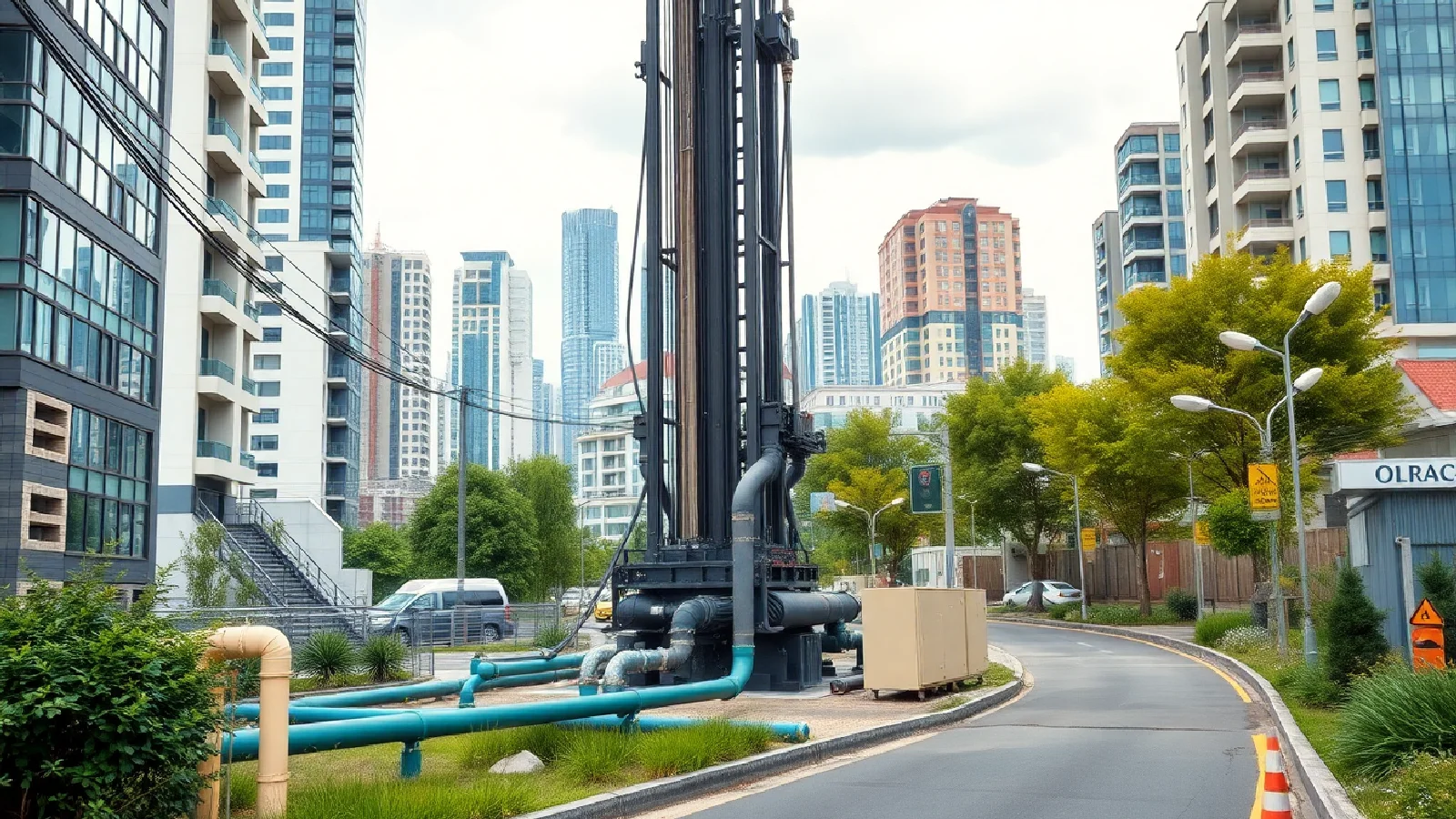
Solutions developed to mitigate climate change, such as urban geothermal networks, must integrate biodiversity issues from their design to avoid conflicts of use.
This transformation requires strengthened collaboration between scientists, natural area managers, policymakers, and economic actors. Only collective mobilization will make it possible to meet these unprecedented challenges that threaten the future of our common natural heritage.