Webb Reveals the Hubble Tension Enigma and Redefines Our Cosmos
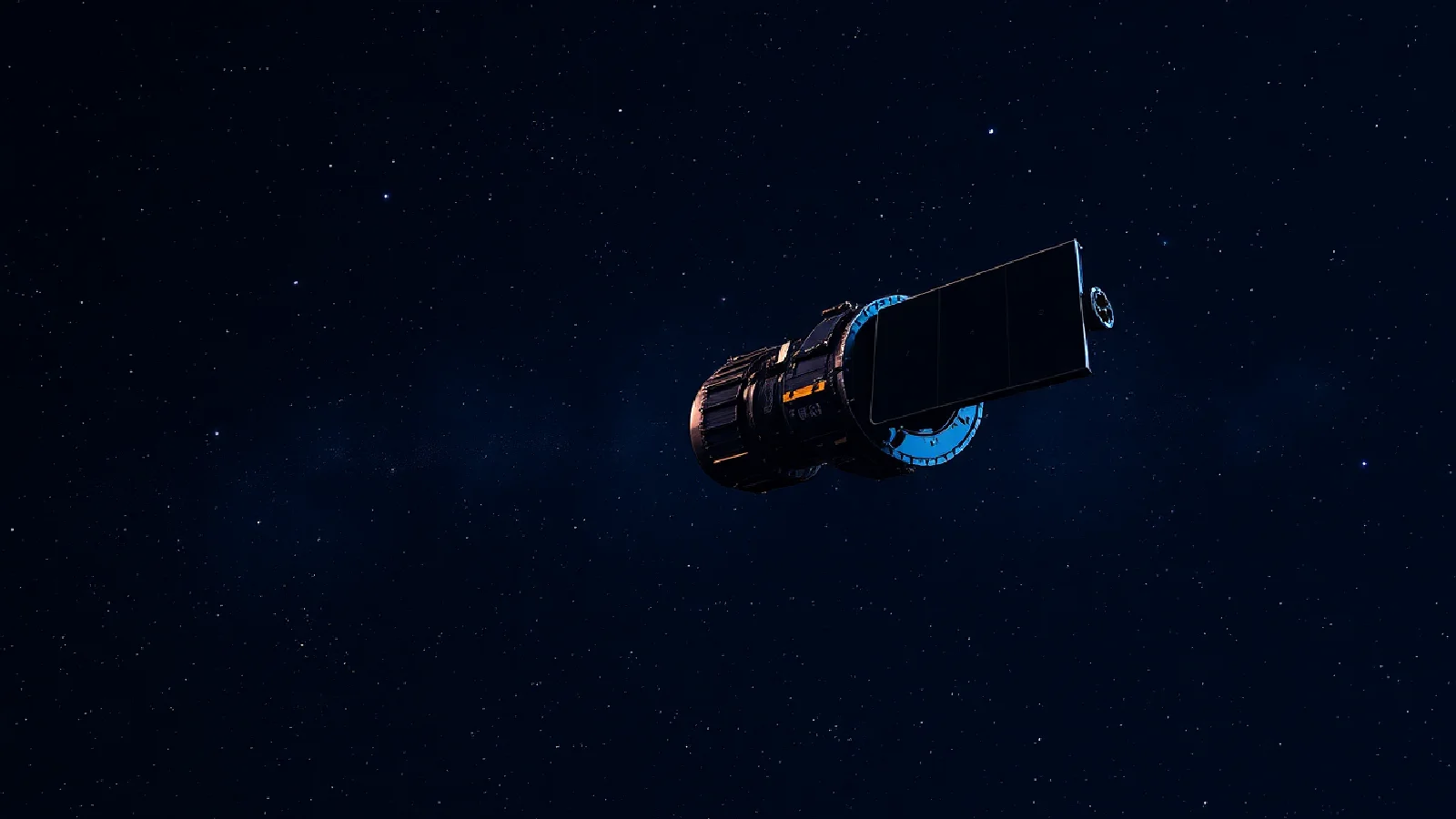
The recent discoveries by the James Webb Space Telescope (JWST) are revolutionizing our understanding of the Universe and offering unprecedented avenues to solve one of the greatest mysteries in modern cosmology: the Hubble tension. This discrepancy between different measurements of the Universe's expansion rate might finally find an explanation thanks to surprising observations of massive galaxies in the early Universe.
Since 2022, the JWST) has been revealing cosmic phenomena that challenge our theoretical models. The presence of extremely evolved and massive galaxies at early epochs questions the standard scenario of cosmic structure formation and suggests that the history of universal expansion might be more complex than anticipated, as highlighted in an article by Pour la Science.
Giant Galaxies in the Infant Universe
The JWST has identified already well-formed galaxies of considerable mass less than a billion years after the Big Bang. These “red galactic monsters” discovered by an international team led by the University of Geneva represent almost the mass of our Milky Way but already existed when the Universe was only 10% of its current age.
These observations reveal that star formation was much more efficient in the early Universe than initially supposed. According to the standard cosmological model, only 20% of the gas captured by dark matter halos normally converts into stars. Yet, these primordial galaxies seem to have far exceeded this limit.
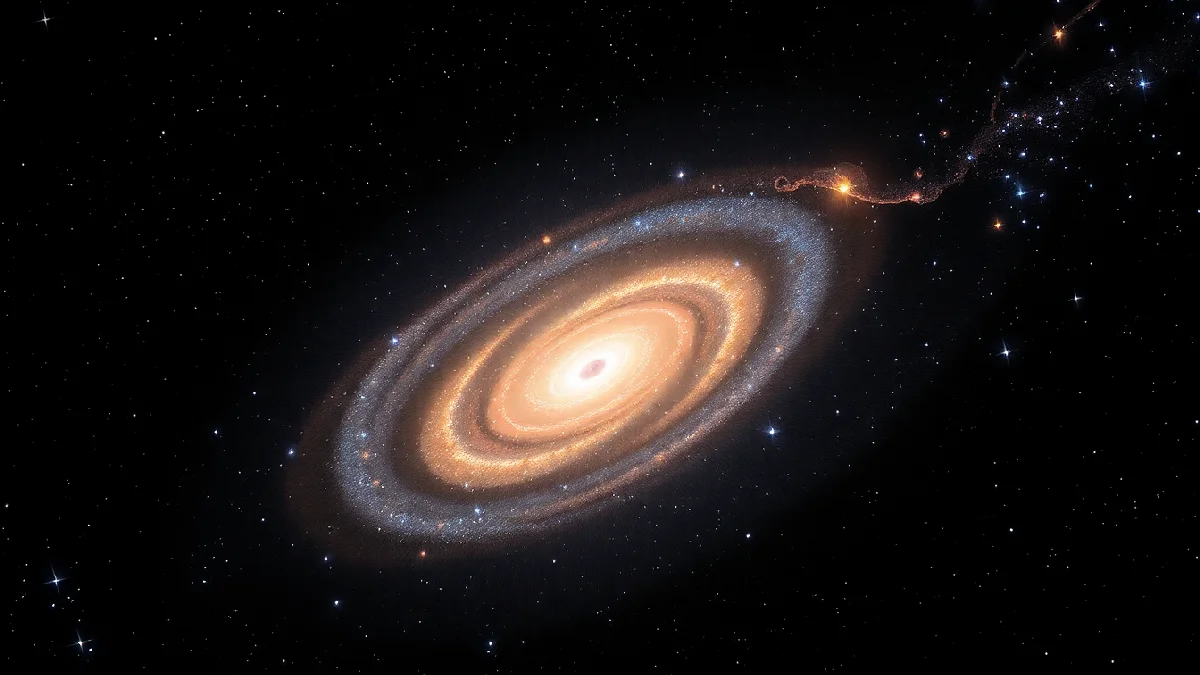
The team led by Nicolas Laporte at the University of Geneva used the JWST's FRESCO program to precisely measure distances and stellar masses. Their results, published in Nature, indicate star formation rates up to 10 times higher than theoretical predictions.
The Hubble Tension Finally Clarified?
The Hubble constant measures the current expansion rate of the Universe. However, two calculation methods yield different results, creating what is known as the “Hubble tension.” On one hand, measurements based on the cosmic microwave background give a value of approximately 67 km/s/Mpc. On the other hand, local observations via Cepheids and supernovae indicate around 73 km/s/Mpc.
"These James Webb data have exacerbated an already complex mystery related to the speed of the Universe's expansion, suggesting that unknown physical laws might be preventing us from solving this cosmic enigma." - National Geographic France
The JWST's discoveries suggest that this discrepancy could be explained by an incomplete understanding of early cosmic evolution. The existence of massive structures so early in universal history implies physical processes not integrated into the standard model.
Comparison of Hubble Constant Measurements
| Measurement Method | Estimated Value (km/s/Mpc) | Implications |
|---|---|---|
| Cosmic Microwave Background | Approximately 67 | Predicted by standard cosmological model |
| Cepheids and Supernovae | Approximately 73 | Current local observations |
| Discrepancy (Tension) | ~ 6 km/s/Mpc | Requires new physics |
Early Dark Energy in Question
An emerging hypothesis proposes the existence of early dark energy that would have accelerated universal expansion during the first billion years. This mysterious energetic component could explain both the rapid formation of massive galaxies and the Hubble tension.
Observations of quiescent dwarf galaxies in the early Universe reinforce this theory. These objects, theoretically impossible according to our current models, suggest star formation regulation mechanisms that are still not understood.
The implications of this hypothesis are significant:- Revision of the ΛCDM (Lambda Cold Dark Matter) model
- Integration of new energetic components
- Recalibration of cosmological parameters
Towards a New Cosmic Physics
The anomalies detected by the JWST are not limited to massive galaxies. The telescope also reveals unusual structures and unexpected star formation processes that question our theoretical foundations.
These discoveries pave the way for extensions of the standard cosmological model. Researchers are particularly exploring:
- Non-Gaussianities on small scales in primordial fluctuations
- The impact of dark matter interactions on early formation
- Amplified stellar feedback effects in the young Universe
The NASA acknowledges that these observations could reveal “yet unknown physical laws” governing cosmic expansion.
Implications for Modern Cosmology
The JWST's discoveries are transforming our perception of cosmic evolution. The unexpected efficiency of early star formation challenges established timelines and suggests physical mechanisms more complex than anticipated.
These revelations directly impact our understanding of:- The true age of the Universe
- The formation processes of the first structures
- The nature of dark energy and dark matter
- The fundamental parameters of cosmology
Integrating this new data might require a major revision of the standard cosmological model, ushering in a new era of understanding of our Universe.
Conclusion
The revolutionary observations from the James Webb Telescope mark a decisive turning point in our cosmological understanding. By revealing the existence of massive galaxies in the early Universe, the JWST provides crucial evidence to resolve the Hubble tension that has divided the scientific community for years.
These discoveries suggest that the history of our Universe is richer and more complex than our current models predict. The hypothesis of early dark energy and the need to revise fundamental cosmological parameters open fascinating prospects for future research.
As we move towards a new generation of observational instruments, particularly with future giant ground-based telescopes, these JWST revelations form the foundations of a renewed cosmology. Resolving the Hubble tension could well transform our view of the Universe and reveal fundamental aspects of physics still unknown. This revolution in space exploration is part of a broader scientific endeavor that constantly pushes the boundaries of our cosmic knowledge. To learn more about the future of research and the challenges of space conquest, you can consult our dossier on the conquest to Mars.